
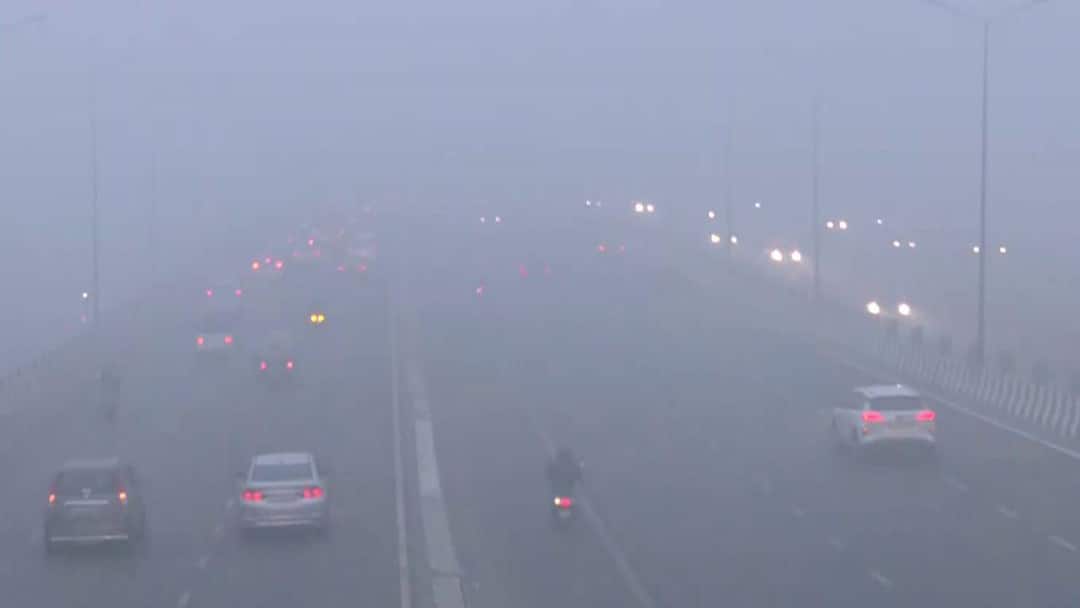


As India’s major cities struggle through another season of toxic air, a worrying gap has emerged between policy intent and on-ground capacity. Nearly half of the sanctioned posts across pollution control boards and committees in the country remain unfilled, even as air quality levels plunge into hazardous territory.
This staffing shortfall, revealed through a response in Parliament during the ongoing session, has raised serious questions about the country’s ability to enforce environmental regulations at a time when public health risks from pollution are mounting, reported Moneycontrol.
Who Is Meant to Police India’s Air?
India’s air quality framework rests on a multi-tiered institutional structure. At the centre is the Central Pollution Control Board (CPCB), supported by 28 State Pollution Control Boards (SPCBs) and eight Pollution Control Committees (PCCs) that oversee Union Territories and the National Capital Territory of Delhi.
Together, these bodies are tasked with monitoring air and water quality, enforcing emission norms, regulating industrial pollution and implementing national clean air policies. However, their ability to do so is increasingly constrained by a lack of manpower.
According to the parliamentary reply cited by The Times of India, the sanctioned strength for scientific and technical posts across these bodies stands at 6,932. Of these, 3,161 positions or 45.6 per cent are currently vacant.
The vacancy rate varies sharply across institutions. As of November, the CPCB reported a vacancy level of 16.3 per cent. In comparison, vacancies stood at 43.8 per cent in Pollution Control Committees and a striking 47.6 per cent in State Pollution Control Boards as of August.
A Persistent Problem, Not a One-Off
The staffing crunch is not a recent development. Data shared in Parliament earlier this year, in March, showed that of the 11,562 sanctioned posts across SPCBs and PCCs, 5,671 or over 49 per cent, were vacant. Over the past five years, vacancy levels have fluctuated between 44 per cent and 51 per cent, suggesting a chronic issue rather than a temporary lag in recruitment.
The March response also highlighted stark disparities between states. Twelve of the 28 SPCBs were operating with vacancy levels exceeding 50 per cent. Sikkim topped the list with 100 per cent vacancies, followed by Jharkhand and Andhra Pradesh, each lacking more than 70 per cent of their sanctioned staff.
At the other end of the spectrum, Kerala emerged as the only large state with vacancies below 10 per cent. Goa recorded a vacancy rate of 9.3 per cent, while Arunachal Pradesh and Nagaland reported no vacancies at all.
Among Pollution Control Committees, Delhi reported a vacancy rate of 44.5 per cent. Ladakh and Dadra & Nagar Haveli and Daman & Diu fared worse, with vacancies touching 69 per cent. Lakshadweep stood out with zero vacancies, while Chandigarh reported only 11.1 per cent of posts lying vacant.
Smog on the Streets, Gaps in the System
The staffing gaps come at a time when air quality across urban India is deteriorating sharply. On Tuesday morning, the Air Quality Index (AQI) in New Delhi remained in the ‘very poor’ category, a day after it spiked to the ‘severe plus’ range, with readings touching 500 in several localities.
Other cities are also grappling with rising pollution levels. In Mumbai, the Brihanmumbai Municipal Corporation (BMC) submitted an affidavit to the Bombay High Court outlining steps taken to curb air pollution. These measures include sensor integration, issuing stop-work notices under the Graded Response Action Plan (GRAP), shifting bakeries to cleaner fuels, deploying electric buses, installing dust mitigation units at key junctions, and operating construction and demolition waste processing facilities.
Funds Released, But Not Fully Used
Manpower shortages are not the only concern. According to The Times of India, data from 44 urban agglomerations showed that Noida, Delhi and Faridabad ranked among the lowest in fund utilisation under the National Clean Air Programme (NCAP).
A parliamentary reply in March revealed that of the Rs 42 crore released to Delhi, only 32 per cent was utilised. Noida used just 11.1 per cent of its allocation, while Faridabad utilised 39 per cent. In contrast, Surat utilised 100 per cent of its allotted funds, Chennai 99 per cent and Kolkata 87 per cent.
As pollution increasingly shifts from being an environmental issue to a public health emergency, the data underscores a troubling disconnect. While policies, funds and action plans exist on paper, the institutions responsible for implementing them are often running on skeletal staff.
With vacancy levels stubbornly high and air quality worsening across cities, the question is no longer whether India has enough rules to fight pollution, but whether it has enough people on the ground to enforce them.