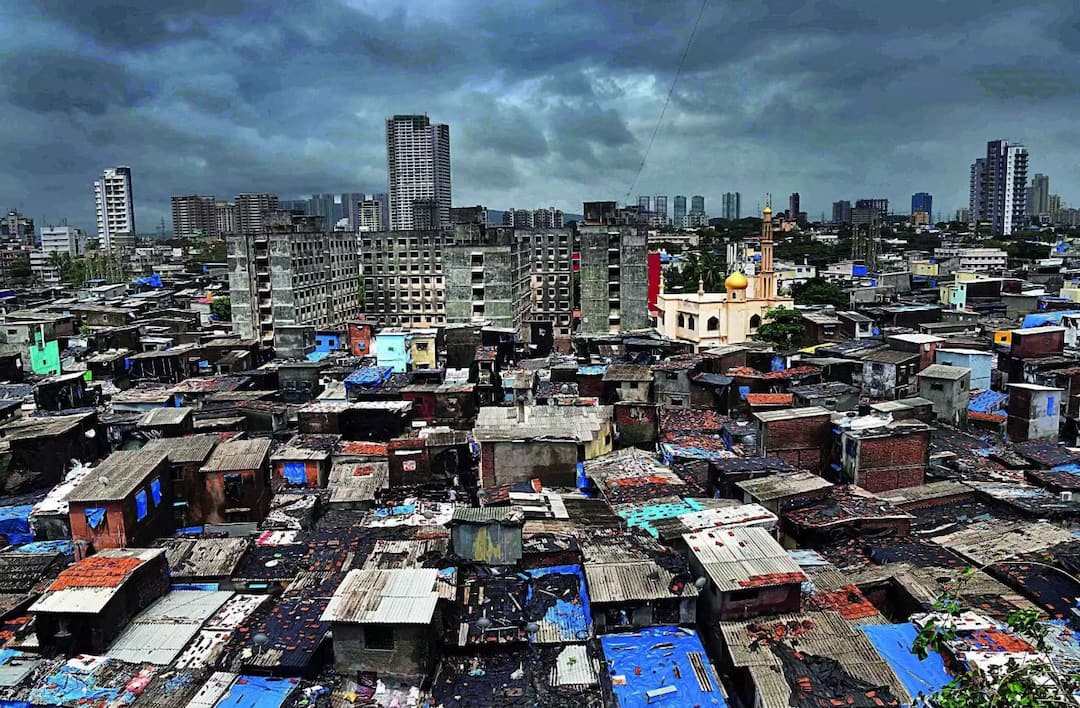

Amid concerns raised over eviction notices served to a small group of residents in Dharavi, authorities overseeing the Dharavi Redevelopment Project (DRP) have sought to reassure the public that relocations are being carried out in a humane and lawful manner, with the larger objective of accelerating one of India’s most ambitious urban rehabilitation programmes.
Responding to notices issued to around 42 residents of Ganesh Nagar/Meghwadi in Sector 1 of Dharavi, DRP and Slum Rehabilitation Authority (SRA) CEO Dr Mahendra Kalyankar said temporary relocation in limited pockets was unavoidable to enable construction work for essential public infrastructure.
“The residents of Dharavi have been living in extremely poor and unhygienic conditions for decades. Redevelopment is not a choice but a necessity for them,” Dr Kalyankar said. He added that the dense layout of Dharavi leaves very little open land to begin construction unless a small number of residents are temporarily shifted.
‘Relocation Is Limited, Intent Is Rehabilitation’
Dr Kalyankar stressed that the notices should not be viewed in isolation or as an indication of forced displacement. “Our intent has always been to ensure a smooth and dignified transition from slum to rehab homes for the residents. Yet, in some cases, like Ganesh Nagar/Meghwadi or railway land, some relocation becomes unavoidable. This is being done strictly as per the provisions of law,” he said.
He underlined that relocating a few thousand residents to transit or rental accommodation must be seen in the context of a project aimed at rehabilitating nearly 10 lakh people. “The Dharavi Redevelopment Project will deliver 1.25 lakh homes and benefit lakhs of Dharavikars. Such decisions are part of any large and complex urban regeneration exercise. Our immediate priority is to open up construction fronts and begin rehab construction work at the earliest,” Dr Kalyankar said.
Sewer Pipeline Project Behind Current Evictions
Project officials explained that the clearance of hutments belonging to the 42 residents is required to facilitate the laying of a 1,800 mm diameter sewage pipeline, a key public utility aimed at improving sanitation and public health in the area.
“To ensure a smooth transition, we are extending full support to these families, including rental assistance and brokerage support,” Dr Kalyankar said, adding that no resident would be left without interim accommodation.
Rental Support and Compensation Details
Under the current relocation framework, eligible residents are being provided financial support based on the nature and location of their premises:
Ground-floor residential eligible residents are being paid Rs 18,000 per month as rent, with 12 months’ rent paid in advance at the time of evacuation. After this period, rent will be paid monthly.
Upper-floor residential eligible residents are being paid Rs 15,000 per month, with 12 months’ rent paid upfront, followed by monthly payments thereafter.
Ground-floor eligible commercial residents are being compensated at Rs 175 per square foot of carpet area per month, with 12 months’ rent paid in advance, followed by monthly disbursals.
In addition, authorities have built in an escalation clause to account for rising rental costs. “We have ensured a rental escalation of 5 per cent per annum for all eligible residents, applicable after 12 months from the date of handing over peaceful and vacant possession of the tenements,” Dr Kalyankar said.
Transit Housing and Next Steps
Highlighting other relocation efforts, Dr Kalyankar said eligible residents from Shatabdi Nagar are being shifted to MHADA transit apartments. He reiterated that the overarching goal of the project is to improve living conditions while maintaining dignity for all residents.
“These temporary arrangements in the initial phase are essential to fast-track the construction and timely delivery of rehabilitation infrastructure,” he said, adding that the DRP remains committed to ensuring every Dharavikar ultimately moves into a permanent, improved home.