
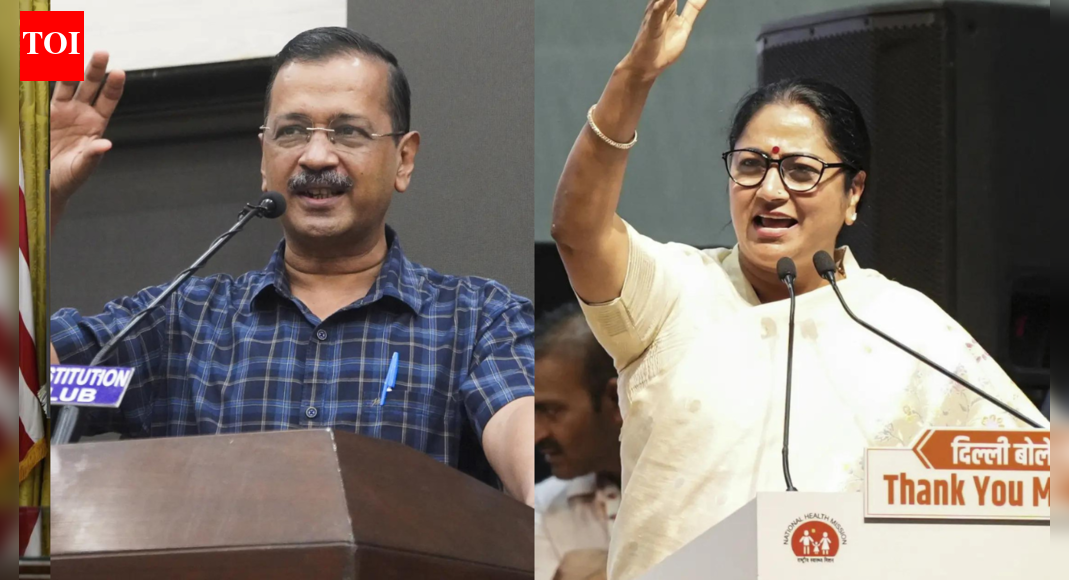


Arvind Kejriwal (left), Rekha Gupta (agencies)
NEW DELHI: Aam Aadmi Party supremo Arvind Kejriwal on Tuesday targeted Delhi chief minister Rekha Gupta over her remarks on air pollution, sharing a video of her comments and questioning the scientific basis of her claims.Posting in Hindi on X, Kejriwal wrote: “AQI monitors are installed, water is being sprayed there so that the truth about pollution doesn’t reach the people of Delhi. In other words, there’s a game afoot to hide the figures and make it look like the ‘air is clean’. Second thing – when did this new science come about that AQI has now become temperature?”Also read: ‘India’s 10 most polluted cities in Delhi-NCR, Ghaziabad tops list’The video shared by Kejriwal showed Gupta defending water spraying at pollution hotspots. In the clip, she said: “So you will spray (water) at a hotspot. Does spraying water on a monitor bring down the AQI, she questioned. “AQI ek aisa temperature hai, jo kisi bhi instrument se pata chalta hai. Toh usme watering is the only solution. Jo hum kar rahe hai, jo pichli sarkare bhi karti thi, aur wo hotspot pe hi hota hai jahan sabse zyada pollution hoga, wahi toh aap safai karenge (AQI is a kind of measurement that can be detected using any instrument. So watering is the only solution for it. That’s what we are doing — just as previous governments did — and it is done only at the hotspots, where pollution is highest. That’s exactly where you would carry out cleaning.),” she said at a media event.The exchange comes at a time when Delhi continues to battle hazardous air. On Tuesday morning, the city woke up to a layer of smog that reduced visibility across several areas. The AQI stood at 292 at 8 am, falling into the ‘poor’ category. Key locations also recorded worrying readings: 265 around India Gate, 294 at ITO, 282 at Alipur, 253 at Aya Nagar, and 291 at Burari. In Akshardham, Ghazipur and Anand Vihar, the AQI touched 319, categorised as ‘very poor’.The worsening air comes despite ongoing government measures. The Delhi government has formed an Expert Group on Air Pollution Mitigation to advise on long-term strategies and emerging technologies. Headed by retired IAS officer Leena Nandan, the panel includes senior scientists, former CPCB officials, IIT professors and representatives from CAQM and IMD. It will meet monthly and offer sector-specific recommendations, covering transport, industry, waste burning and construction.Rekha Gupta has separately emphasised mist spray technology as a key intervention, saying trials at ITO and other NDMC areas have “shown positive results”. She said 305 mist sprayers are being installed at nine hotspots, alongside measures such as filling potholes, improving road surfaces and encouraging residents to report civic issues to prevent dust and waste-related pollution.