
Thermal maps for daily choices: SatLeo tests street-level heat intelligence in Karnataka
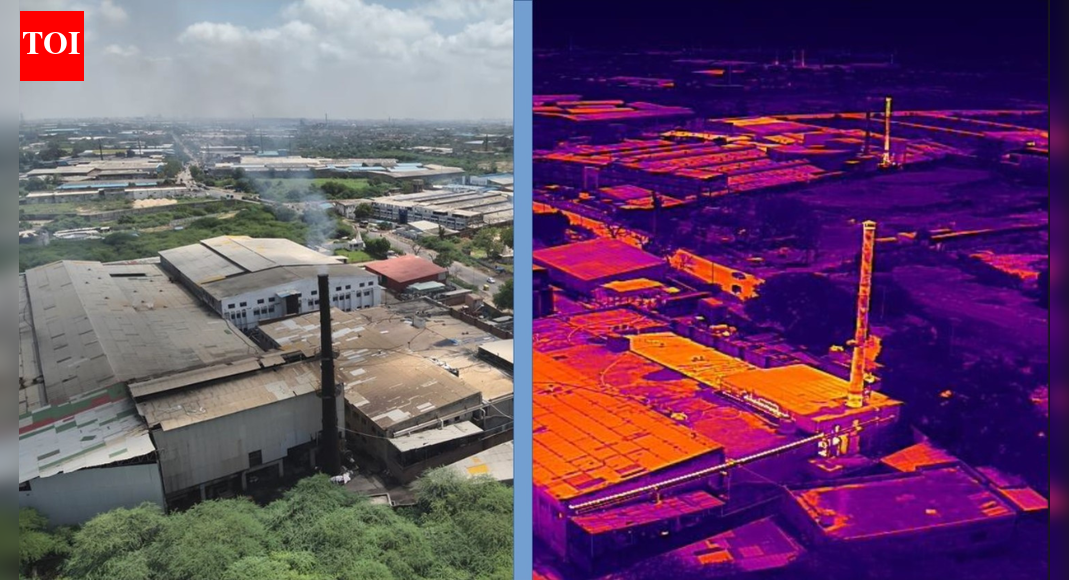
BENGALURU: On a summer morning, or any other day, an app might soon guide a courier or gig worker along a route not because it is shortest but because it is coolest. That is the idea behind Ahmedabad Space startup SatLeo Labs’ thermal mapping, which uses space-borne temperature data to help with everyday decisions, from where a city plants its next tree to how a worker plans a trip on a 40°C afternoon.The idea is already being tested. In Tumakuru, 76km from Bengaluru, SatLeo’s pilot uses drone-mounted thermal sensors paired with satellite-derived layers to spot methane leaks and track heat build-up across a 40-acre solid-waste dump.“Tumakuru is moving toward a cleaner and healthier future. With new technologies like thermal intelligence via satellites and drones, we can now see and solve problems faster, whether it is greenhouse gas emissions above solid waste, heat patterns of the city, or open dumps. This project is about making Tumakuru safer, greener, and more comfortable for every citizen,” Ashwija BV, MD & CEO, Tumakuru Smart City Limited, and commissioner, Tumakuru City Corporation, said.SatLeo’s pitch is to build a thermometer for Earth. Co-founder & CEO Shravan Bhati says current datasets smooth out the sharp differences in temperature that define a city. “There’s no accurate temperature information of each and every spot. Existing datasets are interpolated averages; they hide the fact that a park can be several degrees cooler than an industrial block a few hundred metres away,” he told TOI.SatLeo plans a constellation, with its experimental Tapas-1 mission slated for Q1 2026 and a commercial rollout expected later that year. It aims to blend medium-wave and long-wave infrared imaging with 2.5-metre visible imagery and onboard edge computing. The goal is to offer sub-10-metre thermal maps, twice-daily updates and real-time anomaly detection, giving cities and enterprises processed insights rather than large volumes of raw data. One of these products, the “Thermal Comfort API”, is a layer that municipalities or platforms can plug into their systems to measure heat stress at street level. The Tumakuru pilot shows two useful applications.First is landfill emissions. IoT sensors can tell officials how much methane exists, but they cannot identify the exact point of release across a wide dump. Thermal layers help narrow the location to specific pockets so that teams can tackle the problem without searching tens of acres.Second is urban heat. With thermal layers, the city can plan plantations, shade structures and water supply where they will have the most effect. SatLeo’s data has been used in Tumakuru for several months, and the firm is speaking to other municipalities about similar projects.SatLeo also sees a wider market in outdoor labour management. Bhati points out that average city temperatures say little about the conditions faced by gig workers or those in construction. With street-level thermal maps, insurers could verify claims linked to heat exposure, employers could redirect or reschedule tasks during spikes, and health departments could position cooling stations or medicines more precisely.“If the temperature is going above 48°C and up, then the person is insured… but who will make sure where the people were working that the temperature of that location was 48°C?” Bhati asked, stressing the usefulness of their approach.Co-founder Urmil Bakhai says the roadmap is ambitious but grounded, noting that the firm has letters of intent worth $25 million from public and private players. The appeal for city managers is clear: targeted action is cheaper and quicker than broad schemes. For residents and workers, the benefit is straightforward — cooler routes, better-placed trees and quicker detection of harmful emissions.