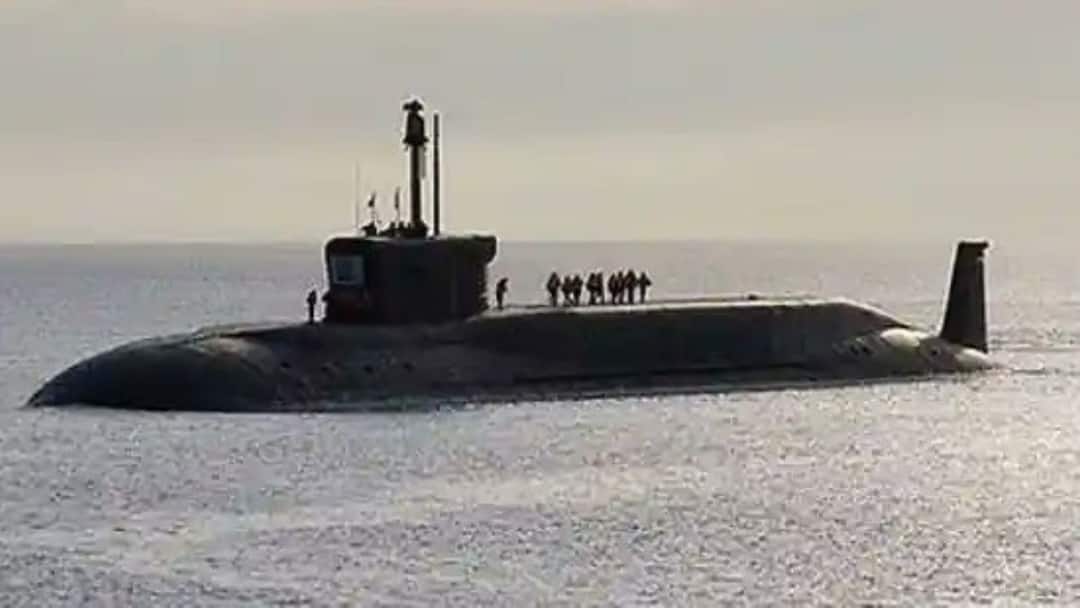

Despite two decades of discussions, the Indian defence establishment has yet to finalise the induction of six additional diesel-electric submarines. However, the imminent commissioning of the third indigenously developed nuclear-powered submarine, INS Aridhaman, offers some reassurance to those responsible for safeguarding Indian waters.
The Indian nuclear propulsion submarine program, while ambitious, has largely remained under the radar. Navy Chief Admiral Dinesh Tripathi’s announcement during the Navy Day media interaction regarding the nuclear submarine’s upcoming commissioning, as it completes its final trials, has garnered significant attention from the global strategic community due to its transoceanic capabilities.
The commissioning of the Aridhaman nuclear submarine will significantly add teeth to India’s second strike capability.
Ageing Conventional Fleet Raises Alarms
The urgency for modernisation is underscored by the fact that half of India’s diesel-electric submarines require immediate replacement. Six Kilo-class submarines are nearing three decades of service, while four HDW German submarines have been operational for over thirty years, collectively representing nearly half of the Indian Navy’s total of eighteen electric submarines. This ageing fleet raises concerns amid increasing maritime challenges from adversaries across the oceans.
India’s Nuclear Submarine Lineage
India’s first two indigenous nuclear submarines, INS Arihant and INS Arighaat, were inducted in 2016 and 2024, respectively. Previously, India had leased two nuclear submarines, INS Chakra-1 and INS Chakra-2, from Russia in the late 1980s and early 2010s, returning them before the lease periods expired.
The Indian Navy is now set to receive a third nuclear submarine on lease from Russia, expected to be delivered by late 2027 or early 2028, further enhancing its strategic capabilities.
Early Russian Support and Indigenous Ambition
India is poised to significantly enhance its sea-based nuclear deterrence capabilities. The country first acquired the Charlie-class Soviet nuclear submarine, Chakra-1, in 1988, which was operational until 1991. Subsequently, in 2011, India leased a second Russian nuclear submarine, the Nerpa-class Shchuka-B SSN, under Project 9710. However, this submarine faced several incidents and was returned before the lease concluded in 2021.
The acquisition of Chakra was primarily aimed at gaining operational experience with nuclear submarines, which ultimately inspired India to develop its own nuclear submarine program and pursue indigenous nuclear propulsion technology.
Technology Denial and Russian Assistance
In light of the technology denial regime imposed by the United States and Western powers during and after the Cold War, India faced significant challenges in realising its nuclear submarine ambitions. Consequently, Indian strategic planners opted to initiate an indigenous program to develop mini-reactors for nuclear submarines.
Reports indicate that Russian engineers played a crucial role in the development of India’s first indigenous nuclear submarine, Arihant, demonstrating Russia’s commitment as a special and privileged strategic partner by providing assistance in this sensitive area despite international nuclear regulations.
Growing Maritime Challenges
As maritime challenges continue to grow, navies require warships capable of operating over extended distances without external support, allowing them to navigate adversarial waters discreetly. The Indian Navy must not only maintain effective surveillance in the Indian Ocean but also extend its operational reach into adjacent Pacific waters, including the South China Sea, through the Malacca Strait. This strategic necessity underscores the importance of advancing India’s naval capabilities to address evolving security dynamics in the region.
AIP vs Nuclear: Capability Gaps
Electric submarines are increasingly being outfitted with advanced Air Independent Propulsion (AIP) technology, allowing them to remain submerged for up to two weeks or more without surfacing. However, this capability is limited by the crew’s endurance underwater, especially when compared to nuclear submarines, which can operate for months or even a year without the need for additional fuel.
AIP submarines are often referred to as “poor man’s submarines,” though currently, the Indian Navy lacks such capabilities. In contrast, the Pakistani Navy is enhancing its fleet with eight Yuan-class diesel submarines from China, which are equipped with AIP technology, thereby gaining a strategic advantage over Indian diesel submarines.
China’s Expanding Naval Footprint
Moreover, China’s support for Pakistan extends beyond submarines; it has also supplied two second-hand submarines to the Bangladesh Navy and is constructing a submarine base at Pekua near Cox’s Bazar, capable of accommodating six submarines. This development suggests that Bangladesh may soon acquire four additional submarines from China.
Consequently, the presence of these submarines in the region poses a significant threat to Indian coastal cities, as neighbouring naval capabilities continue to expand.
Need For Strengthened Surveillance
In light of these emerging challenges, India must enhance its surveillance and countermeasures against potential anti-India strategies from its neighbours. The ongoing development of India’s nuclear submarine program, which is set to deliver its third indigenous nuclear-powered submarine soon, is vital for establishing credible strategic deterrence against the combined threats from China, Pakistan, and Bangladesh.
Strengthening this sea-based component of India’s nuclear triad will be essential to address the increasingly dangerous maritime landscape in the coming years.
Next-Generation SSBNs and SSNs
The S-4, another category of SSBN nuclear submarines, will have a displacement of 7,000 tons, comparable to the Aridhaman and larger than the 6,000-ton Arihant and Arighaat. The Aridhaman is designed to carry a greater number of long-range, nuclear-tipped ballistic missiles, enhancing India’s strategic capabilities.
Following the SSBN program, India has also embarked on developing SSNs, or nuclear-powered attack submarines, which are primarily tasked with locating and neutralising enemy vessels, including submarines.
Roles Of SSBNs Vs SSNs
SSBNs are equipped with ballistic missiles for strategic nuclear deterrence and are engineered to remain submerged for extended durations, allowing for long-range strikes without the need to surface.
In contrast, SSNs are versatile submarines that engage in various missions such as anti-submarine warfare, intelligence gathering, and offensive operations. This dual approach strengthens India’s maritime defence strategy, ensuring a robust response to potential threats.
S-5 Class: India’s Most Ambitious Submarine Yet
To further enhance its sea-based nuclear triad, India is progressing on the next-generation S-5 class ballistic missile submarines, with design work nearing completion and construction expected to commence in late 2027.
With a submerged displacement of 13,500 tons, the S-5 will be nearly double the size of the Aridhaman, featuring improved stealth, endurance, and firepower to address regional challenges in the Indo-Pacific. This advanced submarine is anticipated to join the naval fleet by 2036, bolstering India’s credible minimum deterrence capability in the face of maritime challenges posed by China, which operates a significant number of diesel and nuclear submarines.
Indian Ocean: The Emerging Power Battleground
As global naval powers increasingly focus their attention on the Indian Ocean, a critical artery for international trade, the strategic deployment of nuclear submarines significantly enhances their surveillance capabilities. This region, vital for maritime commerce, has become a focal point for nations seeking to protect their shipping routes and economic interests.
In this context, India, as a key resident naval power in the Indian Ocean, faces the imperative to bolster its own naval capabilities to effectively counterbalance the advancements of rival nations. Strengthening its maritime presence and technological prowess is essential for India to ensure not only its national security but also to maintain stability in this strategically important area.
(The writer is a senior journalist and strategic affairs analyst)