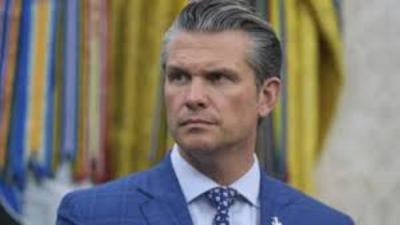
US Defense Secretary Pete Hegseth on Tuesday said “a couple of hours” passed before he was informed that a September military strike he had authorised – and “watched live” – required a second attack to kill two survivors, distancing himself from an incident now under congressional investigation.The account, reported by The Washington Post and expanded on by Hegseth during a Cabinet Room appearance with President Donald Trump, has triggered concerns among lawmakers and legal experts about possible war-crimes violations.Hegseth said he “did not personally see survivors” as “that thing was on fire and exploded,” citing the “fog of war.” Both he and Trump maintained they were unaware of the second strike, placing operational responsibility on admiral Frank Bradley, who oversaw the September 2 mission. “I didn’t know about the second strike. I didn’t know anything about people,” Trump said. According to The Washington Post, Hegseth had given a spoken order ahead of the first missile strike to ensure no crew member survived. Bradley, the paper reported, ordered the follow-up strike after two people were seen clinging to debris. The administration says 11 people were killed.Hegseth dismissed the report as “fabricated,” even as he acknowledged authorising early strikes in the administration’s broader military campaign targeting alleged narcotics smugglers. The Pentagon has not released the written orders underpinning the mission, and former military lawyers have warned that killing unarmed survivors violates the laws of war regardless of the operational context.Two Republican-led committees in Congress have launched bipartisan inquiries, with Senate armed services committee chairman Roger Wicker saying he has sought video, audio and written orders related to the attack. Lawmakers have criticised the administration for withholding information even as Hegseth has signalled that similar operations will continue.White House press secretary Karoline Leavitt on Monday said Hegseth had given Bradley authority to conduct the strikes, stressing that the admiral acted “within his authority and the law.” Military planners have since put greater emphasis on rescuing survivors in later missions.