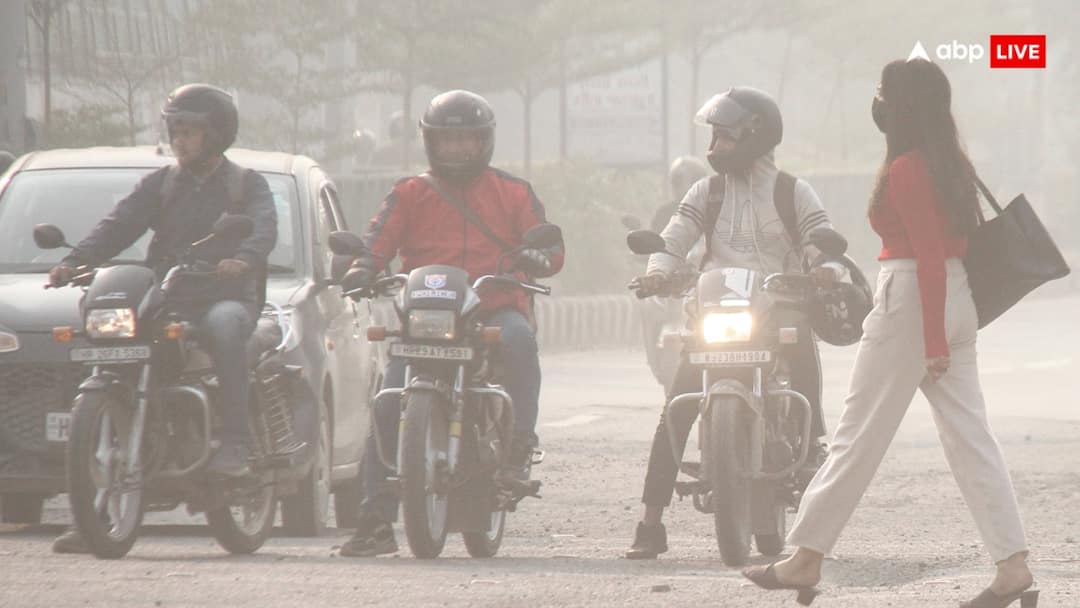

Delhi’s air quality sees a sharp deterioration once again on Wednesday, slipping dangerously close to the ‘severe’ category as temperatures continued to fall.
As recorded on December 3 at 7 am, the city’s Air Quality Index (AQI) stood at 337, according to the Central Pollution Control Board (CPCB), placing the national capital firmly in the ‘very poor’ zone.
IMD issues cold wave warning starting Friday
The India Meteorological Department (IMD) has also issued a forecast warning of a likely cold wave beginning Friday, which may further trap pollutants and worsen smog levels.
While the overall AQI remained in the ‘very poor’ range, several monitoring stations recorded alarming ‘severe’ readings. Among the worst-hit locations were RK Puram (420), Rohini (417), Vivek Vihar (415), Bawana (408), Wazirpur (406), Anand Vihar (405), Ashok Vihar (403), and Sonia Vihar (400). The IGI Airport area reported comparatively lower pollution levels, though its AQI of 303 still fell within the ‘very poor’ category.
CSE Flags Rising Toxicity Despite Fewer Farm Fires
A recent analysis by the Centre for Science and Environment (CSE) of early winter trends has raised concerns about the rising toxicity of Delhi’s air and the stagnation of long-term air quality improvement. Despite a significantly reduced contribution from stubble burning this season, the city’s pollution levels have persisted at very poor to severe levels.
According to the CSE report, this underscores the dominance of local pollution sources particularly vehicular emissions, combustion activities, and industrial pollutants.
Anumita Roychowdhury, Executive Director at CSE, noted that Delhi can “no longer hide behind the smokescreen of farm fires,” as the increase in PM2.5, nitrogen dioxide (NO₂), and carbon monoxide (CO) points to a dangerous mix of local pollutants creating a “toxic cocktail.” The report also highlighted that pollution levels across the NCR region have become increasingly uniform, with smaller towns experiencing prolonged smog episodes.
AQI reading touches 380 in most areas
Meanwhile, CPCB’s latest update on Tuesday classified Delhi’s AQI as ‘very poor’ at around 304. Several areas, including Anand Vihar, ITO, Akshardham, and Ghazipur remained shrouded in thick smog, with AQI readings hovering near 380.
The CPCB reaffirmed that pollution levels between 301 and 400 pose serious health risks even to healthy individuals, while readings above 400 enter the severe category, considered hazardous for the entire population.