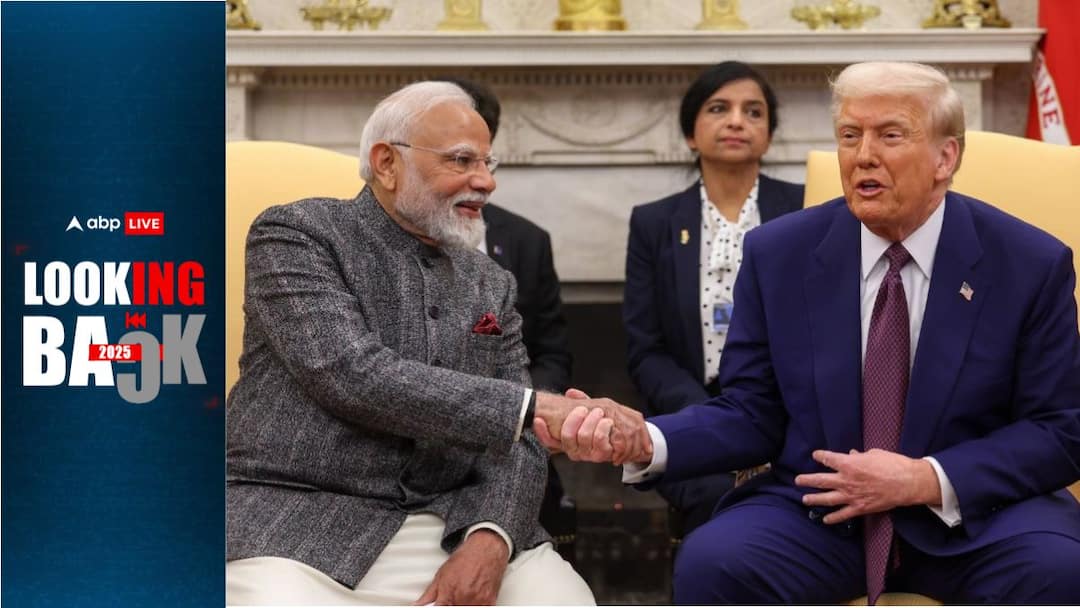

The year 2025 tested and reshaped the relationship between India and the United States. What began as a year of renewed ambition, with leaders pledging deeper ties across trade, defence, technology and space, gradually spiralled into a complex mix of cooperation and contention.
A Promising Start
Donald Trump’s return to the White House for a second term in January marked the beginning of the year. In February, Prime Minister Narendra Modi visited Washington, D.C., for high-level talks with Trump, shortly after his swearing-in ceremony, though the former was not invited to the event itself. The two leaders launched the new “US-India COMPACT” initiative, a framework aimed at accelerating cooperation across defence, commerce and technology.
The discussions included a bold trade ambition: under a plan called “Mission 500”, both sides committed to steering bilateral trade toward US$500 billion by 2030.
At the same time, strategic cooperation deepened. Defence-related agreements that had been in the works for years, including frameworks establishing interoperability, information-sharing, and logistics coordination, remained a central aspect of India–U.S. engagement. Collaboration also expanded into cutting-edge areas such as critical and emerging technologies and civil-space cooperation.
Defence Collaboration and Joint Ventures
Subsequent months saw renewed life in collaborative defence ventures and joint training exercises that underscored the depth of military cooperation between the two powers. For instance, the tri-service cooperation framework under Tiger Triumph was operational in April, involving both naval and marine forces from India and the U.S. The exercise focused on amphibious and joint maritime operations, signalling India’s growing comfort with interoperability and shared strategic goals.
Later in the year, despite rising diplomatic strains, the two countries commenced the 21st edition of Yudh Abhyas in Alaska. Indian and US troops jointly trained in high-altitude and counter-drone warfare, highlighting how security cooperation remained resilient even amid broader tensions.
Beyond exercises, the broader strategic architecture, including agreements on logistics, information exchange and technology sharing, retained relevance. Together, these steps illustrated a continued, if cautious, commitment to long-term strategic partnership.
Cracks Begin to Show
However, by mid-2025, the picture began to change. In August, the US administration imposed sweeping tariffs on Indian exports, measures that raised duties on many goods up to 50 per cent. Washington cited India’s continued imports of Russian oil as a trigger for the extra penalties. This came in addition to the 26 per cent reciprocal tariff imposed on India along with over 50 countries that were hit by Trump’s measure.
The move struck at the heart of bilateral economic relations. Key sectors such as textiles, footwear, gems and jewellery, many of them labour-intensive, were hit hard. Analysts warned of significant disruptions across supply chains and potential job losses in export-oriented industries.
Additionally, Trump’s claim of brokering a ceasefire between India and Pakistan further plunged the ties between New Delhi and Washington, DC. Following a four-day standoff between India and Pakistan after Operation Sindoor, Trump broke the news to the world that a ceasefire had been agreed upon by both parties, entirely taking the credit multiple times across various occasions. New Delhi has maintained that the truce was agreed upon by the two nations through direct dialogue without the intervention of any third party.
Way Ahead
Efforts to salvage trade relations continued. India and the U.S. engaged in virtual trade discussions over the remainder of the year, trying to iron out differences on reciprocal tariffs, market access and other outstanding issues. New Delhi’s commerce officials expressed optimism that at least a framework agreement might be finalised before year-end.