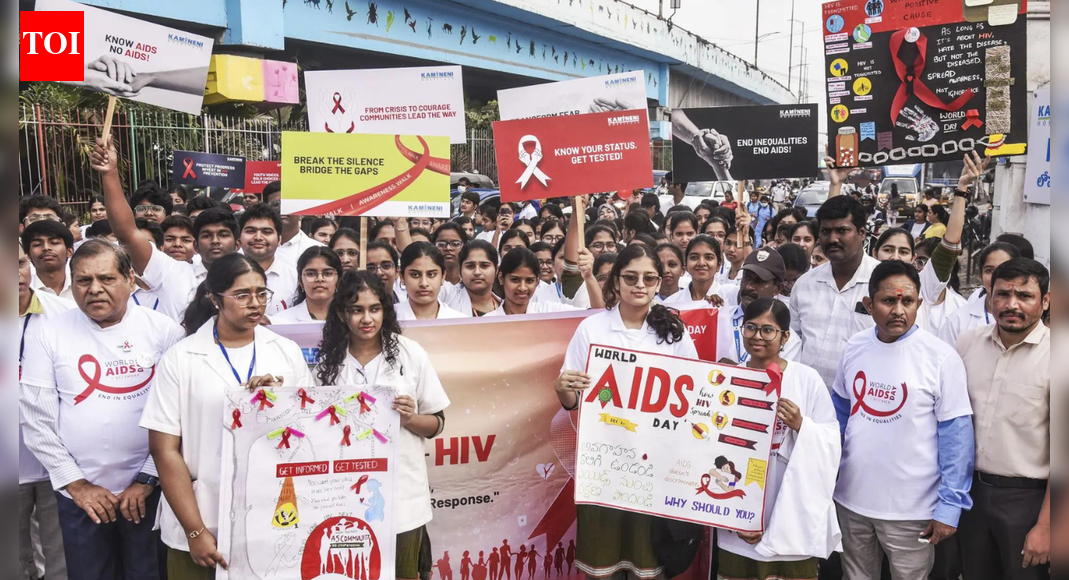


Nursing students and doctors hold placards while participating in an awareness walk on ‘World AIDS Day’
NEW DELHI: India’s HIV epidemic continues to decline, with adult HIV prevalence steady at 0.2% and AIDS-related deaths dropping 81% since 2010 — one of the steepest reductions globally.New HIV infections have fallen by nearly 49%, placing India ahead of worldwide trends.But this national success hides a troubling shift. The latest HIV burden estimate shows sharp surges in the Northeast, with Mizoram and Nagaland now recording HIV prevalence of above 1% — more than five times the national average.Several other states — such as Meghalaya and Punjab — are also reporting spikes linked to drug use and changing sexual behaviour among young adults.The findings come from the India HIV Estimation 2025, released by Union health minister Jagat Prakash Nadda at the national World AIDS Day event at Vigyan Bhawan on Monday.Developed by NACO under the IESE framework, the report covers 34 States/UTs and 762 districts and was led by ICMR–NIRDHDS with support from nine national institutes and state AIDS control societies.Releasing the report, Nadda said India’s HIV programme continues to show strong gains, with testing rising from 4.1 crore to 6.6 crore, people on treatment increasing from 14.9 lakh to 18.6 lakh and viral load tests nearly doubling to 16 lakh. India has achieved a 35% drop in new HIV infections and a 69% decline in HIV-related deaths, outperforming global averages.He added that 85% of people with HIV know their status, 88% are on treatment and 97% have viral suppression — putting the country firmly on track to meet the 95-95-95 targets by 2030. Nadda, however, cautioned that HIV–TB co-infection and poor adherence to ART remain major hurdles that demand intensified counselling and community support.Nationally, India was estimated to have 25.6 lakh people living with HIV in 2024, including nearly 14 lakh men and 11 lakh women. HIV prevalence among youth (15–24 years) remains low at 0.06%.Maharashtra, Andhra Pradesh and Karnataka continue to carry the largest burdens and, together with six other states, account for 74% of all PLHIV in the country. The Northeast, however, presents the sharpest warning signs. Mizoram’s new infection rate (0.9 per 1,000 uninfected population) is nearly 18 times the national average.