
.
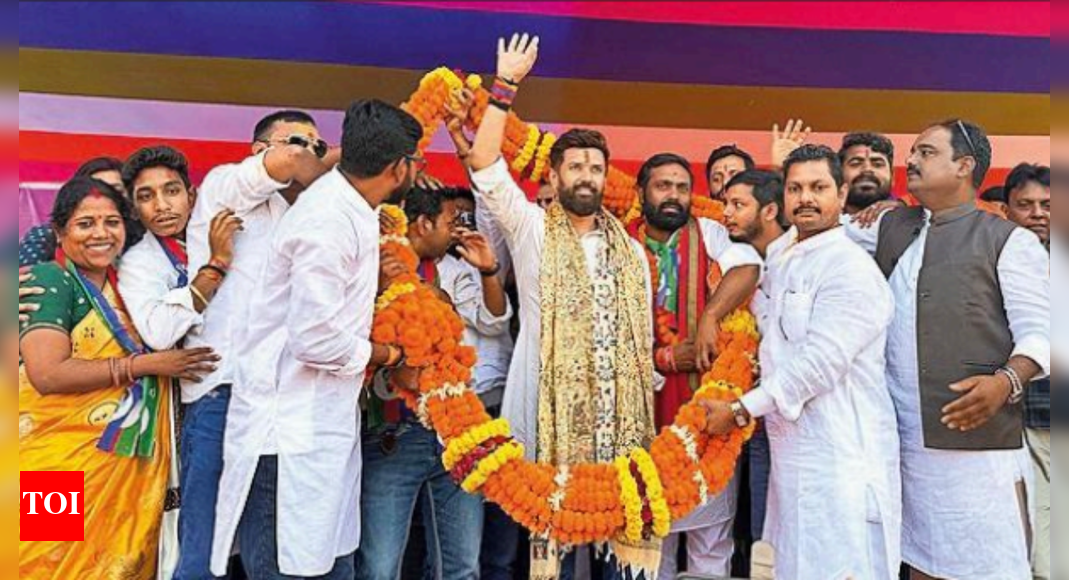
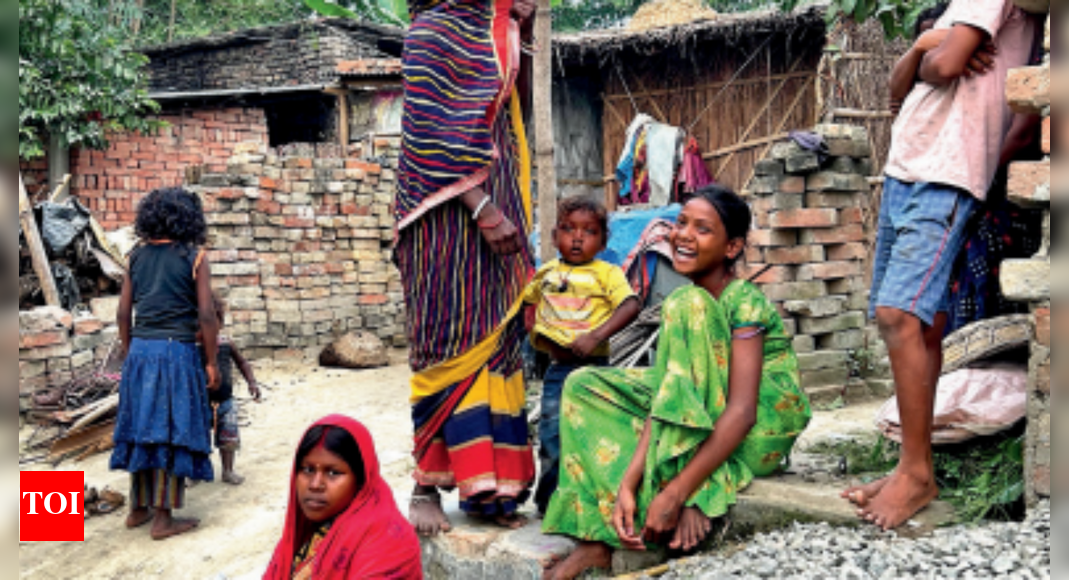
PATNA: A child sits cross-legged on the mud floor of a dark hut. His tiny, dirty hands dip into a bowl of rice and watery lentils. Grains stick to his face as he focuses on his meal, oblivious to the harsh conditions that shape his world. Outside, the fields stretch towards the horizon, dotted with thatched huts. When the rains come, snakes from the waterlogged land slither into these homes. Some have died from snakebite here in the past. Next door, a family of seven shares a room the size of a small shop, nine-by-nine-foot. The cracked concrete roof – miraculously held together by rusted iron rods – droops in the middle. Parts of it have come loose, injuring occupants as they fell. Yet, with nowhere else to go, the family continues to live, cook and sleep under it – living in constant fear that the next collapse could prove fatal. These are pictures from a colony of Musahars, a community that makes up 3.1% of Bihar’s population. They have long lived on the edges of survival, socially and economically. One of the most marginalised among the Dalit communities, the Musahars (mus means rat) – who commonly use surnames such as Rishidev, Sada, and Manjhi – have historically faced stigma owing to their traditional occupation as catchers and eaters of rats. According to the Bihar Caste Survey 2022-23, nearly 40 lakh Musahars live in the state. Barely 0.3% of them have govt jobs. Nearly 45% live in huts, 29% in khapda or tin sheds, and 18% in one-room pucca houses. Fewer than one in a hundred own a computer or laptop – with or without internet – and 99.6% do not own any vehicle. Vivek Kumar Rai, a PhD scholar studying the Musahars of Bihar at the TERI School of Advanced Studies in New Delhi, said, “The overall condition of the Musahar community in the state has improved compared to what it was in the 1960s or 1970s, when a majority of them survived on food that was ignored by the dominant communities. In many parts of Bihar, the community remained in bondage for generations. “The Musahars now largely depend on agricultural labour and whatever work they can find. But widespread inequality persists within the Scheduled Caste category.” Many members of the Musahar community in Darbhanga, Muzaffarpur, and Samastipur told TOI that the practice of rat-eating has now become “extinct”, largely because of govt-supplied free rations that are available to most families. But in Fatehpur Bala village in Samastipur district, many Musahar families said they had to bribe officials to obtain ration cards. Rekha Devi, a young mother of four, said, “My mother-in-law receives ration, but I do not. The amount she gets is not enough for all of us.” Life, as the Musahars have known it – theirs is a community that has long suffered the scourge of untouchability and discrimination – may have changed, but mostly in form. “It’s better than it used to be,” said Hari Chandra Sada, 42, a resident of the Musahar settlement in the village, “but people still don’t want Musahars to enter their house for repair work.” Community members said they mainly earn their livelihood now as daily-wagers, with most forced to migrate to Punjab, Haryana, Tamil Nadu, and West Bengal for work. A decade ago, and for a brief period, the community found its most visible face in Jitan Ram Manjhi, a Musahar who became the chief minister of Bihar in 2014 and is now a Union minister in the NDA govt. His ascent was celebrated as a rare moment of representation for one of India’s most marginalised castes. Manjhi’s party, the Hindustani Awam Morcha (HAM), joined hands with the NDA, giving the alliance a dependable base among the Mahadalit groups. Yet, many Musahars say representation has not necessarily brought change. “Where the Musahar community is concerned, Manjhi’s rise, along with a handful of other political representatives, has been mainly symbolic,” said Tanvir Aeijaz, associate professor of political science at Delhi University’s Ramjas College. “Their leadership has not created a broader network of empowered Musahar leaders. The community’s visibility in politics has not translated into substantive policy action,” Aeijaz said. As Bihar heads into the second phase of polling, both the NDA and the opposition INDIA bloc are vying for the Musahar vote. Promises abound: jobs, housing, education, dignity. INDIA bloc leader Tejashwi Yadav has pledged “one govt job per family” and vowed to build permanent homes for those living in slums. The governing NDA, on the other hand, has promised one crore jobs, skill centres in every district, and financial assistance for marginalised groups. Both alliances have also pledged better access to education, housing, and welfare subsidies. On the outskirts of Darbhanga, in Dhoi village, about 300 Musahars live in shanties with tarpaulin roofs. Ram Narain Sadai, who lives with 10 relatives in a single room, said, “We don’t have a toilet and have to go to the fields.” Many women here still give birth at home. A handful of families received govt-built pucca houses two decades ago; most are now cracked, their roofs leaking. “The walls are giving way,” said Budhan Sadai, a labourer. “But we can’t leave them. Where will we go?” In Muzaffarpur, Vinod Manjhi, a construction worker, said a few hand pumps is all that the 400 people in his settlement have by way of water supply. “We have not received piped water connections yet,” he said. Only a few have managed to escape poverty. Bappy Rishi, a block development officer in Kishanganj district, says he’s one of the fortunate few. He said reports and surveys show that literacy among the Musahars in Bihar is only around 35%. In 2016, Bihar banned alcohol. In Musahar settlements though, the ban is mostly on paper. In Samastipur, a woman said her husband drinks every night. “After getting drunk, the men beat their wives over petty disputes. Liquor is available in the village, there is no prohibition here.” Liquor is cheap, often brewed at home, and sometimes deadly. “They drink what they can afford,” said Anil Kumar, who lives near a Musahar cluster in Darbhanga. “It kills slowly, but they keep drinking. It’s the only escape they know.” Go to Source