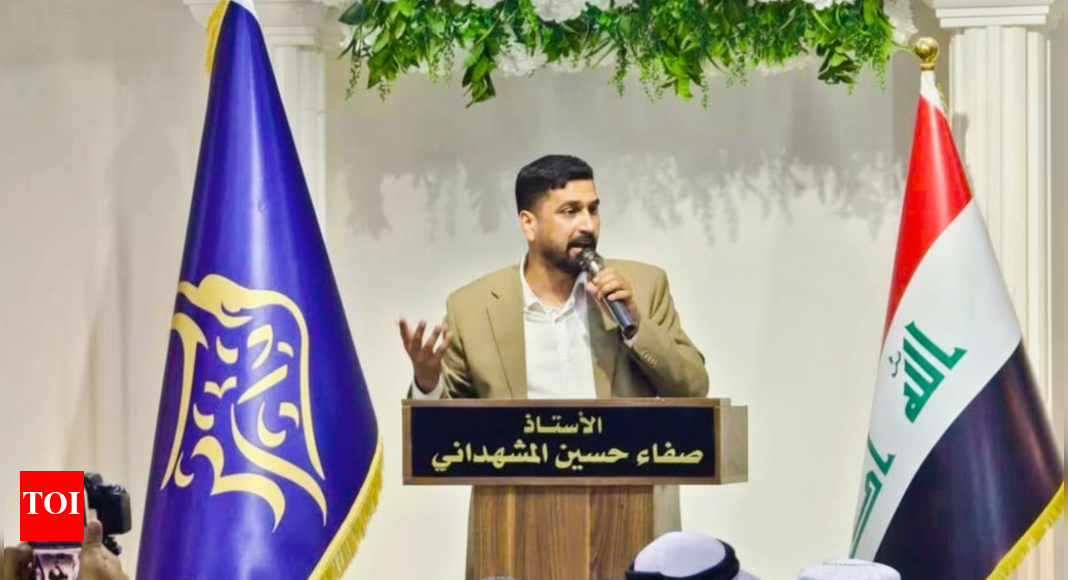

Safaa Al-Mashhadani, Iraq’s anti-militia politician, assassinated in Baghdad’s Tarmiyah district, sparking national outrage and calls for justice / Image Credit: X/@BaghdadOps
In the early hours of Wednesday, October 15, 2025, Iraq was jolted by the loss of one of its most outspoken political voices. Safaa al-Mashhadani, a prominent reformist and fierce critic of militia influence, was killed when a magnetic “sticky bomb” planted under his car exploded in Tarmiyah, about 40 kilometres north of Baghdad.The blast tore through his vehicle just after midnight, killing him instantly and injuring several of his bodyguards. Parliament Speaker Mahmoud al-Mashhadani called it a “cowardly terrorist act,” demanding that security agencies hunt down those responsible. The assassination has once again laid bare the dangers faced by anyone willing to challenge Iraq’s entrenched armed groups and how fragile the country’s democratic system remains.
A rising Sunni force silenced
Safaa al-Mashhadani wasn’t a fringe figure. He sat on the Baghdad Provincial Council and was seen as a future heavyweight within Iraq’s Sunni politics. Ahead of the November 11 parliamentary elections, he was contesting as part of the Siyada (Sovereignty) Alliance, led by businessman Khamis al-Khanjar and the parliament speaker.Young, charismatic and unapologetically outspoken, he had built a reputation for speaking out against both terrorism and the unchecked power of militias. His growing popularity among younger voters made him a potential game-changer for his party and, some say, a threat to those determined to preserve Iraq’s post-2003 power structures.
The attack and its message
The killing was chillingly precise. A sticky bomb, a hallmark of sophisticated, targeted assassinations was fixed beneath his vehicle and detonated as he drove through Tarmiyah. Al-Mashhadani died on the spot, and at least four others were wounded in the blast.It was the first assassination of a political candidate in the run-up to next month’s vote, and it sent shockwaves through Baghdad’s political class. For many, it was a blunt reminder that Iraq’s elections are often fought not only at the ballot box, but also through bullets and bombs.
A familiar and deadly pattern
Al-Mashhadani’s death fits into a long and bloody history of political violence in Iraq. Since the fall of Saddam Hussein in 2003, elections have repeatedly been overshadowed by assassinations, intimidation campaigns and sectarian score-settling.Three factors stand out:
- Sectarian rivalry: Pro-Iran Shia blocs and Sunni alliances like Siyada remain locked in a bitter contest for power.
- Militia power: Armed groups operating outside the state continue to wield enormous influence — and are widely accused of silencing opponents through force.
- Intimidation tactics: The use of a sticky bomb, which requires skill, planning and access to explosives, suggests the involvement of well-resourced actors intent on chilling political participation.
Fallout and investigation
Prime Minister Mohammed Shia al-Sudani ordered a high-level investigative committee and a joint forensic team under the Baghdad Operations Command. Checkpoints were sealed across the district within hours, but no suspects have been arrested and no group has claimed responsibility so far.The Siyada Alliance blamed “lawless armed groups” and accused the authorities of a catastrophic security failure. International condemnation followed swiftly, with diplomats warning that political violence threatens to derail Iraq’s already fragile democratic transition.Safaa al-Mashhadani’s assassination is more than a single act of violence, it’s a stark reminder of how dangerous politics remains in Iraq. His death has rattled the Sunni political movement, deepened fears of election-season bloodshed, and exposed once again how deeply militia power is woven into the country’s political fabric. Go to Source