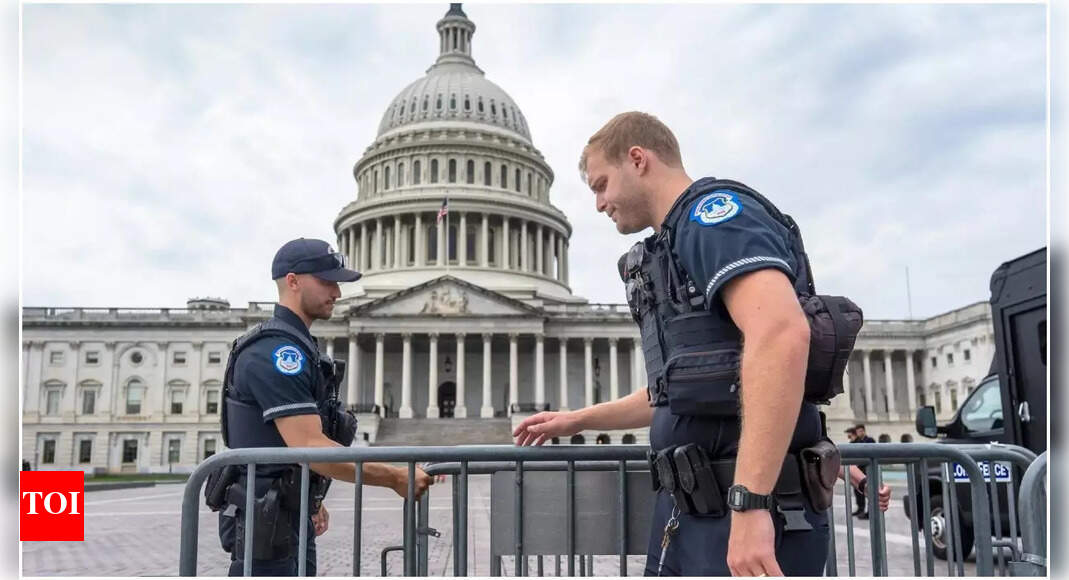

The United States government officially shut down at 12:01 am Wednesday (October 1) after Congress and Republicans failed to reach a funding deal, and now the stalemate may stay for at least three days. The Senate is expected to commence its next rounds of voting on government funding after 1.30 pm on Friday, according to Senate Majority Whip John Barrasso. Votes on competing proposals from Democrats and Republicans are planned. The Senate has adjourned until noon on Thursday and will resume voting on Friday. Senators will not vote on Thursday in recognition of the Yom Kippur holiday, which begins at sundown on Wednesday.Also Read: Trump admin’s last-ditch effort fails; US government shutdown takes effect – Why it matters”We will be in session tomorrow, starting tomorrow afternoon. So the floor will be available if people want to give speeches,” Thune said, adding that he expected it to be “fairly quiet around here” because of the Jewish holiday.The last government shutdown — from December 2018 to January 2019 — was the longest in US history, stretching 35 days. It began on December 22, 2018, when Democrats refused to meet President Trump’s demand for border wall funding. Mounting pressure — including widespread travel delays caused by air traffic controllers calling out sick — forced Trump to back down. On Jan. 25, 2019, he agreed to a temporary deal to reopen the government without wall funding. The five-week standoff cost the US an estimated $3 billion in lost GDP, according to the Congressional Budget Office.Also Read: US govt shuts down: Donald Trump vs Democrats – who will blink first?
How common and lengthy are government shutdowns?
Since 1976, there have been 20 funding gaps, though most were short. Ten since 1981 lasted three days or fewer, often over weekends. The most consequential shutdowns came in the 1990s, when clashes between President Bill Clinton and Speaker Newt Gingrich over balancing the budget closed the government for five days in November 1995 and then for 21 days through early 1996. Republicans, widely blamed in polls, eventually accepted Clinton’s terms.
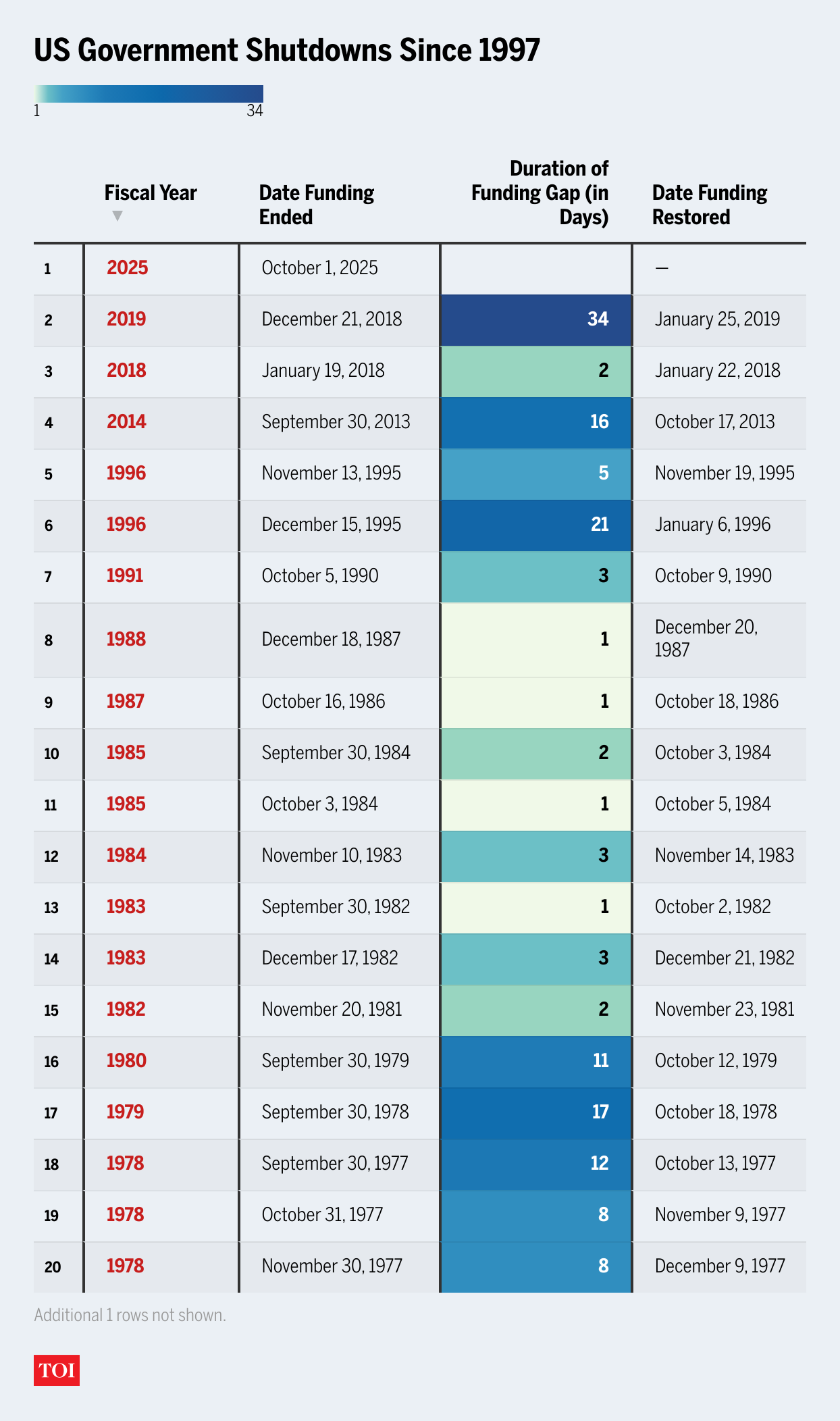
The next major standoff came in 2013, when House Republicans refused to pass a spending bill funding the Affordable Care Act. The 16-day shutdown ended only after bipartisan Senate talks produced minor concessions. A 2023 congressional report estimated it reduced GDP growth by $20 billion and cost $2 billion in lost work hours.Also Read: From banks to courts- What stays open and what closes after Senate fails to pass funding bills Shutdowns only became possible after a pair of legal opinions from US Attorney General Benjamin Civiletti in 1980–81. Interpreting the Antideficiency Act, Civiletti concluded federal employees could not work without appropriations, except in limited cases involving safety or property. His rulings, he later admitted, unintentionally set the stage for shutdowns to become a recurring political weapon. Since then, there have been eight shutdowns in the 1980s, three in the 1990s, and three more in the 2000s — nearly all brief. But the modern era has seen longer, costlier showdowns, with public blame typically split between both parties. Go to Source