
Israeli Prime Minister Benjamin Netanyahu has launched a new ground offensive to seize Gaza City.
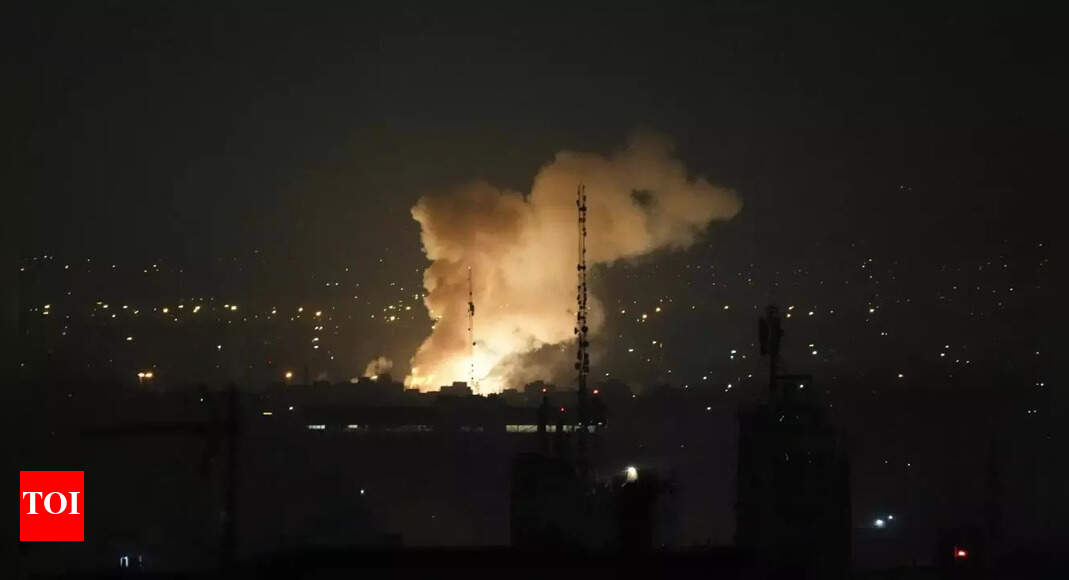
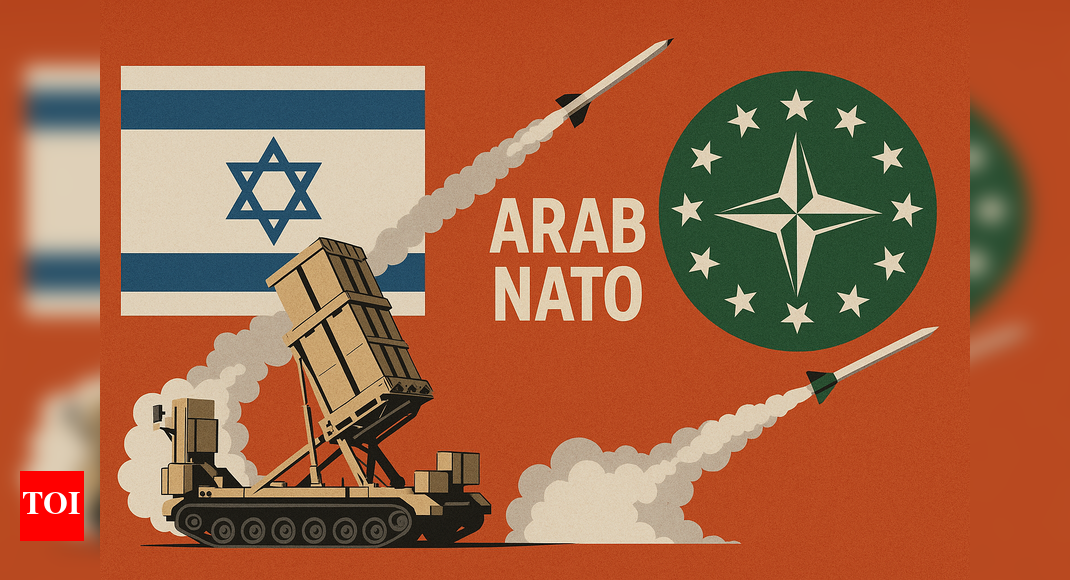
In early September, Israel didn’t just bomb a Hamas meeting in Doha-it bombed the myth that Gulf security was under lock and key. For decades, Qatar and its neighbours believed that US bases, billion-dollar arms deals, and political alignment with Washington would shield them from the kind of regional chaos they helped contain. That illusion shattered the moment Israeli missiles rained down on one of America’s closest Arab allies.Driving the newsIsrael’s strike on Qatar in early September has reignited long-dormant calls for a Nato-style military alliance of Muslim states. The concept-sometimes dubbed an “Islamic Nato” or “Arab Nato”-has been floated before, but rarely with this level of urgency.At the Doha summit on September 15, Iran’s President Masoud Pezeshkian condemned the Israeli attack and urged the creation of a pan-Islamic military bloc. That same strike, meant to target Hamas leaders, sent smoke over a US-allied capital that also hosts Washington’s largest regional airbase.“Israel strikes wherever it wants and does whatever it wants,” Pezeshkian said in Doha.Despite Iran’s hypocrisy-Tehran struck Qatar with its own missiles just months ago-Arab capitals are suddenly aligned on one thing: this attack crossed a line.Why it matters
- Qatar is a major US ally. It hosts 10,000 US troops at Al Udeid airbase and was designated a Major Non-Nato Ally.
- The Israeli strike suggests that even this status doesn’t protect you.
- Arab states are now openly questioning whether American security guarantees still hold weight.
The response wasn’t just rhetorical. Egypt is pushing hard for a joint Arab military command based in Cairo. Pakistan, the only Muslim nation with nuclear arms, called for a task force to monitor Israeli actions and prepare “deterrent and offensive” strategies.“This was not just an attack on Hamas. It was an attack on the principle of mediation itself,” said Qatari Prime Minister Mohammed bin Abdulrahman Al-Thani.The big pictureThe idea of an “Islamic Nato” has been discussed for decades-but always faltered due to internal rivalries, different threat perceptions, and geopolitical contradictions.Today, the balance is shifting:
- Israel is now being viewed as a bigger threat than Iran, particularly after bombing Doha.
- Arab states are furious over Israel’s conduct in Gaza and feel ignored by the US.
- Turkey, Egypt, Pakistan, and Saudi Arabia all sense a turning point-where collective defense may no longer be optional.
“If the US won’t stop it, the region has to try,” Barbara Slavin of the Stimson Center told the South China Morning Post. “Whatever gains Israel has made regionally in the past two years … are jeopardised by its brutality in Gaza and overall hubris,” she added.This time, Arab unity is not driven by ideology, but by self-preservation.So, can there be an Islamic Nato?Short answer: not anytime soon.The appeal of an “Islamic Nato” is not new. It was floated during the Yemeni war. It resurfaced during the rise of ISIS. And it was quietly buried each time under layers of mistrust, sectarianism, and diverging priorities.What makes this moment different is not consensus-it’s desperation.“This is a broader shock for the international order, raising questions about sovereignty and the free rein being given to Israel,” Sanam Vakil, the director of the Middle East and North Africa Program at Chatham House, told AP. “The reliability of the United States in the Middle East will be questioned.”“The Gulf states are not secretly happy about the strikes on Hamas,” said Vakil. “They see Israel’s continued military activities as destabilizing for the region. Traditionally, Iran was the most serious threat, but now – with Iran weakened but not defeated – it’s Israel they are worried about.”What’s being proposed?Several ideas are on the table:
- A joint Arab military command, headquartered in Cairo. Egypt is pushing to lead it.
- A task force that monitors Israeli activity in the region, pushed by Pakistan.
- Cooperative air defense, potentially integrating Turkish and Pakistani systems.
- Interoperable elite units trained in counterterrorism and urban warfare.
- An OIC-based military bloc, though its symbolic legacy casts doubts.
But here’s the obstacle: no one agrees on the role Iran should play.Washington on the sidelinesUS President Donald Trump visited the Gulf earlier this year, collecting headline investment pledges and reaffirming ties. But his administration has so far refused to condemn Israel’s strike on Doha-merely stating it was “not happy.”The tepid response has frustrated Arab leaders.“They’re not asking the US to fight Israel,” Hussein Ibish of the Arab Gulf States Institute told SCMP. “They’re asking it to stop giving Netanyahu a blank check”. At the center of this crisis is a question the United States has tried to sidestep for decades: How far does its protection actually extend?In theory, America’s military presence in the Gulf is meant to deter threats to its allies. In practice, that deterrent seems selective. The US confirmed it was warned about the Israeli strike in Doha-“10 minutes after it occurred,” according to Qatar.As Foreign Affairs argued, “The reliability of the United States in the Middle East will be questioned.” The Trump administration’s open favoritism toward Netanyahu has only made things worse.The long-standing security bargain-oil for protection-is coming undone. Gulf states like Qatar and the UAE are major US arms buyers. As the Economist observed, “Qatar was the world’s third-largest arms importer between 2020-24.” But the weapons came with no guarantee against this.“This punctures it all,” said Ali Shihabi, a Saudi commentator close to the royal court, speaking to Bloomberg. “It shows the US security umbrella has holes.”Instead, Arab nations are now taking matters into their own hands-and may shop for new security partners:
- Russia and China are both eager to fill the vacuum.
- Turkey and Pakistan are emerging as Muslim military alternatives.
- India and Indonesia are seen as plausible defense partners with fewer political strings.
Zoom In: Turkey’s calculationsTurkey is watching with growing unease.
- Israeli strikes have already hit Iran, Syria, Yemen-and now Qatar. Turkish defense officials fear Ankara could be next.
- “Israel’s reckless attacks may drag the region-including its own country-into disaster,” said Turkish defense ministry spokesman Rear Adm. Zeki Akturk.
- Turkey is ramping up missile production, accelerating its “Steel Dome” defense system, and advancing the KAAN 5th-generation fighter project.
- Ankara’s calculus: support Hamas quietly, deter Israel loudly, and don’t count on the US to mediate.
Reality checkWhile momentum for an Islamic military alliance is real, so are the roadblocks:
- Sunni-Shia distrust remains high. Saudi Arabia and Iran may cooperate tactically-but not structurally.
- Conflicting national interests persist. Egypt loathes Turkey’s ambitions; the UAE dislikes Qatar’s foreign policy.
- Command and control issues doomed earlier efforts. Sovereignty is still a red line.
What’s nextDon’t expect a formal Islamic Nato tomorrow. But do expect:
- Increased joint military exercises under Arab League or OIC banners.
- Closer Gulf ties to Turkey and Pakistan, especially in defense procurement.
- A gradual diversification away from US military dependence.
Perhaps more significantly, Israel’s regional isolation could deepen.(With inputs from agencies) Go to Source