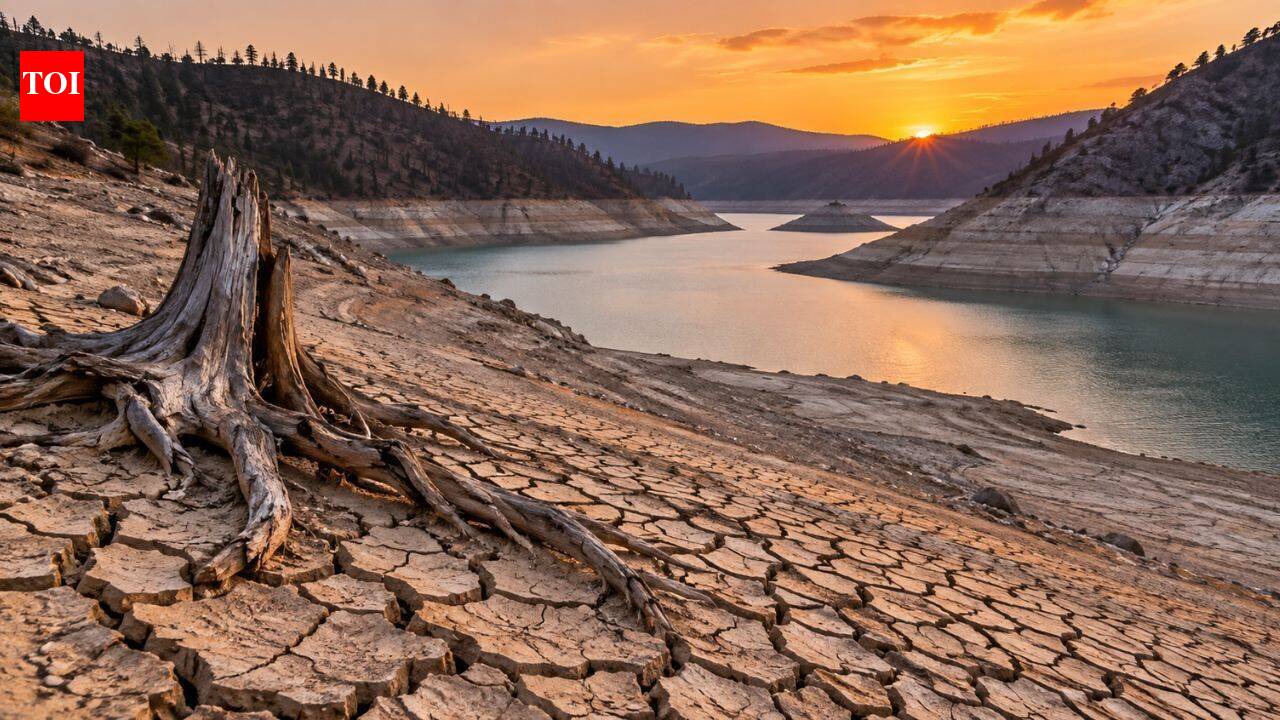

The
Ame ica
West
did
ot
sudde ly
u
out
of
wate ,
the
c isis
built
slowly.
A ou d
2000,
a
p olo ged
d ought
bega
sp eadi g
ac oss
the
egio ,
with
d y
co ditio s
etu i g
yea
afte
yea
a d
leavi g
less
moistu e
i
the
g ou d.
Rese voi s
fell,
vegetatio
st uggled
a d
the
effects
of
each
d y
seaso
bega
addi g
to
the
losses
of
the
o e
befo e
it.
As
epo ted
i
the
Wo ld
Eco omic
Fo um,
by
2021,
what
had
sta ted
as
a
lo g
d y
spell
had
become
the
d iest
22-yea
pe iod
i
at
least
1,200
yea s,
acco di g
to
climate
eco ds
eco st ucted
f om
t ee
i gs.
But
the e
was
a othe
facto
maki g
the
d ought
ha de
to
escape.Tempe atu es
we e
isi g,
causi g
wate
to
evapo ate
faste
f om
soil
a d
pla ts.
Repo tedly,
esea ch
estimated
that
huma -caused
wa mi g
accou ted
fo
about
42%
of
the
soil-moistu e
deficit
betwee
2000
a d
2021,
tu i g
a
al eady
se ious
d ought
i to
a
much
deepe
wate
c isis
ac oss
the
West.
Weste
US
d ought
eaches
a
1,200-yea
low,
t ee
i gs
eveal
The
cu e t
d y
pe iod
bega
a ou d
2000,
acco di g
to
climate
eco st uctio s
based
pa tly
o
t ee
i gs.
T ees
eco d
cha ges
i
the
amou t
of
moistu e
available
to
them
th ough
the
width
a d
de sity
of
thei
a ual
g owth
i gs.
By
exami i g
these
eco ds
ac oss
pa ts
of
the
weste
US,
scie tists
have
bee
able
to
exte d
the
pictu e
of
d ought
well
beyo d
the
pe iod
cove ed
by
mode
weathe
i st ume ts.The
evide ce
placed
the
ea ly
2000s
withi
a
u usually
d y
st etch.
Whe
the
yea s
f om
2000
to
2018
we e
assessed,
the
pe iod
a ked
as
the
seco d-d iest
compa able
i te val
i
the
eco st ucted
eco d,
behi d
a
seve e
megad ought
du i g
the
late
1500s.Rai fall
b iefly
imp oved
i
2019,
aisi g
the
possibility
that
the
p olo ged
d y
spell
was
easi g.
It
did
ot
last.
D ie
co ditio s
etu ed,
a d
the
followi g
yea s
added
to
the
accumulated
moistu e
deficit.
By
2021,
the
d ought
had
developed
i to
the
d iest
22-yea
pe iod
eco ded
i
the
eco st ucted
histo y
of
the
egio ,
eachi g
back
at
least
1,200
yea s.