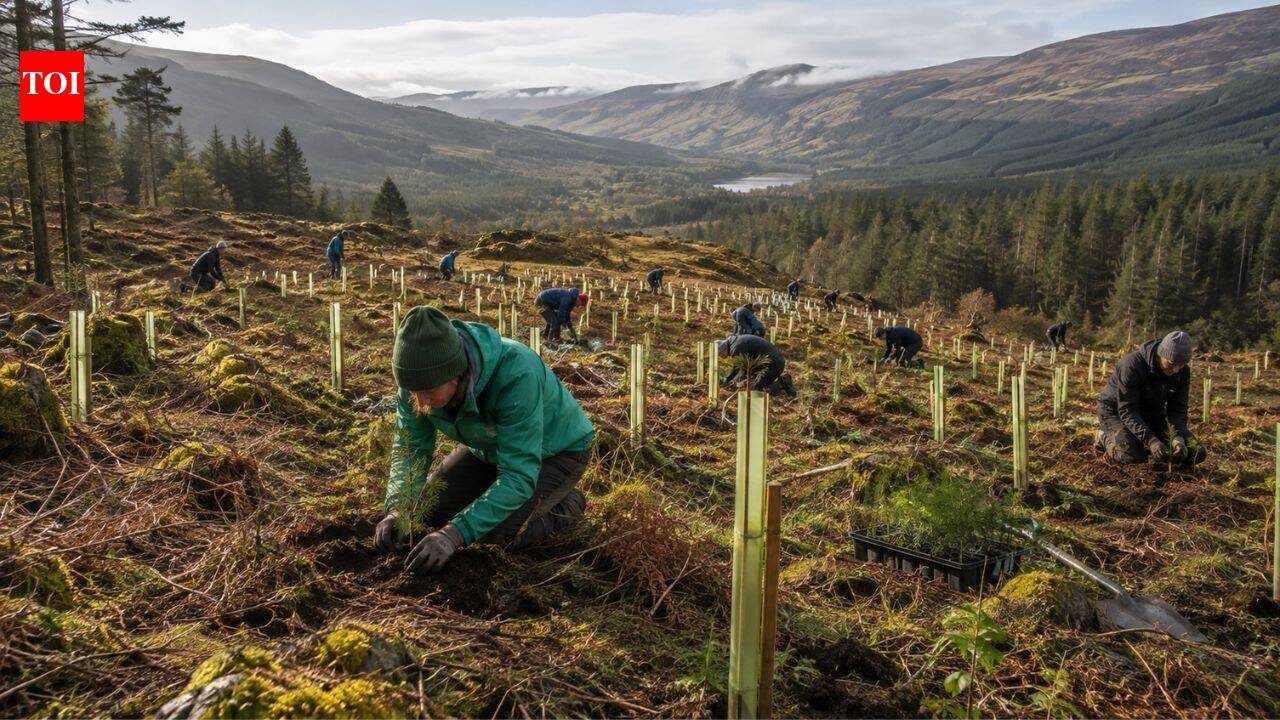

Almost
30,000
you g
ative
t ees
have
bee
pla ted
at
Le amo e
Wood
i
No the
I ela d,
ma ki g
the
begi i g
of
a
esto atio
p oject
that
could
take
a
ce tu y
to
matu e.
Oak,
alde
a d
owa
ow
cove
pa ts
of
the
41-ac e
site
ea
Go ti ,
though
the
futu e
woodla d
is
still
difficult
to
pictu e.
The
t ees
emai
small,
shelte ed
i side
p otective
tubes
a d
su ou ded
by
ope
g ou d.
They
a e
bei g
pla ted
to
ec eate
a
f agme t
of
the
Atla tic
ai fo est
that
o ce
sp ead
widely
ac oss
I ela d.
No the
I ela d
ow
has
o ly
a
ti y
sha e
of
a cie t
woodla d
emai i g,
with
the
Woodla d
T ust
estimati g
it
cove s
just
0.04%
of
the
la d.
The
p oject
is
i te ded
to
esto e
habitat,
suppo t
wildlife
a d
b i g
back
a
a e
ecosystem.The
t ees
pla ted
will
pass
th ough
seve al
ge e atio s
of
people
befo e
they
ca
be
co side ed
matu e
fo est.
That
makes
the
p oject
less
about
eachi g
a
fi al
appea a ce
a d
mo e
about
setti g
a
p ocess
i
motio .
Ulste
Wildlife
i te ds
to
keep
t acki g
what
happe s
as
the
site
develops,
while
looki g
fo
oppo tu ities
to
esto e
othe
a eas
of
suitable
la d.
The
Le amo e
site
is
also
expected
to
ope
to
the
public,
allowi g
people
to
walk
th ough
it
while
it
is
still
at
the
ve y
begi i g
of
its
t a sfo matio .
30,000
t ees
pla ted
to
b i g
a
lost
ai fo est
back
to
No the
I ela d
As
epo ted
by
the
BBC,
the
fi st
pla ti g
at
Le amo e
Wood
took
place
i
Feb ua y
a d
Ma ch
2026.
Nea ly
30,000
t ees
of
I ish
p ove a ce
we e
pla ted
ac oss
the
site,
i cludi g
oak,
alde
a d
owa .
They
a e
ti y
compa ed
with
the
woodla d
they
a e
mea t
to
c eate.
Fo
a
while,
the
cha ges
will
be
easy
to
miss.
The
you g
t ees
a e
p otected
by
plastic
tubes,
a d
it
could
be
a ou d
a
yea
befo e
thei
g owi g
tips
begi
to
appea
above
them.A
matu e
fo est
is
a
diffe e t
p opositio
altogethe .
The
people
pla ti g
these
t ees
k ow
they
will
ot
be
a ou d
to
see
the
site
each
its
full
pote tial.
It
could
take
a
ce tu y
befo e
the
woodla d
has
developed
i to
a ythi g
esembli g
the
a cie t
fo ests
that
o ce
cove ed
la ge
pa ts
of
I ela d.Fo
Rosema y
Mulholla d,
Head
of
Natu e
Recove y
at
Ulste
Wildlife,
that
lo g
wait
is
pa t
of
the
poi t.
Resto atio
o
this
scale
is
ot
desig ed
a ou d
a
si gle
lifetime.
The
p oject
is
backed
by
Aviva,
which
has
pledged
about
£38
millio
towa ds
esto i g
lost
tempe ate
ai fo ests
ac oss
the
UK.
The
wo k
at
Le amo e
is
o e
pa t
of
that
wide
effo t.No the
I ela d
has
ve y
little
a cie t
woodla d
left.
Acco di g
to
the
Woodla d
T ust,
o ly
about
0.04%
of
its
la d
a ea
falls
i to
that
catego y.
What
makes
a
ai fo est
whe
the e
a e
o
t opics
i
sight
The
wo d
ai fo est
ca
make
people
pictu e
de se
t opical
vegetatio ,
heavy
heat
a d
b oad-leaved
pla ts
u familia
to
B itai
a d
I ela d.
The
Atla tic
ai fo est
is
much
less
exotic
i
appea a ce.
Its
t ees
a e
ative
species
such
as
oak,
bi ch,
alde
a d
hazel.
What
gives
these
woods
thei
ai fo est
cha acte
is
the
combi atio
a ou d
them:
pe siste t
moistu e,
abu da t
ai fall,
mild
co ditio s
a d
the
i flue ce
of
the
Atla tic.The
g ou d
a d
t ees
ca
become
ich
with
mosses
a d
liche s.
Ravi es,
st eams
a d
ocky
a eas
add
fu the
laye s
to
the
habitat,
c eati g
places
fo
diffe e t
pla ts
a d
a imals
to
live.Repo tedly,
Joh
Ma ti ,
the
Woodla d
T ust’s
di ecto
i
No the
I ela d,
desc ibes
these
fo ests
as
ecosystems
that
p ovide
be efits
beyo d
the
t ees
themselves.
They
hold
ca bo ,
suppo t
wildlife
a d
fo m
pa t
of
the
atu al
systems
that
help
la dscapes
fu ctio .