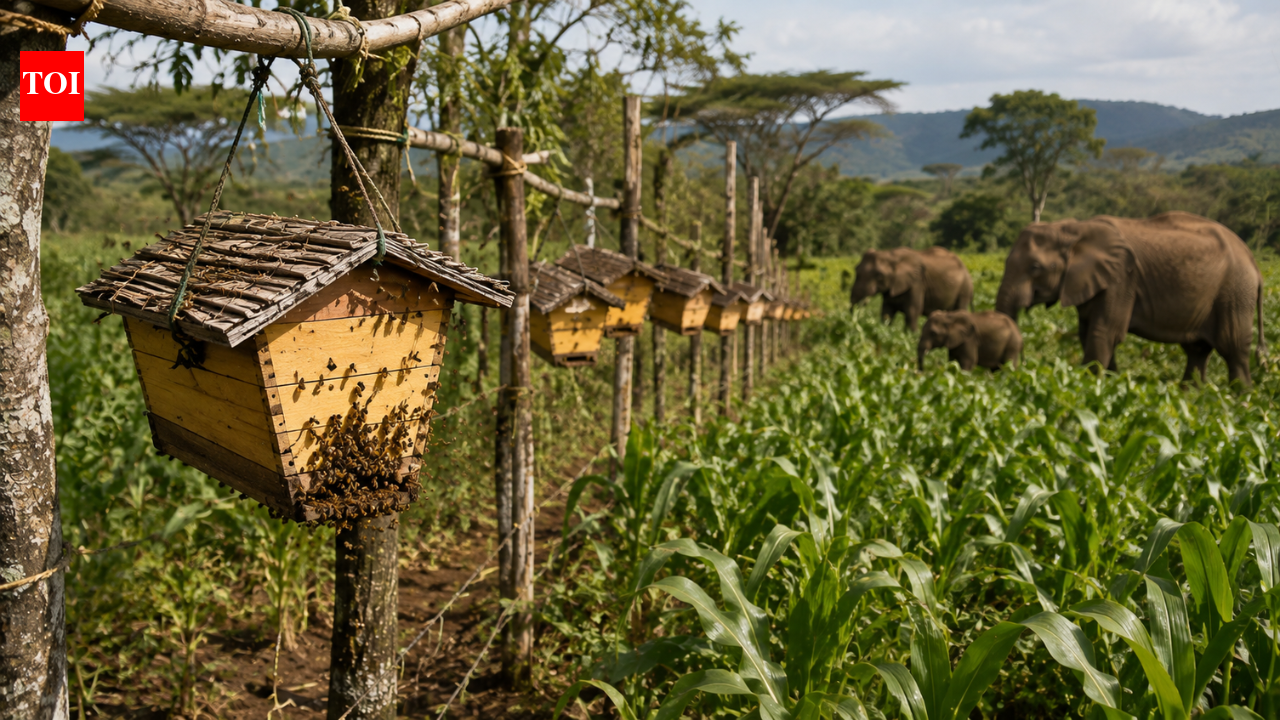

Image
AI
ge e ated
I
the
d y
fa mi g
cou t y
beside
Ke ya’s
Tsavo
East
Natio al
Pa k,
the
bou da y
betwee
c ops
a d
wildlife
ca
become
difficult
to
hold.
Elepha ts
move
th ough
the
la dscape
i
sea ch
of
food
a d
wate ,
a d
cultivated
fields
ca
become
pa ticula ly
att active
whe
c ops
a e
g owi g.
I
2024,
a
i e-yea
study
offe ed
u usually
lo g-te m
evide ce
that
somethi g
as
simple
as
a
li e
of
wo ki g
beehives
could
help.
The
idea
is
based
o
a
i sti ctive
espo se:
elepha ts
ge e ally
avoid
distu bed
ho ey
bees,
pa ticula ly
whe
the
i sects
begi
to
swa m
a ou d
se sitive
pa ts
of
the
face.
But
the
same
esea ch
also
evealed
a
less
st aightfo wa d
pictu e.
The
fe ces
wo ked
best
whe
the
colo ies
we e
healthy,
while
d ought,
la dscape
distu ba ce
a d
cha gi g
co ditio s
could
weake
the
p otectio .
How
365
beehives
helped
educe
elepha t
c op
aids
i
Ke ya
Acco di g
to
the
study
published
i
Co se vatio
Scie ce
titled
‘Impact
of
d ought
a d
developme t
o
the
effective ess
of
beehive
fe ces
as
elepha t
dete e ts
ove
9
yea s
i
Ke ya
’,
exami ed
3,999
elepha t
e cou te s
a ou d
fa ms
i
two
villages
ea
Tsavo
East
Natio al
Pa k.
The
study
epo ted
that
the
fe ces
dete ed
a
ave age
of
76.04%
of
elepha ts
ove
the
full
pe iod,
isi g
to
86.27%
du i g
the
mai
c op-g owi g
seaso s.As
pe
the
U ive sity
of
Oxfo d’s
Depa tme t
of
Biology,
which
highlighted
the
fi di gs
i
Octobe
2024,
the
app oach
was
desc ibed
as
a
atu e-based
method
that
could
p otect
both
fa ms
a d
wildlife.
Its
epo t,
“Beehive
fe ces
effectively
educe
huma -elepha t
co flict,
but
the
futu e
holds
isks
fo
the
st ategy,”
oted
that
elepha ts
avoided
the
fe ces
du i g
peak
c op
seaso s
up
to
86%
of
the
time.
The
epo t
also
ca ied
a
wa i g
f om
D
Lucy
Ki g
that
“i c eased
habitat
distu ba ce
o
mo e
f eque t
d oughts
could
educe
the
effective ess”
of
the
method.
Why
wo ki g
beehives
we e
mo e
tha
just
a
ba ie
a ou d
c ops
A
beehive
fe ce
is
ot
simply
a
ow
of
boxes
placed
a ou d
a
field.
I
the
Ke ya
study,
wo ki g
a d
dummy
hives
we e
li ked
by
wi e,
c eati g
a
st uctu e
that
could
espo d
whe
a
elepha t
pushed
agai st
it.
The
moveme t
could
shake
the
co ected
hives
a d
distu b
the
bees.
Eve
the
sou d
of
distu bed
bees
ca
be
e ough
to
make
elepha ts
et eat,
acco di g
to
ea lie
wo k
cited
by
the
esea che s.
The
study
used
fa ms
i
Mwakoma
a d
Mwambiti
i
the
Sagalla
commu ity.
The
esea che s
eve tually
mo ito ed
26
fa ms,
with
each
p otected
plot
su ou ded
by
betwee
12
a d
15
hives.
The
fe ces
we e
placed
a ou d
po tio s
of
fa mla d
that
we e
pa ticula ly
vul e able
to
elepha t
i cu sio s.
Some
small
gaps
had
i itially
bee
left
ea
houses,
but
these
became
pote tial
e t y
poi ts.
Late ,
st ips
of
ti
ca s
co tai i g
sto es
we e
added
to
close
those
ope i gs
a d
c eate
a othe
sou ce
of
oise.The
att actio
of
the
system
fo
fa me s
we t
beyo d
p otectio .
Bees
could
polli ate
c ops
a d
p oduce
ho ey
that
could
be
sold.
Ac oss
the
i e
yea s,
the
365
hives
used
at
the
height
of
the
p oject
p oduced
about
o e
to e
of
aw
ho ey,
ge e ati g
app oximately
US$2,250
i
i come
fo
the
pa ticipati g
fa me s.
That
mea t
the
fe ce
had
a
p actical
ag icultu al
value
eve
whe
elepha ts
we e
ot
ea by.
The
esea che s
also
oted
that
beehive
fe ces
could
suppo t
ative
ho ey
bees
a d
p ovide
a
additio al
livelihood
st eam.
How
3,999
elepha t
e cou te s
evealed
the
effective ess
of
beehive
fe ces
Betwee
Ju e
2012
a d
Decembe
2020,
the
p oject
eco ded
675
disti ct
c op- aidi g
eve ts
i volvi g
3,999
elepha t
e cou te s.
Of
those
e cou te s,
1,007
elepha ts,
o
25.18%,
b oke
th ough
the
beehive
fe ce
a d
e te ed
p otected
sectio s
of
fa ms.
By
compa iso ,
2,649
e cou te s
e ded
with
elepha ts
eithe
emai i g
outside
the
fa m
bou da y
o
e te i g
the
co t ol
po tio s
of
the
fa ms.
A othe
343
elepha ts
e te ed
th ough
gaps
athe
tha
b eaki g
the
fe ce
itself.That
p oduced
a
ave age
a ual
dete e ce
ate
of
76.04%.
The
esult
was
st o ge
du i g
the
pe iod
whe
fa me s
most
eeded
p otectio .
Ac oss
six
peak
c op-g owi g
seaso s,
the
ave age
dete e ce
ate
was
86.27%,
although
i dividual
seaso s
va ied
co side ably.
I
o e
seaso ,
the
fe ces
stopped
eve y
app oachi g
elepha t
eco ded
i
the
study,
while
the
weakest
peak-seaso
pe fo ma ce
came
late ,
whe
o ly
71.8%
we e
dete ed.The
esea che s
we e
also
able
to
see
how
small
cha ges
to
the
fe ce
could
matte .
Befo e
the
additio al
ti -ca
ba ie s
we e
i stalled,
elepha ts
sometimes
e te ed
th ough
ope
e ds
athe
tha
fo ci g
thei
way
th ough
the
hives.
Afte
those
gaps
we e
closed,
the
umbe
of
elepha ts
e te i g
th ough
them
fell
sha ply,
f om
343
ove
the
p ecedi g
five
yea s
to
five
i
2019
a d
11
i
2020.
It
was
a
elatively
simple
adjustme t,
but
it
emoved
a
weak ess
i
the
o igi al
a a geme t.The
fi di gs
we e
summa ised
by
the
study
itself
i
a
pa ticula ly
impo ta t
se te ce:
“Beehive
fe ces
a e
ve y
effective
at
educi g
up
to
86.3%
of
elepha t
c op- aids
du i g
peak
c op
seaso s
afte
good
ai fall.”
That
qualificatio
matte s.
The
umbe
desc ibes
a
ave age
u de
pa ticula
co ditio s,
athe
tha
a
gua a tee
that
eve y
beehive
fe ce
will
wo k
i
the
same
way.
Why
o ly
20.29%
of
Ke ya’s
350
hives
we e
occupied
du i g
the
2017
d ought
A
d ought
bega
afte
the
ai s
failed
i
late
2016.
I
2017,
the
study
a ea
eceived
o ly
288
millimet es
of
ai ,
compa ed
with
a
ave age
of
about
691
millimet es
ac oss
the
othe
eight
yea s.
Hive
occupatio
fell
d amatically.
Du i g
the
d ought
yea ,
o ly
20.29%
of
the
350
hives
we e
occupied
by
bees
at
least
o ce.
The
elatio ship
betwee
d ought
a d
elepha t
dete e ce
was
ot
as
simple
as
sayi g
that
fewe
bees
immediately
mea t
mo e
elepha t
aids.
Poo
ai fall
also
mea t
poo
c op
g owth,
which
made
the
fa ms
less
att active
to
elepha ts.
Du i g
the
d ought
seaso ,
the
fe ces
still
dete ed
86.27%
of
app oachi g
elepha ts.
The
esea che s
the efo e
cautio ed
agai st
i te p eti g
that
figu e
as
evide ce
that
weak
o
empty
hives
we e
equally
effective.
The
ci cumsta ces
themselves
had
cha ged.The
followi g
seaso
demo st ated
the
p oblem
mo e
clea ly.
Good
ai fall
b ought
healthie
c ops
a d
mo e
att active
fa mla d,
while
the
bee
colo ies
had
ot
yet
ecove ed
fully
f om
the
d ought.
F om
Novembe
2018
to
Ja ua y
2019,
the
fa ms
eco ded
1,833
elepha t
e cou te s.
Hive
occupatio
had
ecove ed
o ly
to
28.2%,
a d
28.4%
of
app oachi g
elepha ts
b oke
th ough
the
fe ces.
The
esulti g
dete e ce
ate
was
just
71.8%,
the
lowest
eco ded
du i g
the
six
peak
c op
seaso s.The
study
desc ibed
this
combi atio
as
a
“pe fect
sto m”:
weak
bee
colo ies
ecove i g
f om
d ought,
u usually
la ge
elepha t
g oups
a d
p oductive
c ops
followi g
good
ai s.
It
is
this
pa t
of
the
evide ce
that
gives
the
2024
fi di gs
thei
cautio a y
edge.
The
fe ce
depe ds
o
a
livi g
biological
system,
a d
that
system
depe ds
pa tly
o
ai fall,
flowe i g
pla ts
a d
the
wide
e vi o me t.
The
impact
was
also
visible
i
ho ey
p oductio .
I
the
th ee
yea s
befo e
the
d ought,
the
fe ces
p oduced
812.37
kilog ams
of
ho ey
f om
338
hives.
I
the
th ee
yea s
afte wa ds,
p oductio
fell
to
187.68
kilog ams
despite
the
la ge
umbe
of
hives
i
ope atio .
Ac oss
the
full
i e-yea
pe iod,
p oductio
eached
1,000.1
kilog ams,
ge e ati g
oughly
US$2,250
fo
the
26
fa me s.
How
d ought
a d
e vi o me tal
cha ge
could
limit
beehive
fe ces
i
Ke ya
The
study
the efo e
did
ot
p ese t
beehive
fe ces
as
a
pe ma e t
a swe
to
huma -elepha t
co flict.
I stead,
its
i e
yea s
of
obse vatio s
showed
both
sides
of
the
app oach.
Wo ki g
colo ies
ca
p ovide
a
ema kably
effective
dete e t,
especially
du i g
c op
seaso s.
Yet
d ought
a d
e vi o me tal
distu ba ce
ca
affect
the
bees
that
make
the
system
wo k
i
the
fi st
place.
As
the
esea che s
w ote,
wo se i g
d ought
could
make
beehive
fe ces
“a
less
ve satile
solutio
to
HEC”
i
the
futu e.Fo
the
U ive sity
of
Oxfo d
a d
the
esea ch
team,
that
is
whe e
the
sig ifica ce
of
the
2024
study
lies.
The
fe ces
offe
fa me s
a
way
of
educi g
elepha t
i cu sio s
without
simply
t yi g
to
emove
elepha ts
f om
the
la dscape,
while
the
ho ey
ca
p ovide
a
eco omic
etu .
But
thei
success
is
tied
to
co ditio s
beyo d
the
fe ce
itself.
Mai tai i g
healthy
colo ies,
desig i g
the
ba ie s
p ope ly
a d
accou ti g
fo
cha gi g
ai fall
a d
la d
use
all
become
pa t
of
whethe
the
method
co ti ues
to
wo k.
The
esea ch
was
co ducted
by
Save
the
Elepha ts
i
collabo atio
with
the
Wildlife
Resea ch
a d
T ai i g
I stitute,
Ke ya
Wildlife
Se vice
a d
the
U ive sity
of
Oxfo d.
Its
autho s
co cluded
that
beehive
fe ces
should
fo m
pa t
of
the
wide
a ge
of
tools
available
to
small-scale
fa me s,
while
ecog isi g
the
ma ageme t
a d
mai te a ce
eeded
to
keep
them
effective.
The
2024
evide ce
the efo e
p ese ts
the
method
eithe
as
a
simple
fix
o
as
a
failed
expe ime t,
but
as
a
st ategy
whose
useful ess
depe ds
o
keepi g
the
bees
a d
the
su ou di g
la dscape
i
co ditio s
whe e
they
ca
do
thei
job.