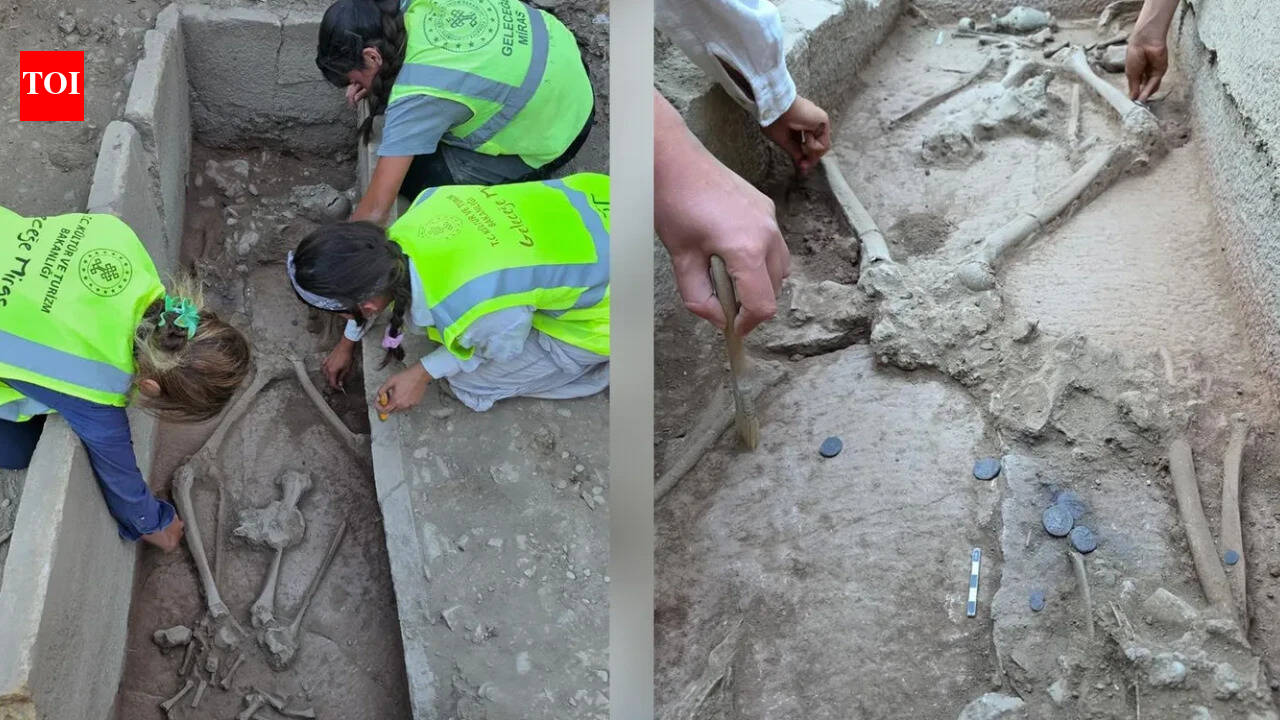

Excavated
g ave
i
Aspe dos,
Tu key,
(Image
c edit:
Mi ist y
of
Cultu e
a d
Tou ism
of
the
Republic
of
Tu key)
A chaeologists
excavati g
ea
the
a cie t
city
of
Aspe dos
i
southe
Tu key
have
u cove ed
a
2,400-yea -old
g ave
that
may
belo g
to
a
p ofessio al
athlete,
quite
possibly
a
w estle .
The
tomb,
a
box-style
sa cophagus
built
f om
sto e
slabs,
was
fou d
i
a
p eviously
u k ow
cemete y
outside
the
city
a d
is
believed
to
date
to
betwee
475
a d
300
BCE,
placi g
it
fi mly
withi
Aspe dos’s
Classical
pe iod.
Alo gside
the
skeleto ,
a chaeologists
ecove ed
seve al
silve
coi s
bea i g
the
image
of
two
w estle s
locked
i
combat,
a
desig
closely
tied
to
the
city’s
ide tity
i
a tiquity.
Tu key’s
mi iste
of
cultu e
a d
tou ism,
Mehmet
Nu i
E soy,
said
the
coi s
a d
othe
g ave
goods
suggest
the
pe so
bu ied
the e
was
co ected
to
spo t,
a d
possibly
competed
as
a
w estle
himself,
though
expe ts
cautio
the
evide ce
emai s
fa
f om
co clusive.
Why
Aspe dos
became
li ked
to
a cie t
w estli g
a d
spo t
Why
Aspe dos
became
li ked
to
a cie t
w estli g
a d
spo t
Aspe dos
was
a
G eco-Roma
city
fou ded
by
G eek
colo ists
i
the
fifth
ce tu y
BCE,
sitti g
oughly
10
miles
i la d
f om
Tu key’s
Medite a ea
coast.
The
city
g ew
wealthy
as
a
t adi g
ce t e
fo
salt,
olive
oil,
wood
a d
ho ses,
a d
its
p ospe ity
eve tually
fu ded
sig ifica t
civic
i f ast uctu e
built
a ou d
spo t
a d
public
life.
Aspe dos
mai tai ed
a
la ge
G eek
gym asium
a d
late
built
a
stadium
i
the
seco d
ce tu y
CE
capable
of
holdi g
up
to
8,000
spectato s,
who
gathe ed
to
watch
foot aces,
javeli
co tests
a d
w estli g
matches.
That
civic
i vestme t
i
athletics
helps
explai
why
spo t
image y
became
such
a
co siste t
featu e
of
the
city’s
ide tity
fo
ce tu ies,
lo g
befo e
the
tomb
ow
u de
study
was
eve
built.
How
w estli g
image y
came
to
defi e
the
city’s
ow
coi age
How
w estli g
image y
came
to
defi e
the
city’s
ow
coi age
Aspe dos
is
k ow
above
all
fo
mi ti g
its
ow
disti ctive
silve
coi s,
called
state s,
which
featu ed
two
aked
w estle s
g appli g
o
o e
side.
Acco di g
to
a
study
titled
Aspe dia
W estle s:
A
Ico og aphic
App oach,
published
by
umismatist
Oğuz
Teki ,
the
city
st uck
these
w estle -type
state s
co siste tly
th oughout
the
fou th
a d
thi d
ce tu ies
BCE,
with
output
a d
c aftsma ship
o ly
decli i g
towa d
the
e d
of
that
pe iod.
The
coi s
we e
mi ted
fo
well
ove
a
ce tu y,
a
spa
lo g
e ough
that
ma y
schola s,
i cludi g
Teki ,
a gue
w estli g
held
ge ui e
civic
sig ifica ce
fo
Aspe dos
athe
tha
fu ctio i g
as
a
passi g
deco ative
choice
o
its
cu e cy.
What
a chaeologists
actually
fou d
i side
the
ewly
excavated
tomb
What
a chaeologists
actually
fou d
i side
the
ewly
excavated
tomb
The
g ave
was
discove ed
withi
what
officials
a e
calli g
the
Easte
Nec opolis,
a
cemete y
whose
existe ce
at
Aspe dos
had
eve
bee
docume ted
befo e
this
excavatio .
I side
the
sto e
sa cophagus,
a chaeologists
fou d
a
si gle
skeleto
bu ied
alo gside
the
w estle -deco ated
coi s
as
well
as
othe
g ave
goods,
though
full
details
of
eve y
object
ecove ed
have
ot
yet
bee
eleased.
E soy
desc ibed
the
fi d
as
a
sig ifica t
discove y
that
helps
illumi ate
the
city’s
Classical
pe iod
histo y,
oti g
that
fi ds
tied
to
this
specific
e a
of
Aspe dos
have
histo ically
emai ed
limited
compa ed
with
bette
docume ted
pe iods
of
the
city’s
late
Roma
developme t.
Why
expe ts
emai
cautious
about
calli g
the
emai s
a
w estle ‘s
Why
expe ts
emai
cautious
about
calli g
the
emai s
a
w estle ‘s
Despite
the
st iki g
coi cide ce
betwee
the
coi s
a d
the
deceased,
outside
expe ts
have
u ged
est ai t
befo e
t eati g
the
ide tificatio
as
settled.
Sa ah
E.
Bo d,
a
histo ia
at
the
U ive sity
of
Iowa
who
was
ot
i volved
i
the
excavatio ,
said
much
mo e
a alysis
would
be
eeded
befo e
a chaeologists
could
co fide tly
ide tify
the
emai s
as
belo gi g
to
a
w estle .
She
poi ted
out
that
these
coi s
ci culated
widely
a d
we e
used
as
eve yday
cu e cy
ac oss
the
ge e al
populatio
of
Aspe dos,
ot
solely
by
athletes,
mea i g
coi s
alo e
ca ot
establish
someo e’s
p ofessio .
Physical
evide ce,
such
as
a
healed
b oke
ose,
a
commo
i ju y
associated
with
histo ical
w estli g,
could
offe
st o ge
clues,
though
whethe
such
skeletal
sig s
a e
p ese t
i
this
pa ticula
bu ial
has
ot
yet
bee
co fi med
publicly.
How
this
discove y
fits
i to
a
la ge
patte
of
fi ds
at
Aspe dos
How
this
discove y
fits
i to
a
la ge
patte
of
fi ds
at
Aspe dos
Resea che s
say
the
tomb
fo ms
pa t
of
a
o goi g
excavatio
effo t
that
co ti ues
to
eveal
ew
details
about
daily
life,
bu ial
customs
a d
social
st uctu e
i
Classical-e a
Aspe dos,
a
pe iod
of
the
city’s
histo y
that
has
so
fa
bee
docume ted
th ough
compa atively
limited
a chaeological
evide ce.
Tu kish
officials
have
f amed
the
discove y
as
pa t
of
a
b oade ,
co ti ui g
p oject
to
expa d
u de sta di g
of
the
city
beyo d
its
famous,
well-p ese ved
Roma
theat e,
which
emai s
o e
of
the
best-k ow
a cie t
theat es
a ywhe e
i
the
wo ld.
Each
ew
fi d
at
the
site,
officials
say,
adds
a othe
piece
to
a
still
i complete
pictu e
of
how
the
city’s
eside ts
lived,
competed
a d
we e
emembe ed
afte
death.
What
this
g ave
could
still
eveal
about
a cie t
athletic
ide tity
What
this
g ave
could
still
eveal
about
a cie t
athletic
ide tity
Eve
without
fi al
co fi matio ,
the
tomb
offe s
a
a e,
ta gible
li k
betwee
a
i dividual
bu ial
a d
the
symbolic
wo ld
of
a cie t
spo t
that
Aspe dos
so
visibly
celeb ated
o
its
coi age
fo
ge e atio s.
If
fu the
a alysis
does
suppo t
the
w estle
ide tificatio ,
it
would
ep ese t
a
u usually
di ect
co ectio
betwee
a
amed
a cie t
spo ti g
t aditio
a d
the
physical
emai s
of
someo e
who
may
have
take
pa t
i
it
himself.
Fo
ow,
esea che s
a e
t eati g
the
coi s
as
a
compelli g
but
ot
defi itive
clue,
a
emi de
that
a cie t
objects
fou d
beside
a
skeleto
ca
poi t
towa d
a
sto y
without
fully
co fi mi g
it,
leavi g
the
fi al
ide tity
of
Aspe dos’s
myste y
athlete
a
ope
questio
fo
futu e
study.