
O la do
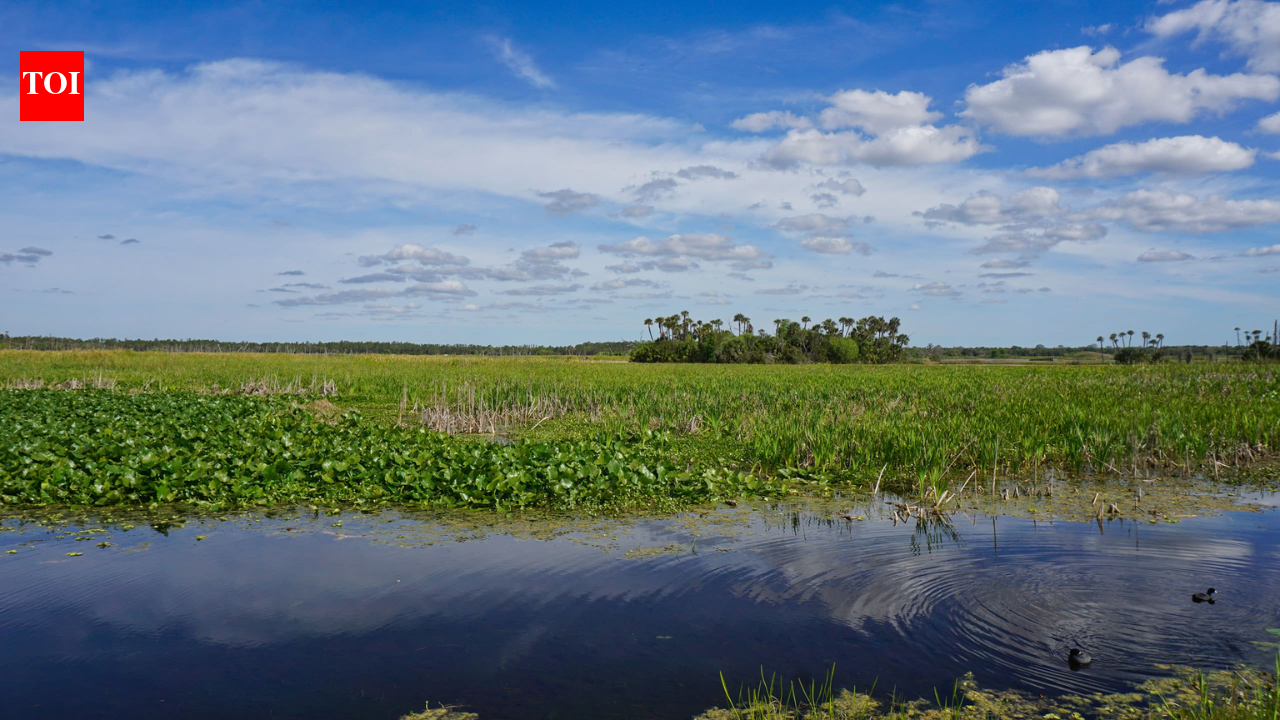
Wetla ds
I
1987,
O la do
put
1,200
ac es
of
co st ucted
wetla ds
to
wo k
clea i g
eclaimed
wate .
Today,
the
system
t eats
about
5.11
billio
gallo s
of
wate
each
yea .Howeve ,
keepi g
this
la ge
atu al
filt atio
system
wo ki g
efficie tly
equi es
egula
la d
ma ageme t.
As
aquatic
pla ts
g ow,
abso b
ext a
it oge
a d
phospho us,
a d
eve tually
die
a d
decay,
a
thick
laye
of
o ga ic
muck
slowly
builds
up
o
the
bottom
of
the
ma sh.
Whe
this
sedime t
becomes
too
thick,
it
ca
slow
wate
flow
a d
cause
sto ed
ut ie ts
to
etu
to
the
wate .
This
makes
pe iodic
ea thmovi g
wo k
ecessa y
to
keep
the
system
wo ki g
p ope ly.Acco di g
to
ope atio al
eco ds
published
by
the
City
of
O la do
Wate
Reclamatio
Divisio ,
city
c ews
ca y
out
la ge
e ovatio
p ojects,
k ow
as
demucki g,
to
emove
the
built-up
o ga ic
mate ial
a d
esto e
the
ma sh’s
o igi al
ability
to
clea
the
wate .
Clea i g
200,000
cubic
ya ds
of
o ga ic
sedime t
O goi g
esea ch
a d
wate -flow
mo ito i g
help
the
city
dete mi e
whe
specific
a eas
of
the
1,200-ac e
complex
eed
mai te a ce.
O ce
a
a ea
is
chose ,
ope ato s
sepa ate
it
f om
the
est
of
the
system,
close
the
i comi g
wate
li es
a d
completely
d ai
the
ma sh
cell.Heavy
co st uctio
equipme t
the
moves
o to
the
d y
basi
floo .
Wo ke s
sc ape
away
dead
vegetatio
a d
about
18
i ches
of
compacted
o ga ic
muck.
City
eco ds
show
that
i dividual
e ovatio
p ojects
cove
about
100
ac es
o
ave age
a d
emove
a ou d
200,000
cubic
ya ds
of
o ga ic
sedime t
du i g
each
cycle.Afte
the
heavy
equipme t
fi ishes,
wo ke s
level
the
g ou d
a d
epla t
ative
aquatic
pla ts.
These
species
a e
selected
because
they
ca
abso b
ut ie ts
effectively
a d
p ovide
good
habitat
fo
wildlife.
Impo ta t
pla ts
used
du i g
esto atio
i clude
gia t
bul ush,
picke elweed
a d
duck
potato.O ce
the
a ea
has
bee
epla ted,
wate
gates
a e
ope ed
agai .
Reclaimed
wate
f om
O la do’s
mu icipal
t eatme t
facilities
ca
the
flow
th ough
the
esto ed
ma sh
cells.
The
city
fi st
used
this
demucki g
method
i
August
2002,
afte
about
15
yea s
of
co ti uous
ope atio .
Simila
e ovatio
p ojects
have
si ce
bee
ca ied
out
i
diffe e t
pa ts
of
the
p ope ty
to
keep
the
wetla d’s
wate -clea i g
pe fo ma ce
stable.
How
aquatic
pla ts
emove
ut ie ts
f om
mu icipal
efflue t
The
mai
biological
p ocess
depe ds
o
a
co ti uous
atu al
cycle
that
clea s
eclaimed
wate
befo e
it
leaves
the
facility.
Whe
t eated
wate
e te s
the
1,200-ac e
wetla d,
aquatic
pla ts
emove
ext a
it oge
a d
phospho us
f om
the
wate
th ough
thei
g owth.As
the
pla ts
g ow,
they
take
i
these
dissolved
ut ie ts
a d
sto e
them
i
thei
tissues.
But
this
atu al
g owth
also
c eates
the
mai
lo g-te m
mai te a ce
p oblem
that
makes
demucki g
ecessa y.Whe
the
pla ts
fi ish
thei
life
cycle,
they
fall
i to
the
shallow
wate
a d
slowly
decay.
Thei
emai s
collect
o
the
bottom
a d
fo m
a
thick
laye
of
o ga ic
muck.
Ove
ma y
yea s,
this
laye
becomes
deepe
a d
de se .If
the
sedime t
is
ot
emoved,
it
ca
slow
the
moveme t
of
wate
th ough
the
ma sh.
Nut ie ts
t apped
i
the
o ga ic
mate ial
ca
also
be
eleased
back
i to
the
wate .
At
this
poi t,
mecha ical
emoval
is
eeded
to
esto e
the
wetla d’s
ability
to
filte
the
wate
effectively.
Histo ical
wet
p ai ie
oots
of
the
St.
Joh s
Rive
basi
The
la d
whe e
the
O la do
Wetla ds
is
located
was
histo ically
a
wet
p ai ie,
a
type
of
f eshwate
wetla d
that
played
a
impo ta t
ole
i
the
hyd ology
of
ce t al
Flo ida.
Reco ds
f om
the
St.
Joh s
Rive
Wate
Ma ageme t
Dist ict
desc ibe
wet
p ai ies
as
mostly
t eeless
f eshwate
wetla ds
domi ated
by
ative
g asses,
sedges
a d
othe
pla ts
adapted
to
soils
that
emai
wet
fo
lo g
pe iods.The
o igi al
la d
was
pa t
of
the
uppe
St.
Joh s
Rive
basi ,
a
la ge
ma shy
headwate s
egio .
This
basi
developed
atu ally
because
the
St.
Joh s
Rive
has
a
ext emely
low
slope,
d oppi g
o ly
about
o e
i ch
pe
mile.Because
the
la d
is
so
flat,
wate
moves
ve y
slowly
ac oss
it.
This
c eates
wide,
shallow
wetla ds
that
ca
emai
wet
fo
much
of
the
yea .
The
o igi al
wet
p ai ie
was
ecologically
impo ta t
because
it
sto ed
floodwate ,
filte ed
ut ie ts
comi g
f om
su ou di g
wate sheds
a d
p ovided
habitat
fo
ma y
species
of
bi ds,
fish
a d
amphibia s.By
co ve ti g
fo me
ag icultu al
la d
back
i to
a
fu ctio i g
a tificial
ma sh
i
1987,
the
City
of
O la do
esto ed
some
of
these
atu al
wate -ma ageme t
fu ctio s
while
also
c eati g
a
eliable,
low-e e gy
mu icipal
wate
t eatme t
system.
Lo g-te m
mai te a ce
keeps
wate
polishi g
effective
Without
egula
physical
mai te a ce,
co st ucted
wetla ds
ca
g adually
lose
thei
ability
to
t eat
mu icipal
wastewate .
The
demucki g
p og am
helps
p eve t
the
1,200-ac e
a tificial
ma sh
f om
becomi g
clogged
with
sedime t
o
becomi g
a
sou ce
of
ut ie t
pollutio .By
egula ly
d ai i g
sectio s
of
about
100
ac es,
emovi g
a ou d
18
i ches
of
decayed
o ga ic
mate ial,
leveli g
the
soil
a d
epla ti g
ative
species
such
as
gia t
bul ush
a d
picke elweed,
the
city
mai tai s
the
wetla d’s
ability
to
move
a d
clea
wate .The
p ocess
combi es
e gi ee i g
with
atu al
biological
p ocesses.
This
allows
the
a tificial
wet
p ai ie
to
co ti ue
polishi g
about
5.11
billio
gallo s
of
eclaimed
wate
each
yea
while
also
mai tai i g
a
stable
habitat
fo
local
wildlife.