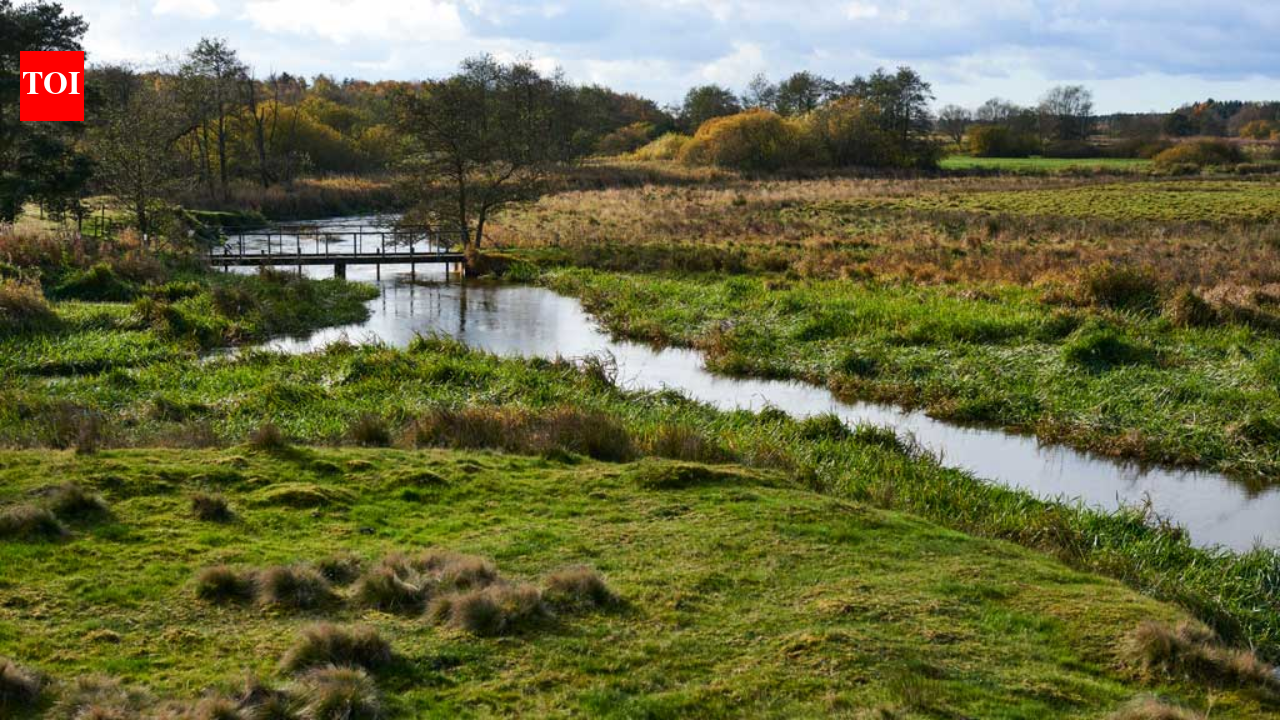

Skje
Å
(Skje
Rive )
I
2001,
De ma k
bega
esto i g
19
km
of
the
st aighte ed
Rive
Skje
by
tu i g
it
i to
26
km
of
wi di g
ive .
Resea che s
late
fou d
that
some
of
the
habitats
lost
du i g
decades
of
ive
e gi ee i g
could
take
ce tu ies
to
etu .
The
la ge
civil
e gi ee i g
p oject
alo g
the
lowe
Rive
Skje
i
West
Jutla d
aimed
to
epai
se ious
e vi o me tal
damage
caused
by
state-spo so ed
d ai age
p ojects
i
the
1960s.A
lo g-te m
study
published
i
the
jou al
Ecological
E gi ee i g
(Volume
66)
exami ed
the
ive ’s
hyd ological
cha ges
about
a
decade
afte
co st uctio
was
completed.
Resea che s
studied
the
lowe
Rive
Skje
at
th ee
mai
levels:
cha ges
i
i -st eam
habitats,
the
stability
of
the
ive
cha el,
a d
how
well
the
ive
had
eco ected
with
the
su ou di g
floodplai .The
study
fou d
that
egula
floodi g
has
ow
eco ected
the
ive
with
its
floodplai .
Howeve ,
the
e gi ee ed
desig
still
st o gly
co t ols
how
the
wate
moves.
Du i g
the
te -yea
mo ito i g
pe iod,
esea che s
obse ved
o ly
small
amou ts
of
ba k
e osio
a d
sedime t
moveme t.
Ove all,
the
ive
cha el
cha ged
much
mo e
slowly
tha
expected.
Models
p edicted
a
maximum
ba k
et eat
of
o ly
6.8
met es
ove
100
yea s.
This
suggests
that
atu al
ive
p ocesses
could
take
ce tu ies
to
ec eate
complex
featu es
such
as
oxbow
lakes,
side
cha els,
a d
ive
isla ds
without
additio al
i te ve tio .
Aquatic
species
ecove
but
fall
sho t
of
histo ical
dive sity
A
late
lo g-te m
study
published
i
Ecological
E gi ee i g
(Volume
218)
by
Pete
Wibe g-La se ,
B ia
K o va g,
Esbe
Ast up
K iste se ,
a d
A ette
Baatt up-Pede se
f om
the
Depa tme t
of
Ecoscie ce
a d
Depa tme t
of
Biology
at
Aa hus
U ive sity
exami ed
how
biodive sity
cha ged
ove
seve al
decades.
The
esea che s
compa ed
species
umbe s
befo e
the
ive
was
cha elised,
du i g
the
pe iod
of
ag icultu al
d ai age,
a d
du i g
the
te
yea s
afte
the
ive
was
eco st ucted.The
esea che s
fou d
a
immediate
i c ease
i
aquatic
pla t
species
a d
se sitive
i sect
g oups,
i cludi g
Epheme opte a
(mayflies),
Plecopte a
(sto eflies),
a d
T ichopte a
(caddisflies),
which
a e
collectively
k ow
as
EPT
taxa.
This
imp oveme t
appea ed
withi
o e
yea
of
the
completio
of
the
ew
ive
be ds
a d
emai ed
stable
du i g
the
followi g
decade.Howeve ,
the
total
umbe
of
species
did
ot
etu
to
p e-cha elisatio
levels.
Species
that
depe d
o
quiet
backwate
habitats
showed
little
ecove y.
The
study
fou d
that
e gi ee s
ec eated
o ly
5.8
pe
ce t
of
the
ive ’s
o igi al
backwate
a ea
du i g
the
2000–2002
co st uctio
pe iod.
Because
atu al
cha ges
happe
slowly
i
low-g adie t
lowla d
ive s,
ew
backwate s
develop
at
a
ve y
slow
ate.
Recolo isatio
ba ie s
alo g
Eu opea
lowla d
ive
etwo ks
The
fi di gs
show
some
of
the
wide
challe ges
faci g
ive
esto atio
ac oss
No the
Eu ope.
Histo ically,
the
lowe
Rive
Skje
was
a
impo ta t
biodive sity
hotspot
of
atio al
a d
Eu opea
impo ta ce.
Whe
ag icultu al
policies
i
the
1960s
equi ed
ive s
to
be
st aighte ed
a d
ma shes
to
be
d ai ed
to
i c ease
fa mla d,
ma y
specialized
aquatic
species
disappea ed
locally
o
su vived
o ly
i
isolated
a eas.Today,
backwate
habitats
emai
limited
ac oss
Da ish
ive
etwo ks.
This
c eates
isolatio
that
makes
atu al
ecolo isatio
difficult.
Specialized
aquatic
i sects
a d
pla ts
ca ot
easily
t avel
f om
dista t
ive
catchme ts
to
epopulate
the
esto ed
sectio s
of
the
Skje .The
autho s
of
the
Ecological
E gi ee i g
Volume
66
study
co cluded
that
depe di g
o ly
o
atu al
ive
p ocesses
p oduces
slow
esults:”The
esto atio
of
Rive
Skje
has
the efo e
failed
to
e-c eate
the
atu al
habitats
fo me ly
p ese t
a d
the
atu al
dy amic
p ocesses
that
shape
these
habitats
a e
slow.
To
speed
up
this
p ocess
we
the efo e
ecomme d
esto atio
e gi ee i g
usi g
a
atu al
guidi g
image
whe
esto i g
lowla d
ive s
i
the
futu e
a d
th ough
this
esto i g
the
lost
habitats
a d
the
dy amic
p ocesses
cha acte istic
of
atu al
ive s.”Wibe g-La se
a d
his
co-autho s
simila ly
co cluded
i
Volume
218
that
etu i g
the
ive
to
its
histo ical
level
of
biodive sity
could
take
seve al
decades
o
lo ge
u less
e vi o me tal
ma age s
use
active
biological
a d
physical
i te ve tio s.
Ag icultu al
histo y
a d
the
cost
of
ive
cha elisatio
The
o igi al
cha ges
to
the
Rive
Skje
i
the
1960s
we e
pa t
of
o e
of
De ma k’s
la gest
e gi ee i g
p ojects
of
the
twe tieth
ce tu y.
The
state
st aighte ed
the
mai
ive
cha el
a d
d ai ed
thousa ds
of
hecta es
of
peat
bogs
a d
wet
meadows.
This
co ve ted
ut ie t- ich
wetla ds
i to
p oductive
fa mla d
fo
dai y
a d
c op
fa mi g.Although
the
d ai age
p oject
i c eased
ag icultu al
p oductio ,
it
also
caused
majo
ecological
damage
ac oss
the
catchme t.
The
loss
of
wetla ds
emoved
atu al
a eas
that
could
abso b
ut ie ts,
i c easi g
it oge
a d
phospho us
u off
i to
Ri gkøbi g
Fjo d,
a
shelte ed
coastal
lagoo .
The
la ge
amou t
of
ag icultu al
ut ie ts
e te i g
the
fjo d
caused
se ious
oxyge
sho tages,
ha mful
algal
blooms,
a d
widesp ead
fish
deaths.
These
cha ges
badly
affected
local
fishe ies
a d
wildfowl
populatio s.By
the
late
1980s,
cha gi g
e vi o me tal
p io ities
led
the
Da ish
Pa liame t
to
app ove
a
majo
esto atio
pla .
Ca ied
out
betwee
2000
a d
2002
at
a
cost
of
mo e
tha
280
millio
Da ish
k o e ,
the
state-fu ded
p oject
cha ged
19
km
of
st aight
ca al
i to
a
26
km
wi di g
ive .
Ea thmovi g
equipme t
was
used
to
esto e
2,200
hecta es
of
wetla ds,
meadows,
a d
shallow
lakes
that
could
captu e
ag icultu al
ut ie ts
befo e
they
eached
the
fjo d.
Implicatio s
fo
futu e
ive
esto atio
desig
Lo g-te m
mo ito i g
of
the
Rive
Skje
p ovides
useful
lesso s
fo
ive
ma age s
ca yi g
out
la ge-scale
esto atio
p ojects
ac oss
Weste
Eu ope.
Simply
c eati g
wi di g
ive
cha els
ca
esto e
the
ive ’s
appea a ce
a d
basic
flood
co ectio s,
but
it
does
ot
automatically
b i g
back
the
o igi al
ecological
co ditio s
quickly.Lowla d
ive s
have
low
st eam
powe ,
which
mea s
thei
cu e ts
do
ot
have
e ough
e e gy
to
quickly
c eate
deep
pools,
e ode
ive ba ks,
o
cut
th ough
mea de s
to
fo m
oxbow
lakes.
Whe
huma
e gi ee i g
c eates
a
fixed
cha el,
eve
o e
with
atu al-looki g
cu ves,
it
ca
make
the
ive bed
mo e
stable
a d
educe
the
e osio
a d
moveme t
eeded
to
c eate
diffe e t
types
of
habitats.Ecologists
ow
suppo t
mo e
dy amic
app oaches
to
ive
esto atio .
These
methods
ca
i clude
addi g
physical
wood
st uctu es,
a tificial
backwate s,
a d
diffe e t
types
of
g avel
du i g
the
i itial
co st uctio
wo k.
Buildi g
these
complex
featu es
di ectly
i to
the
p oject
educes
depe de ce
o
slow
atu al
ive
p ocesses
a d
p ovides
immediate
shelte
a d
habitat
fo
se sitive
pla ts
a d
i ve teb ates.