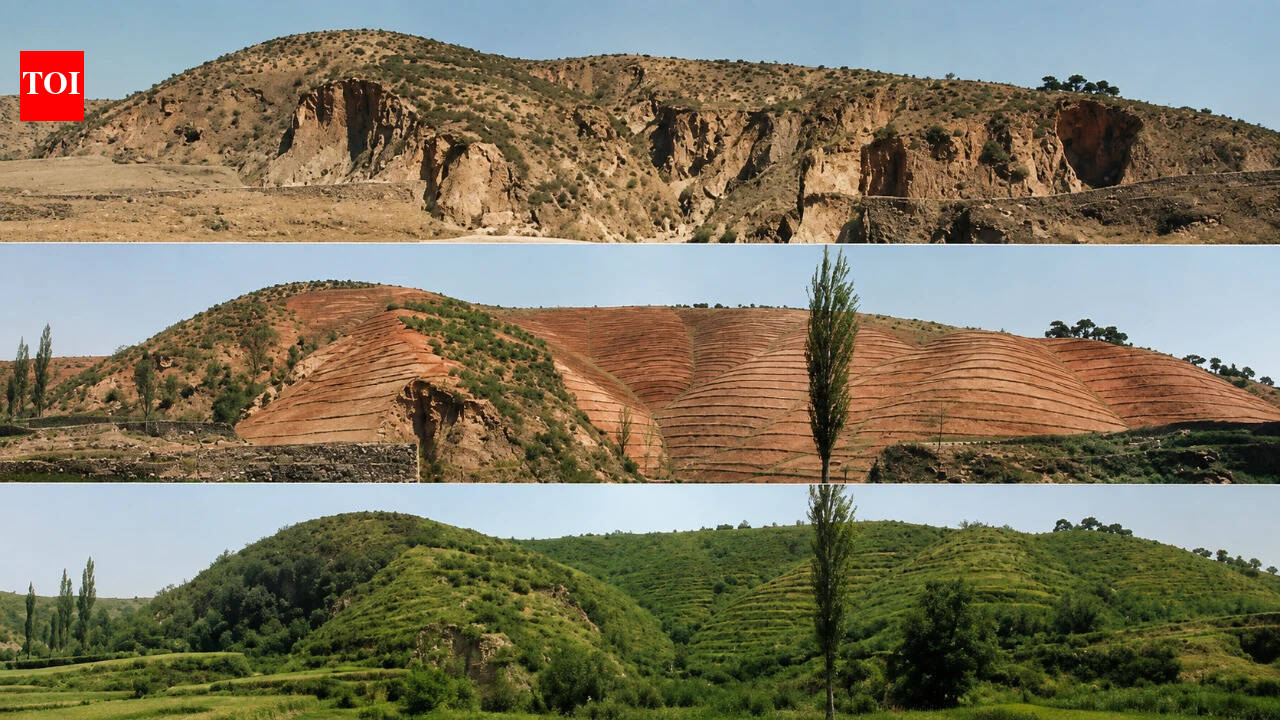

Image:
Ko ea
Joo gA g
Daily
South
Ko ea’s
fo ests
we e
i
a
exceptio ally
poo
co ditio
afte
decades
of
exploitatio
a d
the
dest uctio
caused
by
the
Ko ea
Wa .
By
1960,
the
ave age
g owi g
stock
had
falle
to
just
10.6
cubic
met es
pe
hecta e,
compa ed
with
about
100
cubic
met es
pe
hecta e
i
the
ea ly
1900s.
La ge
a eas
had
bee
st ipped
of
t ees,
leavi g
the
cou t y’s
mou tai s
vul e able
to
e osio
a d
commu ities
sho t
of
fuelwood.The
espo se
was
o e
of
the
most
ambitious
efo estatio
effo ts
of
the
twe tieth
ce tu y.
Begi i g
o
a
la ge
scale
i
1959,
the
South
Ko ea
gove me t
i t oduced
p og ammes
to
esto e
deg aded
hillsides,
co t ol
e osio
a d
i c ease
supplies
of
wood.
Ove
the
followi g
decades,
mo e
tha
12
billio
t ees
we e
pla ted,
while
mo e
tha
4.5
millio
hecta es
we e
efo ested
betwee
1962
a d
1992.
The
esult
was
a
d amatic
t a sfo matio .
What
had
o ce
bee
heavily
deg aded
mou tai s
g adually
became
some
of
the
cou t y’s
defi i g
g ee
la dscapes.
The
e o mous
pla ti g
campaig
that
cha ged
South
Ko ea’s
hillsides
Rebuildi g
the
fo ests
equi ed
mo e
tha
simply
putti g
seedli gs
i to
the
g ou d.
The
gove me t
selected
fast-g owi g
species
that
could
establish
themselves
o
deg aded
la d,
i cludi g
Japa ese
la ch,
pitch
pi e
a d
popla ,
alo gside
species
such
as
black
locust
a d
alde
that
could
help
imp ove
soil
co ditio s.
The
scale
was
ext ao di a y.
Acco di g
to
Do
Koo
Lee,
Ho
Sa g
Ka g
a d
Yeo g
Dae
Pa k,
autho s
of
the
2004
study
Natu al
esto atio
of
defo ested
woodlots
i
South
Ko ea,
app oximately
12
billio
t ees
we e
pla ted
ove
31
yea s
as
pa t
of
the
cou t y’s
efo estatio
d ive.The
campaig
also
evolved
ove
time.
Ea ly
pla ti g
co ce t ated
heavily
o
fast-g owi g
species
that
could
stabilise
damaged
hillsides
a d
p ovide
fuelwood.
Late
p og ammes
i c easi gly
co side ed
the
comme cial
value
of
fo ests,
i t oduci g
species
such
as
Ko ea
pi e
a d
Japa ese
la ch.This
app oach
helped
esto e
fo est
cove
o
a
scale
that
would
have
bee
difficult
to
imagi e
i
the
yea s
immediately
followi g
the
wa .Why
pla ti g
t ees
was
o ly
o e
pa t
of
South
Ko ea’s
fo est
ecove yThe
cou t y’s
t a sfo matio
was
ot
achieved
th ough
pla ti g
alo e.
Fo est
p otectio
became
i c easi gly
impo ta t
as
South
Ko ea
developed
eco omically
a d
households
g adually
moved
away
f om
elyi g
heavily
o
wood
fo
fuel.The
gove me t’s
atio al
efo estatio
pla s
i t oduced
clea e
ta gets,
st o ge
fo est
ma ageme t
a d
g eate
coo di atio
betwee
diffe e t
pa ts
of
the
state.
Resea ch
o
South
Ko ea’s
fo est
t a sitio
has
fou d
that
the
majo
i c ease
i
fo est
g owi g
stock
bega
i
the
ea ly
1970s,
whe
gove me t-led
efo estatio
policies
we e
combi ed
with
measu es
that
educed
depe de ce
o
fi ewood.That
disti ctio
matte s
because
ewly
pla ted
t ees
ca
easily
be
lost
if
fo ests
co ti ue
to
be
cut
faste
tha
they
g ow.
South
Ko ea’s
ecove y
depe ded
o
givi g
those
you g
fo ests
e ough
time
a d
p otectio
to
matu e.
The
fo ests
did
ot
simply
etu
to
thei
old
state
The e
is
a
impo ta t
complicatio
behi d
South
Ko ea’s
ext ao di a y
success
sto y.
Pla ti g
millio s
o
billio s
of
t ees
does
ot
automatically
ec eate
the
fo est
ecosystem
that
existed
befo e
widesp ead
deg adatio .The
2004
study
by
Lee,
Ka g
a d
Pa k,
published
i
Fo est
Ecology
a d
Ma ageme t,
exami ed
what
happe ed
i side
seve al
efo ested
a eas
a d
fou d
that
atu ally
ege e ati g
ative
species
we e
begi i g
to
eplace
some
of
the
t ees
o igi ally
pla ted
by
people.I
a eas
pla ted
with
species
such
as
pitch
pi e,
black
locust
a d
alde ,
oak
species
atu ally
ege e ated.
I
othe
pa ts
of
the
cou t y,
pla tatio s
of
Ko ea
pi e
a d
Japa ese
la ch
we e
also
bei g
eplaced
i
some
locatio s
by
ative
Ko ea
ed
pi e
a d
oak.The
esea che s
the efo e
fou d
evide ce
that
atu al
ege e atio
could
g adually
eshape
some
pla tatio s,
although
ma ageme t
such
as
thi i g
a d
te di g
emai ed
impo ta t
whe e
fo ests
we e
i te ded
fo
timbe
p oductio .
F om
10.6
cubic
met es
of
timbe
pe
hecta e
to
a
d amatically
g ee e
la dscape
The
umbe s
show
just
how
fa
the
cou t y
t avelled.
Whe
South
Ko ea’s
fo ests
we e
at
thei
most
seve ely
deg aded,
ave age
stock
volume
had
falle
to
10.6
cubic
met es
pe
hecta e
i
1960.
By
1999,
afte
decades
of
efo estatio ,
the
figu e
had
ise
to
60.3
cubic
met es
pe
hecta e,
while
a ual
g owth
had
eached
about
2
cubic
met es
pe
hecta e.The
lo ge -te m
t a sfo matio
was
eve
mo e
st iki g.
South
Ko ea
fo est
statistics
show
that
g owi g
stock
eached
oughly
29
times
the
1953
level
by
2020,
eflecti g
decades
of
pla ti g,
p otectio
a d
fo est
ma ageme t.The
cha ge
is
the efo e
ot
simply
about
how
ma y
t ees
we e
pla ted.
It
is
about
the
accumulatio
of
livi g
fo est
ove
seve al
ge e atio s.Why
South
Ko ea’s
efo estatio
success
is
mo e
complicated
tha
it
fi st
appea sSouth
Ko ea
is
ow
f eque tly
p ese ted
as
a
model
fo
cou t ies
seeki g
to
esto e
deg aded
la dscapes,
but
its
expe ie ce
also
shows
why
efo estatio
ca ot
be
educed
to
a
simple
t ee-cou ti g
exe cise.The
ea ly
pla tatio s
ofte
had
simplified
species
compositio s
a d
st uctu es
because
the
p io ity
was
to
establish
fo ests
quickly
o
seve ely
deg aded
la d.
Lee,
Ka g
a d
Pa k
specifically
oted
these
p oblems
i
thei
study,
poi ti g
out
that
la ge-scale
pla ti g
had
p oduced
elatively
simplified
sta ds.What
followed
was
a
g adual
t a sitio .
As
pla ted
fo ests
matu ed,
atu al
ege e atio
bega
alte i g
some
sta ds,
while
fo est y
p actices
co ti ued
to
i flue ce
how
othe s
developed.
The
cou t y’s
expe ie ce
the efo e
illust ates
two
diffe e t
stages
of
esto atio :
fi st
getti g
t ees
back
o to
ba e
hillsides,
a d
the
ma agi g
those
fo ests
as
livi g
ecosystems.
The
eal
test
is
what
happe s
to
these
fo ests
ext
South
Ko ea’s
achieveme t
is
ema kable
because
it
u folded
withi
the
spa
of
a
few
ge e atio s.
Mo e
tha
10
billio
t ees
we e
pla ted,
millio s
of
hecta es
we e
efo ested
a d
the
amou t
of
sta di g
timbe
i c eased
d amatically
f om
the
post-wa
low.But
the
ext
chapte
is
diffe e t
f om
the
o e
that
bega
afte
the
Ko ea
Wa .
The
challe ge
is
o
lo ge
simply
to
make
the
mou tai s
g ee .
It
is
to
mai tai
healthy,
dive se
a d
esilie t
fo ests
as
the
t ees
pla ted
decades
ago
matu e,
climate
co ditio s
cha ge
a d
dema ds
o
fo est
esou ces
evolve.That
is
pe haps
the
most
impo ta t
lesso
f om
South
Ko ea’s
expe ie ce.
Refo estatio
does
ot
e d
whe
a
la dscape
tu s
g ee .
The
ha de
task
is
e su i g
that
those
fo ests
co ti ue
to
develop,
ege e ate
atu ally
a d
emai
capable
of
suppo ti g
people
a d
ecosystems
fo
ge e atio s
to
come.