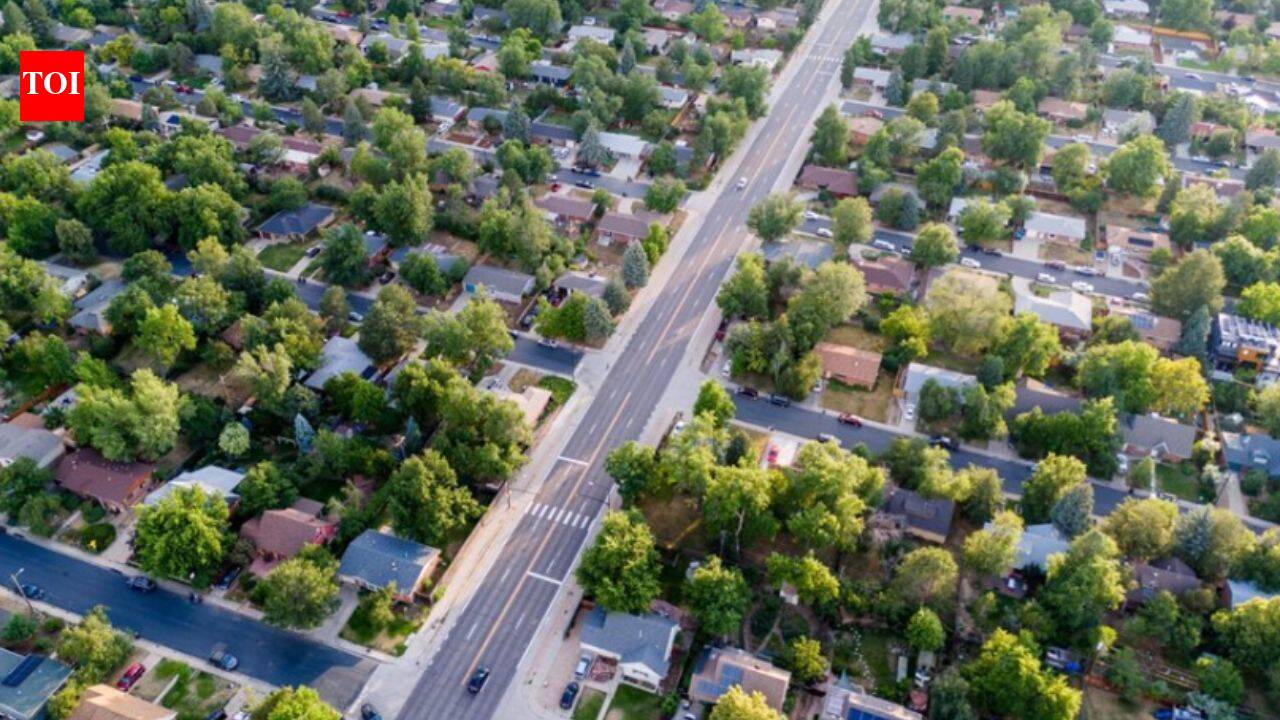

Neighbourhoods in Chicago that lost more tree canopy also recorded higher mortality rates. (Representational photo)
Tree canopy loss in cities may be linked to higher death rates, according to a new study. Researchers have found that Chicago neighbourhoods that lost more tree cover over 11 years also recorded higher mortality, especially in areas with hotter summer temperatures. Researchers say the findings show that cities should not only plant new trees but also protect mature ones.The study was published in the journal GeoHealth, Science X reported. Researchers examined annual changes in tree canopy between 2011 and 2021 and compared them with more than 220,000 death records from the same period. I”Previous studies have mostly looked at how health outcomes are associated with static tree canopy coverage,” says the study’s senior author Daniel Horton of Northwestern University.”These snapshot-style studies looked at mortality rates and the tree canopy at one moment in time. But cities and their tree canopies constantly change, so we looked at how the canopy and death rates change over the years. We found that as tree canopy decreases, mortality increases,” Horton adds.Tree canopy refers to the parts of trees made up of leaves and branches that spread over the ground when viewed from above. The larger the canopy, the more shade the trees provide. Mature trees usually have much wider canopies than young trees.
Tree canopies across Chicago
The project grew out of the Buffett Institute’s Defusing Disasters Working Group. The group brings together climate scientists, doctors, public health experts, city officials and community partners to study how extreme weather affects people in Chicago and how cities can reduce those risks.”The Defusing Disasters Working Group set out to determine what makes Chicago residents vulnerable to extreme heat,” Horton says. “We found that a number of different factors contribute to heat vulnerability, and trees are one part of the equation.”The idea for studying tree canopy also came from personal observations made by lead author Harrison Garcia during a walking tour of Chicago’s North Lawndale and Douglas Park neighbourhoods.”I noticed how much more exhausting it felt to walk through areas with little tree cover compared to nearby blocks lined with mature trees,” Garcia says.”I remember thinking that if the heat was affecting me so noticeably during a short walking tour, it must be shaping people’s health over the long term.”