
Wednesday, August 5, 2026
30.3 C
New Delhi

Hawaii’s ancient island origins explain why it has no native snakes

Hawaii has remained snake-free for millions of years, and the reason lies in how the islands were born

Hawaii’s unique volcanic history and geographic isolation effectively kept snakes from establishing themselves on the islands. This absence allowed native wildlife to flourish without the fear of snake predators. Unfortunately, accidental snake introductions, as evidenced by Guam’s experiences, can wreak havoc. To combat this risk, Hawaii enforces strict regulations and vigilant monitoring to safeguard its delicate ecosystem and ensure the island’s natural heritage endures.

For many visitors, Hawaii’s lack of snakes feels like an unusual travel fact rather than something with a deeper explanation. It is easy to assume the islands were simply fortunate. The reality stretches back millions of years, long before people arrived. Hawaii emerged in remarkable isolation, far out in the Pacific, where reaching land has always been an enormous challenge for wildlife. That distance shaped every part of the islands’ natural history. Birds, insects and hardy plants managed to arrive over time, while many familiar animals never did. Snakes were among those left behind, and their absence quietly influenced the way Hawaiian ecosystems developed. Today, protecting that rare balance has become one of the state’s most closely guarded environmental priorities.

How Hawaii’s volcanic origins kept snakes away

Unlike many islands around the world, Hawaii did not split away from an existing landmass. The archipelago was built gradually as volcanic activity pushed molten rock through the Pacific Plate, creating one island after another over millions of years. Even now, volcanoes such as Mauna Loa and Kīlauea continue to reshape parts of the youngest island. Because these islands rose from the middle of the ocean rather than breaking away from a continent, there was never a land route linking Hawaii with North America or Asia. Every native species had to cross thousands of kilometres of open sea to arrive there. That single fact explains much of Hawaii’s distinctive wildlife.Some travellers could manage the journey. Birds could fly. Seeds drifted on currents or survived attached to floating vegetation. Tiny insects occasionally rode powerful storms across the Pacific. Countless other creatures simply had no practical way of making the crossing.

Why snakes never became part of Hawaii’s wildlife

The problem for snakes was not just distance but it was survival. Most land snakes cannot tolerate long exposure to saltwater, and an ocean crossing lasting weeks would leave little opportunity to find food or fresh water. Even if one somehow reached shore alive, it would still need another snake to establish a breeding population.Island ecology has long shown that the odds of successful colonisation fall sharply as isolation increases. Hawaii sits among the most remote island chains on Earth, making accidental arrivals exceptionally uncommon. In effect, geography filtered out entire groups of animals before they ever had a chance to settle.One exception exists, though it barely changes the story. The yellow-bellied sea snake spends its life in the open ocean and is adapted to marine conditions. Individuals are occasionally carried into Hawaiian waters by currents or storms, but they rarely come onto land and have never formed a land-based population.
Why snakes never became part of Hawaii's wildlife<br />” msid=”132919954″ width=”” title=”” placeholdersrc=”https://static.toiimg.com/photo/83033472.cms” imgsize=”” resizemode=”4″ offsetvertical=”0″ placeholdermsid=”47529300″ type=”thumb” src=”https://static.toiimg.com/photo/83033472.cms” class=”” data-src=”https://static.toiimg.com/photo/msid-132919954/why-snakes-never-became-part-of-hawaiis-wildlifebr.jpg” data-api-prerender=”true”/></div>
</p></div>
<p><h3> Why Hawaii has so few native reptiles</h3>
</p>
<p> The absence of native snakes reflects a much broader pattern. Hawaii also lacks native terrestrial amphibians and native land reptiles. Geckos and skinks seen around gardens, hotels and buildings today were introduced by people over the last two centuries, often unintentionally through shipping and trade.Marine reptiles are another matter entirely. Several sea turtle species are native to Hawaiian waters and return to beaches only for nesting. Their lives are tied to the ocean rather than the forests and volcanic slopes where native birds evolved.A tiny blind snake, introduced through imported plants, has become established in Hawaii. Living almost entirely underground and feeding on ants and termites, it attracts little attention and poses little ecological threat compared with larger predatory snakes. </p>
<p><h3> Wildlife that never learned to fear snakes</h3>
</p>
<p> Millions of years without snakes altered the behaviour of Hawaii’s native animals in subtle ways.Many native forest birds evolved without needing to recognise snakes as predators. Their nesting habits reflected that safety. Ground nests and low shrubs presented few problems in an ecosystem where no climbing snakes existed.Experiments with native Hawaiian birds have highlighted this unusual history. When presented with snake models near their nests, several endemic species showed little or no defensive behaviour. Introduced birds, whose ancestors evolved alongside snakes elsewhere, reacted far more cautiously.That difference is worrying because predator recognition is not something animals can develop overnight. Species that have spent thousands of generations without encountering snakes may respond too slowly if one suddenly appears. </p>
<p><h3> How a single snake could start an invasion</h3>
</p>
<p> Keeping snakes out is not simply about avoiding large numbers. Many snake species are capable of storing sperm for extended periods after mating. That means one fertilised female arriving unnoticed could, under suitable conditions, begin establishing a population without another snake immediately present.Detecting snakes early is another challenge. They spend much of their time hidden, many are active mainly at night, and several species climb trees with remarkable ease. By the time repeated sightings occur, removing every individual becomes far more difficult.For islands with vulnerable wildlife, preventing arrival is far simpler than trying to reverse an invasion later.  </p>
<p><h3> How Guam became a warning for Hawaii</h3>
</p>
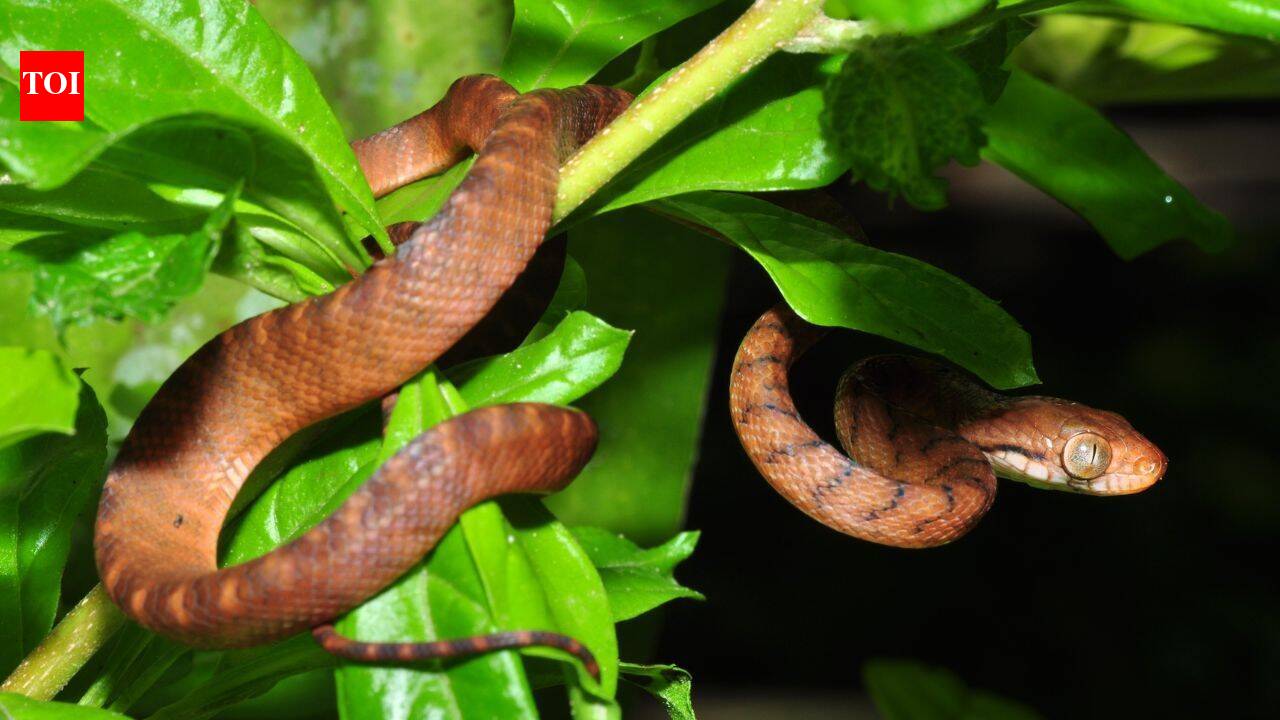
<p> Hawaii’s strict approach is shaped by events elsewhere in the Pacific. Following the Second World War, brown treesnakes reached Guam, almost certainly concealed within military cargo. Over the following decades they spread across the island in extraordinary numbers.Native bird populations collapsed. Several species disappeared entirely from Guam’s forests, surviving only through captive breeding or relocation programmes. Lizards and other native animals also declined as the snakes expanded into new habitats.The impact reached beyond wildlife. Brown treesnakes regularly climbed electrical infrastructure, creating short circuits that caused repeated power failures across the island. Those disruptions carried substantial economic costs alongside the environmental damage.For Hawaiian officials, Guam represents a practical example of what can happen when a snake gains a foothold on an isolated island with species that evolved without reptilian predators. </p>
<p><h3> How snakes still reach Hawaii</h3>
</p>
<p> Snakes do occasionally appear in Hawaii, but they do not arrive naturally. Most documented cases involve accidental transport inside cargo containers, nursery shipments or aircraft. Others have involved illegally imported pets that escaped or were deliberately released.The shipping connection between Guam and Hawaii receives particular attention because it represents one of the highest-risk transport routes for brown treesnakes.Whenever reports emerge, wildlife authorities move quickly. Capturing an animal before it disappears into dense vegetation is considered far easier than searching for it weeks later. </p>
<p><h3> Strict laws backed by constant monitoring</h3>
</p>
<p> Hawaii treats snake possession far more seriously than most parts of the United States.Keeping or transporting a snake without authorisation can lead to severe financial penalties and prison sentences. The intention is straightforward: discourage illegal ownership before animals ever enter the environment.Inspection programmes operate at airports, harbours and cargo facilities. Detector dogs trained specifically to locate snakes examine freight arriving from higher-risk locations, while permanent trapping systems surround key transport hubs.Officials also run an amnesty programme allowing unwanted snakes to be surrendered without prosecution. Encouraging owners to hand over animals safely is considered preferable to creating circumstances where someone might release a snake into the wild.Funding from both state and federal agencies continues to support surveillance, rapid-response teams and research aimed at preventing introductions throughout the Pacific region. </p>
<p><h3> An unusual balance worth preserving</h3>
</p>
<p> Hawaii’s reputation as a place without native snakes is not a coincidence or a lucky accident. It is the outcome of geological isolation that has shaped the islands ever since volcanoes first emerged above the Pacific.That same isolation also produced hundreds of species found nowhere else on Earth. Many evolved in an environment where snakes never existed, leaving them poorly equipped to cope with such predators if they were introduced.The state’s strict laws, cargo inspections and monitoring programmes reflect an understanding built over decades. Once invasive snakes become established on remote islands, removing them is rarely simple. Keeping them out in the first place remains the most effective way to protect one of the world’s most distinctive island ecosystems.    <a href=Go to Source

Hot this week

Over 3,000 cases of deadly fungus Candida auris reported in US: What it is, how it spreads- explained

Over 3,000 cases of deadly fungus Candida auris reported in US. Read More

How a faulty dam gate revealed a 2,400-year-old Turkish settlement

Representative Image of an underwater archaeological site beneath Dicle Dam Lake (AI-generated image) Beneath the still waters of Dicle Dam Lake in southeastern Turkey, an entire neighbourhood of stone houses, a mosque, a religious s Read More

Topics

How a faulty dam gate revealed a 2,400-year-old Turkish settlement

Representative Image of an underwater archaeological site beneath Dicle Dam Lake (AI-generated image) Beneath the still waters of Dicle Dam Lake in southeastern Turkey, an entire neighbourhood of stone houses, a mosque, a religious s Read More

Nearly 2,000 RSS volunteers assist over 40,000 flood-affected families in Assam

File photo: Members of the Rashtriya Swayamsevak Sangh (RSS) NEW DELHI: The Rashtriya Swayamsevak Sangh (RSS) on Wednesday said its volunteers, along with affiliated organisations, have been carrying out rescue and relief operations Read More

Meena shares powerful note: ‘Be proud of your character, not your birth’

Veteran actress Meena has won praise on social media after sharing a powerful message that encourages people to value character and humanity over identities determined at birth. Read More

Congress vs Congress in Punjab: With ‘sleeper cell’ warning, party puts Channi camp on notice

NEW DELHI: Will the Congress crack the whip against dissidents in Punjab? Read More

Related Articles