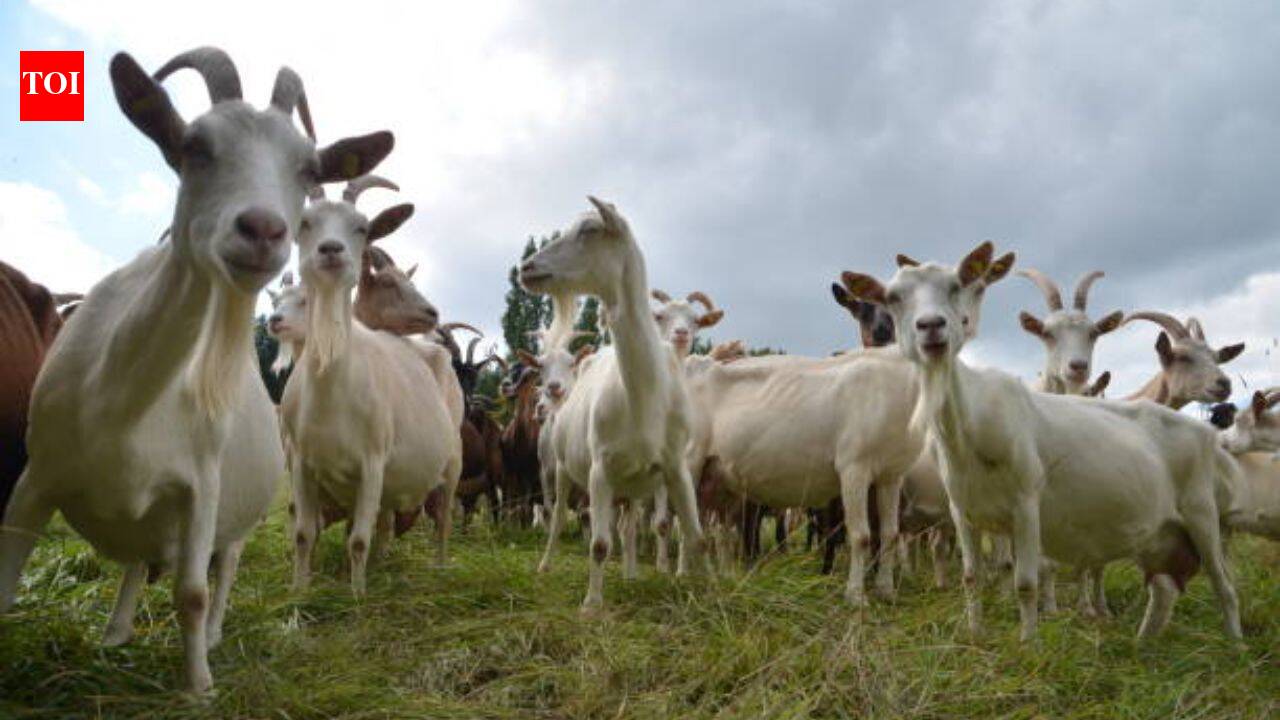

In a remarkable ecological initiative, over 140,000 invasive goats have been eradicated from three areas of the Galapagos Islands. This operation, costing $10.5 million, aims to rejuvenate the habitat for native wildlife. Using judas goats fitted with transmitters, conservationists pinpointed the remaining invaders. Following their removal, the area’s native plants are thriving once again, supported by continuous monitoring and protective measures.
The Galapagos Islands removed more than 140,000 goats from three regions in order to let their native wildlife thrive in an ecological operation that cost a whopping $10.5 million. The Judas goats were decisive in one of the largest ecological restoration operations carried out on the islands.
Invasive goats consumed native vegetation
The goats were brought to the island by sailors, pirates and whalers who left the animals on the islands as a meat reserve for future voyages. Without major natural predators, the herds grew and advanced over the vegetation. They consumed everything: leaves, shoots, bark and even cacti, which were used by giant tortoises and other species. They also prevented the growth of young trees and shrubs, eliminated shaded areas, and left the soil more exposed to erosion.Then in 1997, the Galapagos Conservancy, the Galapagos National Park and the Charles Darwin Foundation launched Project Isabela to remove the destructive species from the islands. As per the Galapagos Conservancy website, the project brought together hunters on land, trained dogs, digital maps, and helicopters in areas marked by craters, lava fields, dense vegetation, and large volcanic expanses.
Aerial hunting for the goats
The team conducted aerial operations that allowed the location and elimination of large concentrations of goats. In the first seven months of the campaign carried out in northern Isabela alone, more than 55,000 animals were removed. The difficulty increased when there were only a few individuals left scattered across the territory. Eliminating 99% of the population would not solve the problem as small surviving groups could reproduce and rebuild the herds in a few years. The teams needed to find every remaining animal, including those hidden in hard-to-reach places. It was at this stage that the Judas goats began to play the role of trackers.Some goats were captured, sterilised and equipped with transmitter collars. As these animals are social, the Judas goats would seek out other specimens and end up revealing to hunters where the last groups were. The radio signals allowed tracking their movements. The goats found around the trackers were removed, while the equipped animal remained alive to repeat the search. About 770 Judas goats were used in northern Isabela.
Back to their native
After the removal of the invasive goats, small trunks began to produce sprouts again and new seedlings appeared. Trees, high-altitude shrubs, cacti of the Opuntia genus and other endemic plants increased in Santiago and northern Isabela. The recovery of the vegetation cover also favoured the Galápagos rail, a bird dependent on wet and densely covered environments. Its population grew in the restored areas of Santiago, while the restoration of habitats reduced the isolation between groups of the species.Despite the progress, the three regions did not immediately return to the state before the arrival of the goats. Some invasive plants occupied available spaces, and the recovered vegetation did not always present the same original composition. The continuity of recovery depends on monitoring, preventing new introductions, and protecting the giant tortoises, which disperse seeds, open paths, and participate in the reconstruction of Galápagos’ natural processes. Go to Source