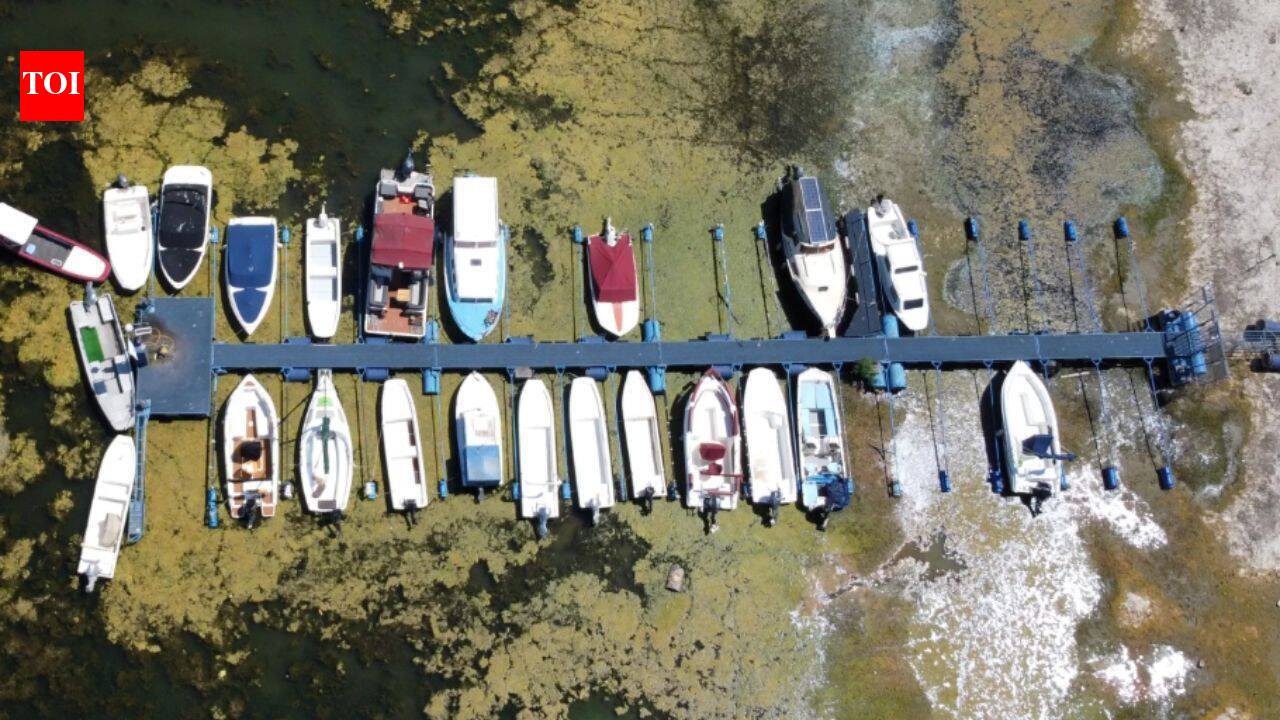

Europe’s shrinking Donbe river has hit power supply, transport and businesses
Europe’s major rivers are shrinking as extreme heat and drought continue across the continent, creating several issues. Falling water levels are reducing electricity production, disrupting the transport of goods and affecting businesses that depend on rivers.From the Rhine in western Europe to the Danube in central and eastern Europe, waterways that normally support shipping, power generation and farming are becoming increasingly unreliable. The situation has forced countries to cut electricity production, import costly power and deal with transport delays.Scientists have long warned that Europe is warming faster than any other continent. Record-breaking heatwaves and irregular rainfall are now making that warning visible in everyday life.The impact is spreading across several countries at the same time. Companies are reporting lower earnings, farmers are finding it harder to move crops, and governments are asking people to reduce electricity use as pressure on power systems grows.
Power plants shut down
Many power plants depend on rivers. Some generate electricity directly from flowing water, while others use river water to cool their reactors or equipment.Hydropower plants work by allowing flowing water to turn large turbines, which then produce electricity. When river levels fall, there is less water available to spin those turbines, reducing the amount of power that can be generated.On the other hand, nuclear power plants do not produce electricity from river water, but they need large amounts of water to cool their reactors safely. If river levels become too low or the water becomes too warm, plants may have to reduce output or temporarily shut down. That is now happening in several parts of Europe.The Danube, Europe’s second-longest river, flows through 10 countries before reaching the Black Sea. It supplies water for power plants, supports shipping and provides water for agriculture. But record low water levels have disrupted all of these activities.Hungary’s Paks nuclear power plant, which produces nearly half of the country’s electricity, has been reducing output because the Danube can no longer provide enough cooling water. The plant is also expected to shut down as water levels remain too low for safe operation.Romania has also shut one reactor at its Cernavoda nuclear power plant for the same reason, with a second reactor expected to follow. Together, the shutdowns could temporarily remove a significant share of the country’s electricity supply.In Serbia, the Djerdap 1 hydropower plant, the country’s largest, is producing only about 20% of its normal capacity because of the lack of water.The drought has also affected cooling systems at Serbia’s Kostolac coal-fired power plants, forcing them to reduce electricity generation.To make up for the shortfall, both Hungary and Serbia plan to import electricity. However, buying power from neighbouring countries becomes more expensive when demand is already high during heatwaves.France has also reduced nuclear power production because of low river levels and rising water temperatures.
Rivers carrying less cargo
Europe’s rivers are also major transport routes, moving grain, oil, coal, chemicals and other goods between countries. Cargo vessels need enough water beneath them to sail safely. When rivers become shallow, ships cannot carry their normal loads. They either transport less cargo or stop operating altogether.Along the Danube, farmers are facing difficulties moving harvested grain because barges can no longer reach several inland ports.Cezar Gheorghe of Romanian grain market consultancy AGRIColumn told Reuters, “Only the ports which are closer to the Black Sea are still operational. Barges can’t go through the others,” he said.