
File photo: Middle East security situation
US embassies across several Middle Eastern countries on Saturday urged American citizens to consider leaving the region or be prepared to depart at short notice, warning of the possibility of an “unforeseen escalation” in the conflict involving Iran.The security alert was issued by US embassies in Bahrain, Iraq, Israel, Jordan, Kuwait, Lebanon, Oman, Qatar, Saudi Arabia and the United Arab Emirates, a day after US President Donald Trump threatened to hit Iran “very hard”.The advisory comes as the conflict between the United States and Iran continues to intensify, with repeated military exchanges disrupting travel, trade and security across the region.
US warns of escalating security risks
The identical security alerts described the situation in the Middle East as “fluid” and warned that the Iranian regime remained “unpredictable”, citing recent attacks carried out “without warning or provocations” and the expansion of strikes to areas not previously targeted, including Egypt.”Americans in the region should consider departing, or be prepared to depart should there be escalation,” the advisory said. The embassies also advised US citizens to exercise “heightened vigilance” and prepare for possible flight cancellations, temporary airspace closures and wider travel disruptions.The advisory urged travellers to closely monitor airline operations and local safety guidance, while Americans planning trips to the region were asked to “seriously reconsider” their travel plans, as reported by PTI. The alert also warned that US diplomatic facilities, businesses and institutions worldwide could be targeted by Iran or groups aligned with Tehran.”Americans should remain vigilant, as merely because US interests or businesses have not been attacked in a country in the past does not ensure their safety,” the advisory said.
Specific warnings for Jordan and Israel
The advisory contained country-specific guidance for some US nationals.Americans in Jordan were advised not to visit US military bases, which have recently come under Iranian missile attacks.In Israel, US citizens were urged to identify the nearest bomb shelter and remain prepared in case of fresh attacks.The US Embassy in Beirut also said it remained under “ordered departure status”, meaning non-emergency US government personnel continue to remain relocated outside Lebanon.
Advisory follows Trump’s fresh warning to Iran
The travel warning came a day after Trump threatened further military action against Iran.Speaking during a Cabinet meeting at Camp David on Friday, Trump said the US would continue hitting Iran “very hard” until it “can’t take it anymore”.Later, White House press secretary Karoline Leavitt accused Tehran of violating a previous truce understanding, saying Iran had resumed attacks on commercial shipping and American forces.”President Trump is not going to stand by and allow this terrorist behavior to occur,” Leavitt said.The latest advisory marks one of the broadest security alerts issued by Washington since the conflict intensified.
Iran warns countries against supporting US
Iran responded sharply to the US warnings and military posture.According to news agency AFP, Ali Abdollahi, head of Iran’s military central command, accused Washington of escalating tensions and warned countries supporting the United States.”Any country serving as defensive shield for criminal and aggressive America will be engulfed by the flames of war,” he said in a statement carried by Iranian state television.Mohammad Mokhber, an adviser to Iran’s Supreme Leader, also warned against attacks on Iranian infrastructure.”You calculate through military equations, but we respond with the logic of history,” he wrote on X, adding that attacking Iran’s infrastructure would awaken “the fault lines” underpinning America’s global influence.
Shipping and regional tensions remain high
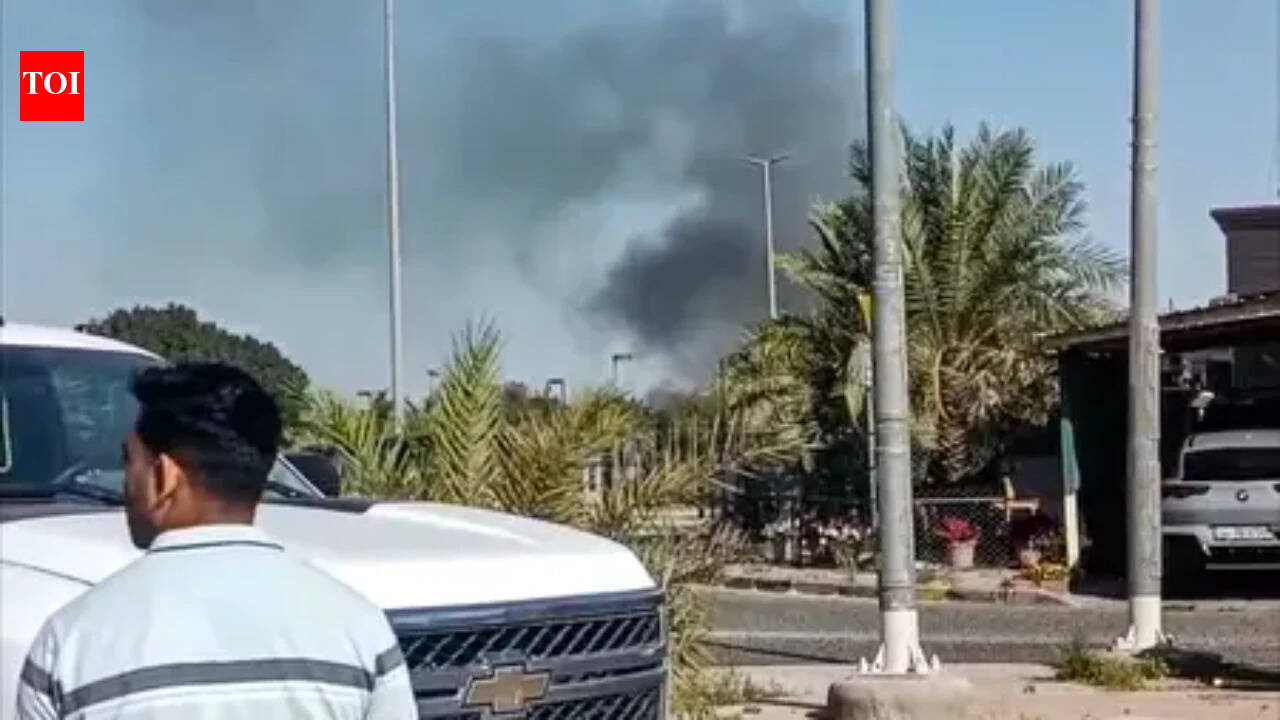
The security warning comes amid continued disruption to maritime traffic in the Gulf.An “unknown projectile” struck a tanker off the coast of Oman on Saturday, while British maritime authorities also reported another explosion near a separate vessel in the Strait of Hormuz.Kuwait’s military also responded to a fresh round of Iranian drone attacks targeting vital facilities, although no casualties were reported.Maritime analytics firm Kpler said traffic through the Strait of Hormuz had dropped sharply as shipping companies reassessed risks.”With US and Iranian public positions still at odds, operators are closely monitoring traffic volumes, routing behaviour and any diplomatic developments that could reshape risk across regional shipping lanes in the days ahead,” Kpler said.Iran has tightened its control over navigation through the Strait of Hormuz since the conflict began, requiring vessels to obtain permission before transiting the strategic waterway.
Wider conflict continues across the region
The latest developments come as the broader regional conflict shows little sign of easing.Israel carried out fresh strikes in Gaza after Hamas agreed to disarm under a US-backed phased peace framework, while Israeli forces also said they killed three Hezbollah fighters in southern Lebanon.One Israeli soldier was moderately injured during a close-quarters encounter with Hezbollah militants.The United States and Iran have remained engaged in hostilities since February, with repeated missile, drone and naval attacks continuing despite earlier ceasefire efforts.The prolonged conflict has disrupted regional economies, affected global energy markets and raised concerns over further escalation across the Middle East. Go to Source