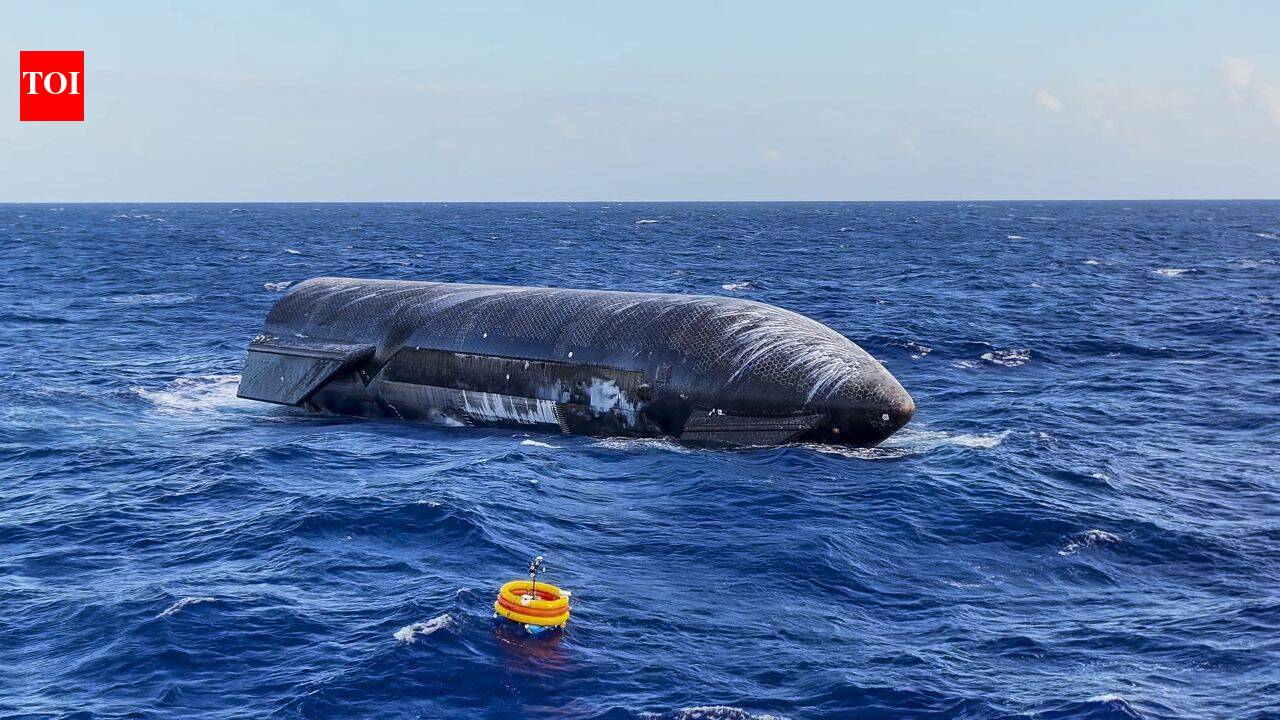

A rocket has been floating on the surface of the Indian Ocean for the past five days and its pictures are all over the internet. While one would assume it to be a scene from a sci-fi movie, the image is of SpaceX’s most recent spacecraft that made a successful return from space.On Friday, SpaceX launched Starship for the 13th time from its Starbase, Texas launch site on Friday, July 24. The upper stage Starship 40 made the softest splashdown landing in the Indian Ocean. The landing burn and engine cutoff sequence worked flawlessly, resulting in a better-than-expected soft water landing that also had the spacecraft remaining intact. What is even more interesting is that the spacecraft has stayed afloat on the surface of the Indian Ocean near Australia for the past five days.SpaceX founder and CEO Elon Musk shared a video of the celebrated feat on X, taken by a Starlink satellite, where the Starship looks as intact as it was at the time of its landing.
Inside the Starship
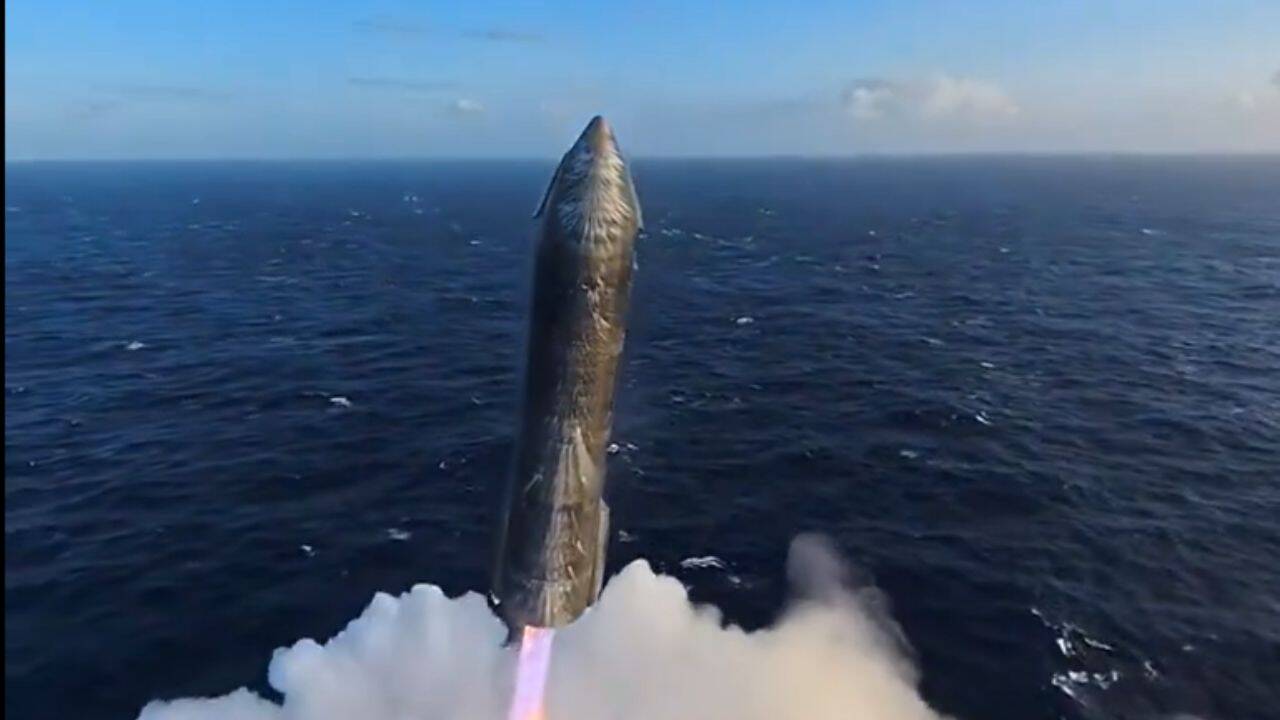
There are two major parts of a fully integrated Starship: the lower or first stage Super Heavy rocket booster and the upper or second stage Starship spacecraft.
The spacecraft floating in the ocean might look like a normal object, but it is actually a megastructure. There are two major parts of a fully integrated Starship: the lower or first stage Super Heavy rocket booster and the upper or second stage Starship spacecraft. In the Flight 13 launch test (IFT-13), SpaceX landed the Starship 40 upper stage in the Indian Ocean. It’s the latest V3 generation of the Starship; the upper stage alone stands at 52.1 meters (171 feet) tall, which can be translated to a 16-story building to understand the massive scale of the spacecraft alone (without the booster).Made of steel, it has around 18,000 heat-shield tiles installed on it. At the bottom section, six Raptor 3 engines are installed, three sea-level and three vacuum-level, for atmosphere and space, respectively. These objects combine to have a weight of around 100 tons.A smooth splashdown landing of an enormous object is a great achievement in aerospace technology. This also paves the path for reusability. Interestingly, most of the Starship 40 and its engines have stayed intact during the flight and after landing. This is why Musk confirmed in a later post on X that SpaceX is sending a ship to the Indian Ocean to recover Starship 40.