
PC: BBC
Far beyond the green edges of Australia’s coastal cities, a strange landscape appears in the middle of the outback. Low hills of pale earth rise from the red desert, scattered across the horizon like unfinished sculptures. They are not ancient ruins or natural formations, but traces of a town built around one of Australia’s most unusual industries. Beneath this harsh landscape, thousands of tonnes of rock have been removed over decades, creating a place where homes, churches and businesses exist below ground. This is Coober Pedy, a remote settlement where living underground is not a curiosity but a practical response to one of the world’s toughest climates.Apart from comfort, underground living also saves money. Coober Pedy produces its own electricity, with 70% powered by wind and solar, but cooling above-ground homes can be extremely expensive. With summer temperatures exceeding 50°C, residents avoid huge air-conditioning costs by using the earth’s natural insulation beneath the desert.
Coober Pedy, Australia: The hidden underground town created by opal miners
Coober Pedy sits in South Australia’s desert, roughly 850km north of Adelaide. At first sight, it looks like a typical outback mining town, with wide roads, dusty surroundings and buildings spread across a vast empty landscape. But the piles of excavated earth give away its unusual history.The town grew around opal mining, after valuable stones were discovered there in the early 20th century. The search for opals transformed the landscape, leaving behind thousands of mining holes and mounds of discarded rock. Over time, residents realised the same ground that held precious stones also offered a solution to the region’s extreme weather.Instead of building traditional houses above the surface, many locals began carving rooms into the soft rock beneath their feet. These underground homes became known as “dugouts”.A significant part of Coober Pedy’s population lives below ground. From outside, some homes are almost invisible, marked only by entrances and ventilation pipes rising from the desert floor.
How Coober Pedy’s underground homes beat the desert heat
The climate above ground can be unforgiving. Summer temperatures regularly climb beyond 40C, and extreme heatwaves have pushed conditions even higher. The exposed desert offers little shade, and the landscape absorbs and reflects the heat throughout the day.Inside a dugout, the conditions are completely different. Several metres of rock separate residents from the surface, keeping indoor temperatures stable throughout the year. While outside temperatures can swing dramatically between scorching summers and cold winter nights, underground homes remain close to a comfortable room temperature.For residents, the appeal is practical rather than unusual. Underground living reduces the need for constant heating and cooling, something that can be expensive in an isolated town where energy costs are already high.Many homes are surprisingly comfortable. Some contain large living spaces, modern kitchens, bathrooms and entertainment rooms. Because the surrounding rock can be shaped during excavation, residents are not limited to the straight walls and layouts of conventional houses.
Why humans have lived underground for millennia
Coober Pedy may seem like a modern experiment, but humans have used underground spaces for shelter for thousands of years.Globally, people have relied on cave dwellings and even rock-cut structures in order to adapt to challenging environments. In central Turkey, Derinkuyu represents an underground city whose rooms were formerly used as dwellings, storages, places of worship, and refuge at times of war and strife.The geological formation of Cappadocia provided the opportunity for underground architecture, as was the case with the sandstone surrounding Coober Pedy that was easily mined. There have been many examples from arid environments, where the rock-cut architecture provided protection against harsh temperatures. Some of the examples include Petra in Jordan and Mesa Verde in America.The common factor is that underground constructions act as natural insulators. The ground covering and surrounding these structures protects them from the extreme temperature shifts.
More than just houses beneath the ground
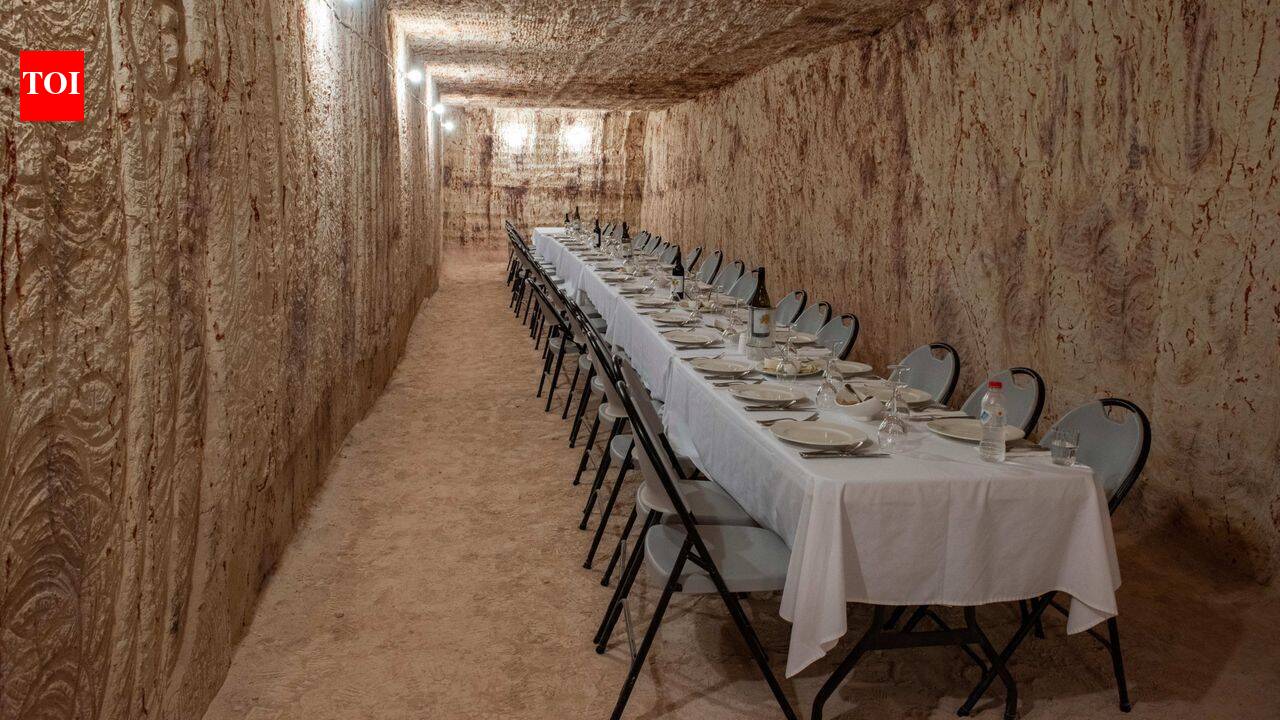
In Coober Pedy, underground life extends well beyond private homes.Visitors can find restaurants, accommodation, shops and even religious buildings beneath the surface. Some underground spaces began as mining areas before being transformed into places for daily life.The town’s unusual environment has also made it a destination for travellers curious to experience life below ground. Some visitors stay in underground accommodation carved directly into the surrounding rock, experiencing the quiet atmosphere that comes with being surrounded by earth.Residents often describe the underground environment as peaceful. There is less noise from the outside world, fewer insects, and protection from the intense desert conditions.
Why underground homes are not everywhere
The idea of moving underground may sound appealing in a warming climate, but Coober Pedy’s success depends on a very specific combination of circumstances.The local rock is soft enough to excavate but strong enough to hold its shape without extensive support. The region is also extremely dry, which reduces problems caused by moisture.Water is one of the biggest challenges for underground construction. In wetter regions, underground spaces can suffer from leaks, condensation and mould. Without careful design, caves and basements can become damp and unhealthy.Ventilation is another important factor. Underground homes need systems that allow fresh air to circulate and prevent humidity from building up. In Coober Pedy, simple ventilation shafts help maintain airflow and remove moisture from everyday activities such as cooking and washing.
A possible lesson for hotter cities
With increasing temperature levels across many parts of the world, the design of buildings that would rely less on cooling systems is regaining attention. One way to do this is through the use of underground space, especially in regions that experience high temperature.There are cities where underground spaces have been used as shelters during heat waves due to their hot weather. There are also historic underground spaces that have been put into new uses. Go to Source