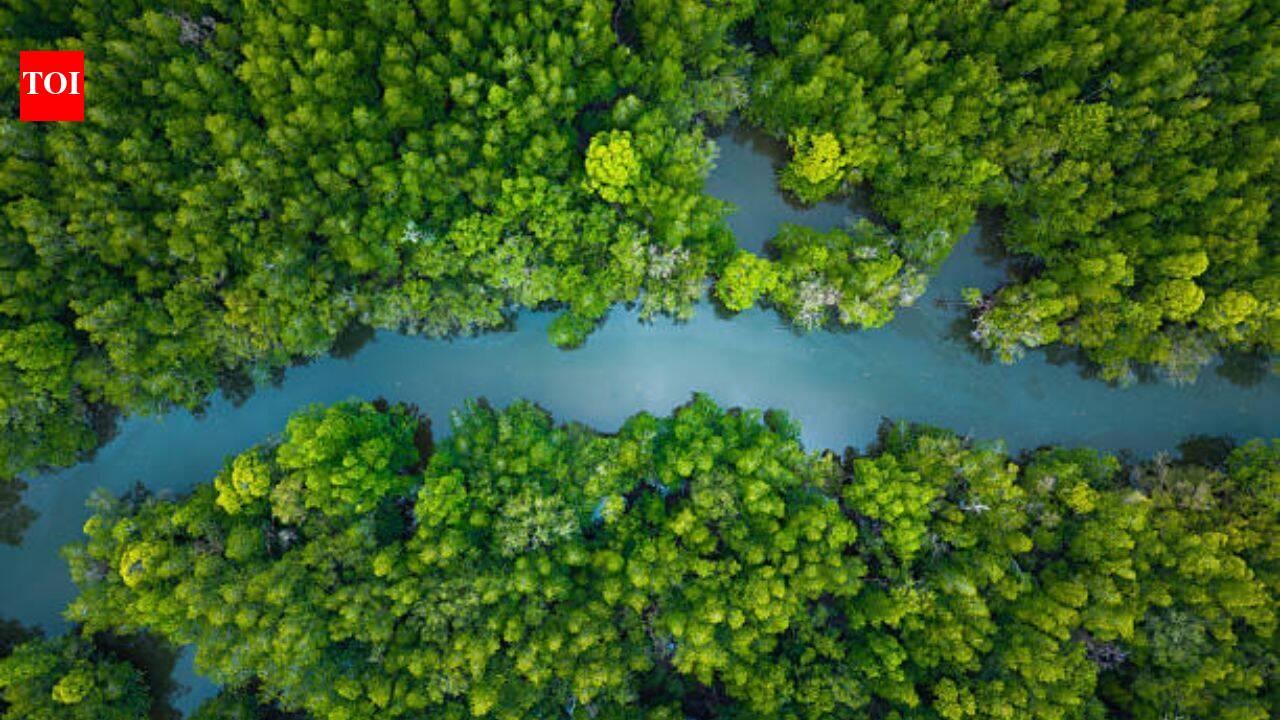

Mangroves naturally occur along the southeast Chinese coast and traverse the provinces of Hainan, Guangdong, Guangxi, Fujian and Taiwan. Thirty-seven mangrove tree species, representing 20 families and 25 genera have been documented in the country. Yet a remarkable decrease of species richness has taken place over the past 40 years in China, with the nation losing nearly two-thirds of its mangroves. This has been largely due to factors including conversion of land for rice farming, embankment for aquaculture ponds and rapid coastal urban development.Now, China is among the handful of countries in the world where mangrove coverage is increasing, said the Ministry of Natural Resources and the National Forestry and Grassland Administration on Sunday. It has planted and restored around 22,500 hectares of mangroves since 2020, including 11,600 hectares of newly planted forests. The announcement coincided with International Day for the Conservation of the Mangrove Ecosystem, observed annually on July 26, under a UNESCO designation. According to a report by China Daily, Lin Cunyan, an official with the ministry’s department of ecological restoration of land and space, said the newly planted area exceeded the 9,050-hectare target set under a special action plan for mangrove protection and restoration. “The 2025 national land use change survey revealed that China’s mangrove area has reached 31,700 hectares, marking an increase of about 44 per cent since the early 2000s. Alongside this expansion, the quality, stability and carbon sequestration capacity of mangrove ecosystems have significantly improved,” Lin said.