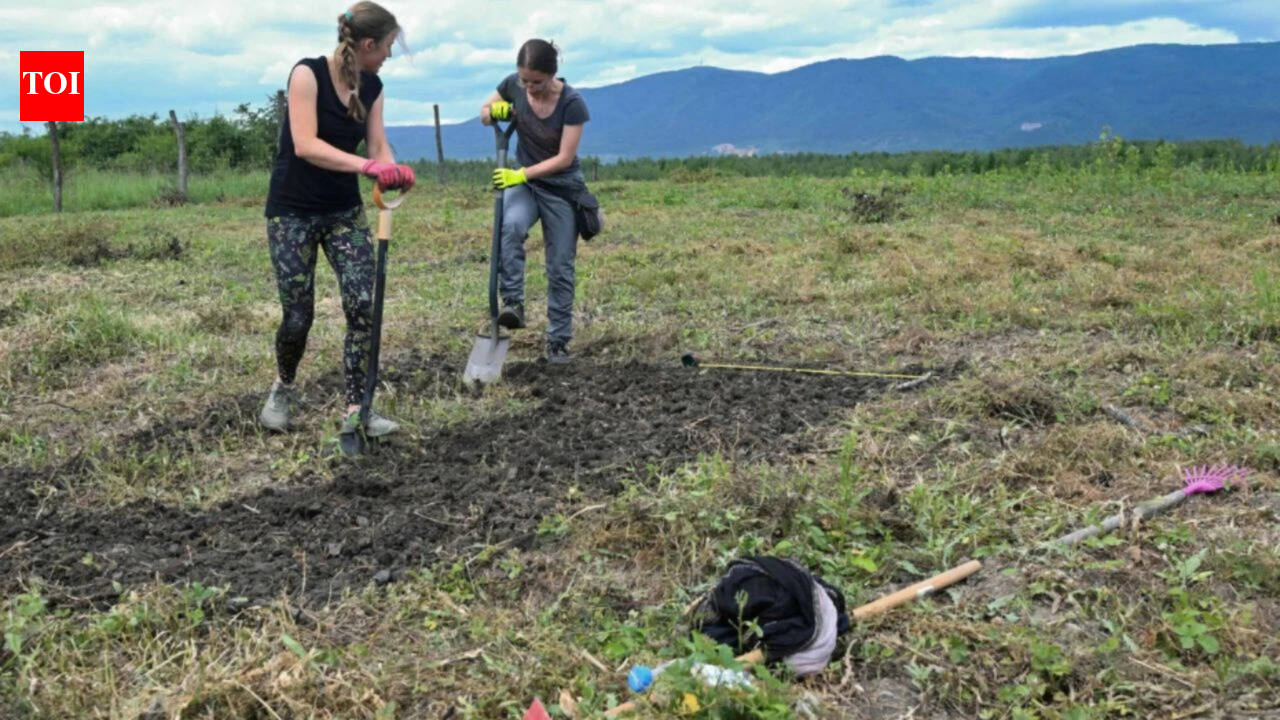

Scientists prepare a field for Miscanthus plants in northern Czech Republic (AFP photo)
More than four years of war have left lasting damage across parts of Ukraine. It has not only affected buildings and infrastructure, but also the natural environment. Areas that once supported forests, wildlife and agriculture have been reduced to barren lands which could take years to recover.Ukraine’s rich black soil has long been one of the country’s biggest strengths. This natural asset helped the European nation become one of the world’s leading producers and exporters of grain. Years of war have left it damaged and polluted, making farming difficult in some places.Researchers at the Jan Evangelista Purkyne University (UJEP) in the Czech Republic are testing giant Miscanthus, a fast-growing grass, to see if it can gradually remove harmful pollutants from contaminated soil while also producing biomass that can be used for energy.The research is part of a NATO-backed project that aims to reduce the environmental damage caused by military conflict. Scientists say the process is slow and could take years, but early findings suggest the grass may improve soil health and prepare damaged land for future farming.
Breadbasket of Europe
Ukraine is often called the ‘breadbasket of Europe’ because of its vast areas of chernozem or black soil. The soil is rich in nutrients and organic matter, making it one of the most fertile soils in the world. It has helped Ukraine become a major producer of wheat, maize and other crops.However, after nearly four-and-a-half years of war, large areas of farmland have been affected by military activity. Soil in some regions has been polluted by oil products, explosives and other contaminants.Heavy vehicles, shelling and fighting have also damaged the land by compacting the soil and destroying vegetation. Restoring this land will be essential if it is to be used for agriculture again.
Testing giant Miscanthus
At an experimental site on a former brown coal mine near Most in northern Czech Republic, researchers are growing giant Miscanthus to understand how it behaves in damaged soil.”The goal is to revitalise contaminated areas while producing biomass,” UJEP environmental scientist Josef Trogl says, as quoted by news agency AFP.Giant Miscanthus is originally from East Asia but is now grown across Europe. It is mainly used as a biomass crop because its dried stems can be burned to produce heat and energy.Researchers believe the plant may also help clean polluted land through a natural process called phytoremediation.
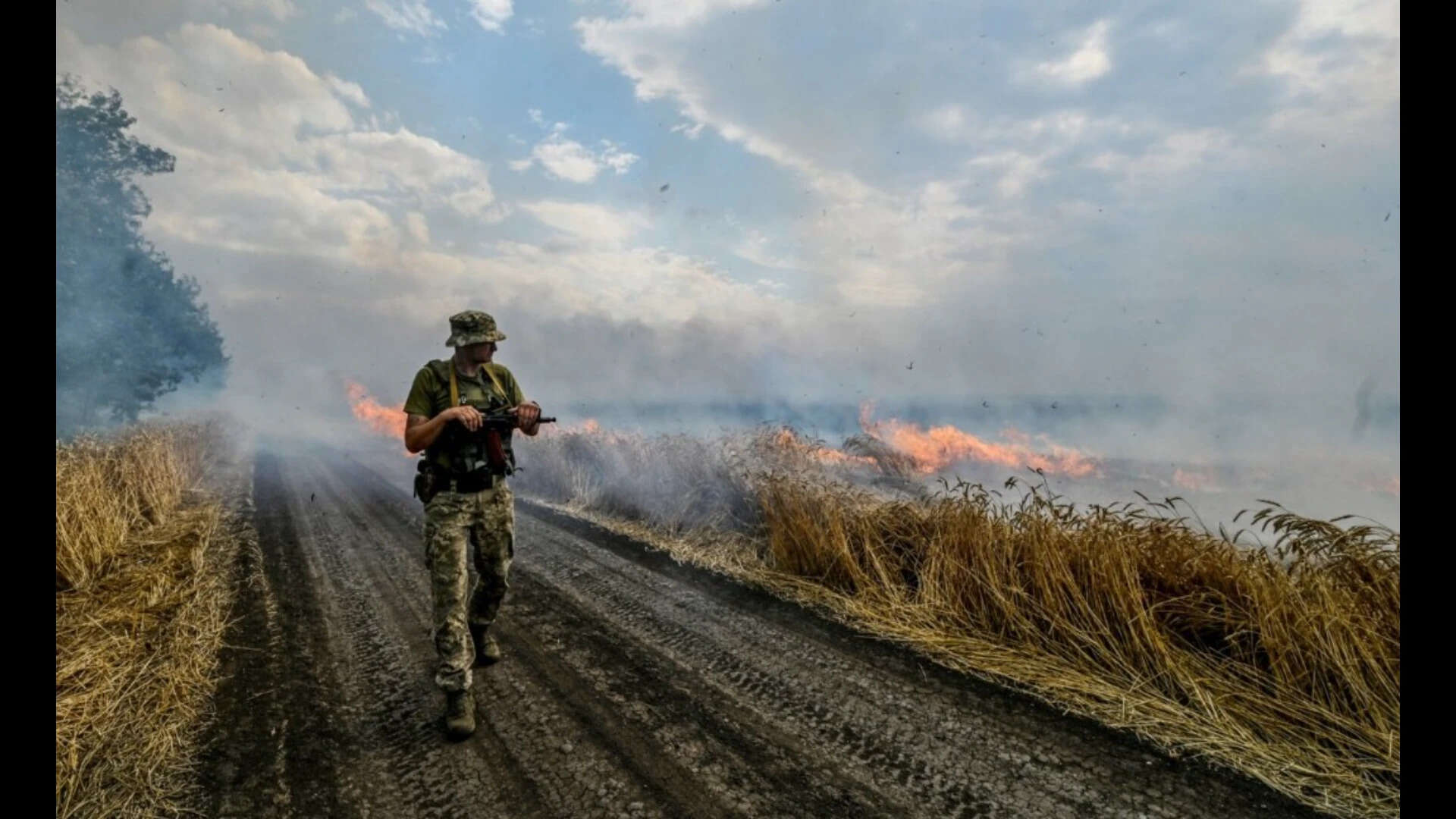
A Ukrainian fighter walks past a burning wheat field (Reuters file photo)
How grass helps soil
Scientists say the plant develops a large and deep root system. These roots can trap some harmful substances, including certain metals and other pollutants, while improving the condition of the soil.Ember Morrissey, a biologist at West Virginia University and co-author of a recent study on giant Miscanthus, says the grass is “capable of growing on degraded and contaminated soils and produces extensive root systems that can accumulate metals while simultaneously restoring soil organic matter.”According to the researchers, most of the pollutants remain in the roots underground. The stems and leaves that grow above the ground stay largely clean and can still be harvested as biomass.The plant also improves soil quality in another important way. “The plant also sends up to 40% of organic material it produces through photosynthesis to the soil via its roots, which is way more than other farm plants,” Trogl said.Photosynthesis is the natural process through which plants use sunlight to convert carbon dioxide and water into food for growth while releasing oxygen. During this process, giant Miscanthus stores a large amount of carbon in the soil through its roots. Scientists say this helps rebuild soil organic matter, making the land healthier over time.
Improving soil naturally
Healthy soil contains organic matter called humus, which helps retain water and nutrients needed for plant growth. Trogl says giant Miscanthus encourages the formation of humus more effectively than many other crops.”The development of humus and soil fertility is better here than under other plants,” he said, adding that the grass also supports soil microorganisms to faster degrade organic pollutants such as petroleum.Soil microorganisms are tiny living organisms, including bacteria and fungi, that naturally break down harmful substances. By creating better conditions for these organisms, the plant may help speed up the recovery of contaminated land.
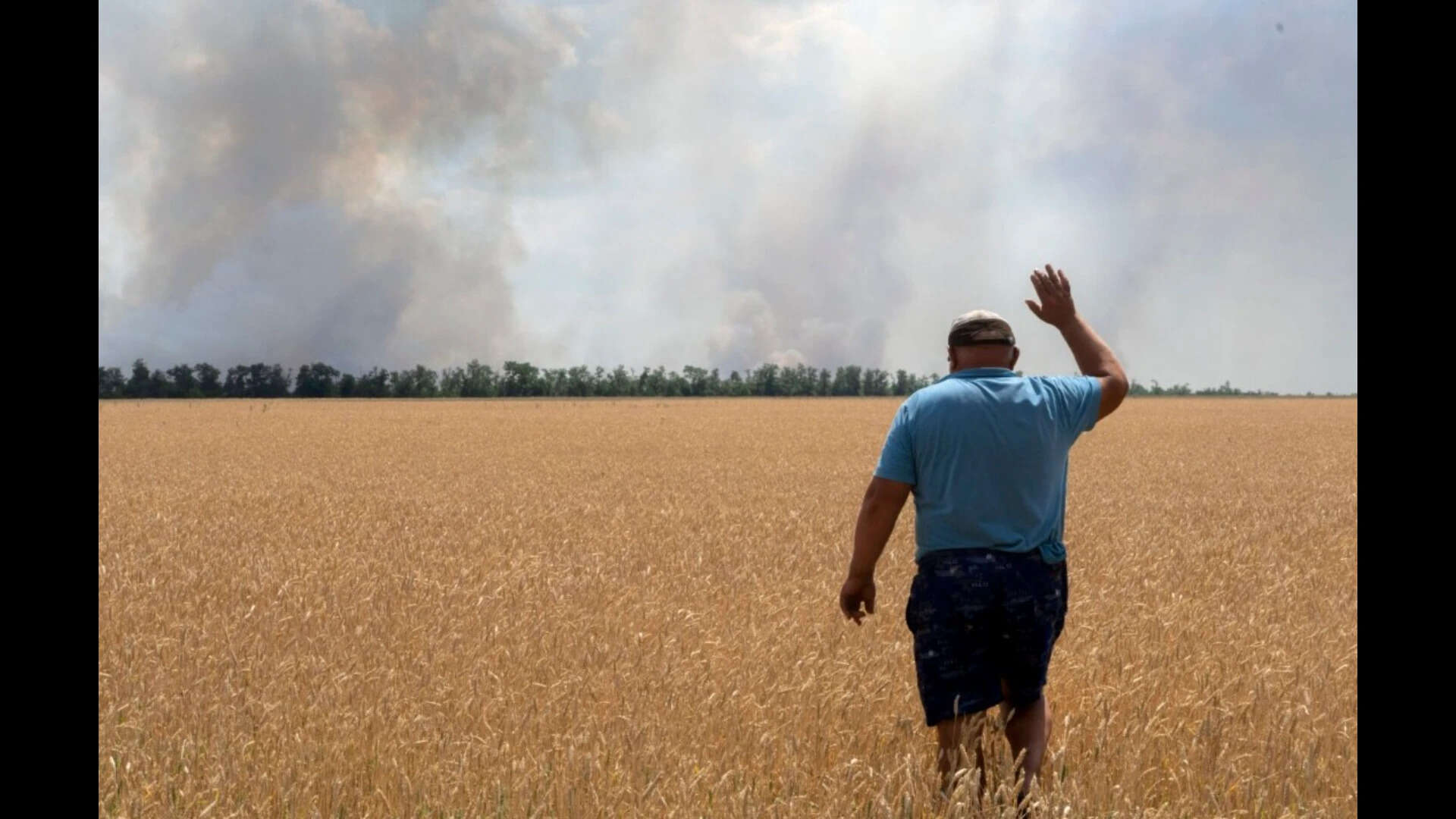
A Ukrainian farmer watches as patches of his wheat fields burn (AP file photo)
Research underway in Ukraine
The Czech research is not limited to laboratory testing. Since 2023, scientists have also been growing giant Miscanthus in Vorzel, near Bucha, a suburb of Kyiv.The area was occupied by Russian forces between February and March 2022 before being liberated the following month. It was later cleared of mines during autumn 2022.According to Valentina Pidlisnyuk, a Ukraine-born professor at UJEP who leads the research team, the land suffered extensive environmental damage.”The area was occupied by Russian troops between February and March 2022, liberated in April 2022, and subsequently demined in autumn 2022,” she said.
Early findings are encouraging
Although the grass takes several years to show its full impact, scientists say the first results are positive. Pidlisnyuk said analyses carried out so far have shown positive effects on soil biological parameters and carbon sequestration.Carbon sequestration means capturing and storing carbon in the soil instead of releasing it into the atmosphere. This not only improves soil quality but can also help reduce the amount of carbon dioxide contributing to climate change.Researchers say the project is giving them valuable information about how damaged land can be restored using natural methods instead of relying only on expensive engineering solutions.Worth €346,000 (around $395,000), the project involves researchers from the Czech Republic, Ukraine, Canada, Croatia, Kazakhstan and the United States. It is currently scheduled to continue until next year. Go to Source