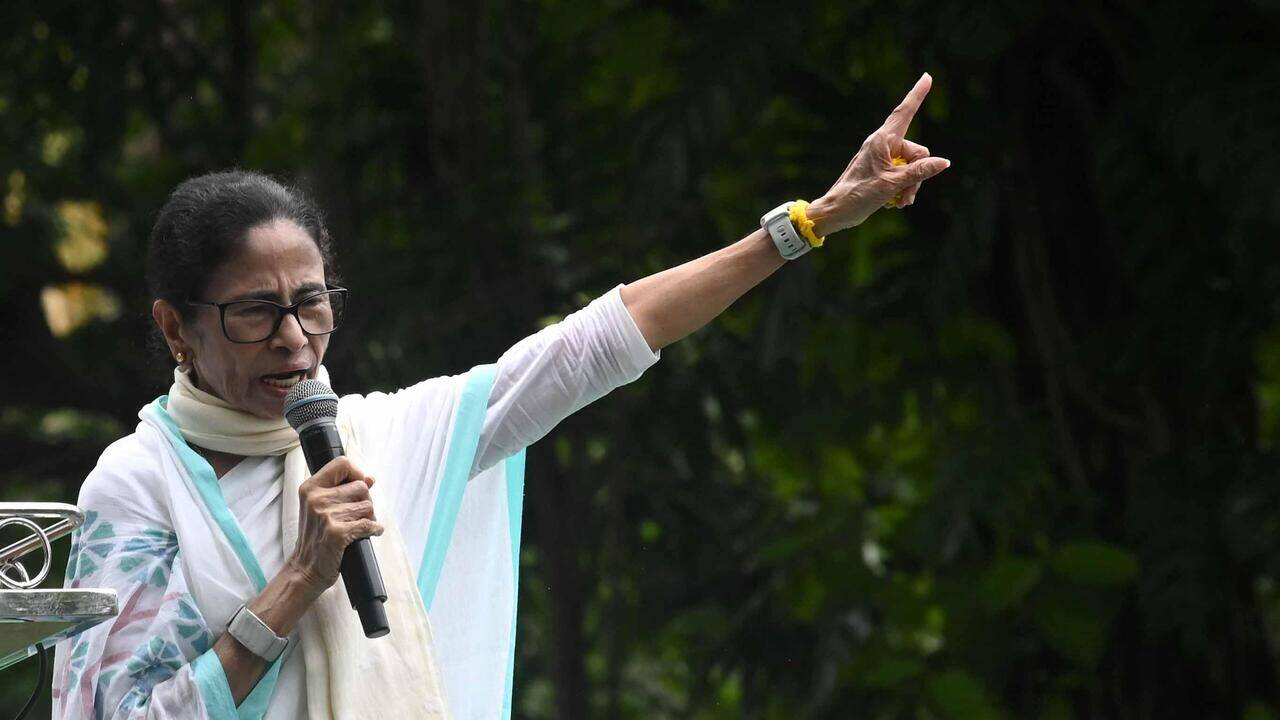

TMC chairperson Mamata Banerjee addresses supporters during Martyrs’ Day function in Kolkata.
On 20th July night, Mamata Banerjee refused to leave the Martyrs’ Day stage after her faction alleged that it had been vandalised. Less than two weeks earlier, a protest march led by her had been disrupted by clashes with people the TMC identified as BJP workers. A veteran politician that she is, Mamata refused to take another chance and kept a night-long vigil.There was something faintly Shakespearean about the scene, a former ruler separated from the machinery of her kingdom, surrounded by a diminished circle of loyalists and guarding a stage her faction said had been vandalised.By the next afternoon, she was back on stage, speaking largely extempore. There were fewer people to thank, with the guest list missing its usual glamour quotient, and fewer formalities to observe. The poetry was not as eloquent as in the past. Her Hindi was toned down, now that Delhi was no longer calling. The plans she laid out were not grandiose; in fact, they were skeletal, reflecting a fear of further backstabbing. Yet Didi was in her element, refusing to throw in the towel without a fight.For TMC workers, Mamata remains the agni-kanya, the leader who can blaze through opposition by sheer force of action. But this July 21 was an acid test. After the May 4 defeat and the desertion of a large part of the party’s rank and file, Mamata had to prove to her detractors, and perhaps to herself, that she could still draw a crowd without the full weight of the well-oiled party machinery or the organisational muscle of many of her former lieutenants.By that limited yardstick, Mamata passed with flying colours.The breakaway faction cut a sorry figure, with a TOI report citing a paltry attendance of 500, far below Mamata’s gathering. The Congress, which held its own Martyrs’ Day observance, surprisingly managed to cobble together a reasonable gathering. This was no longer the old Dharmatala sea. But Mamata still occupied the largest space.
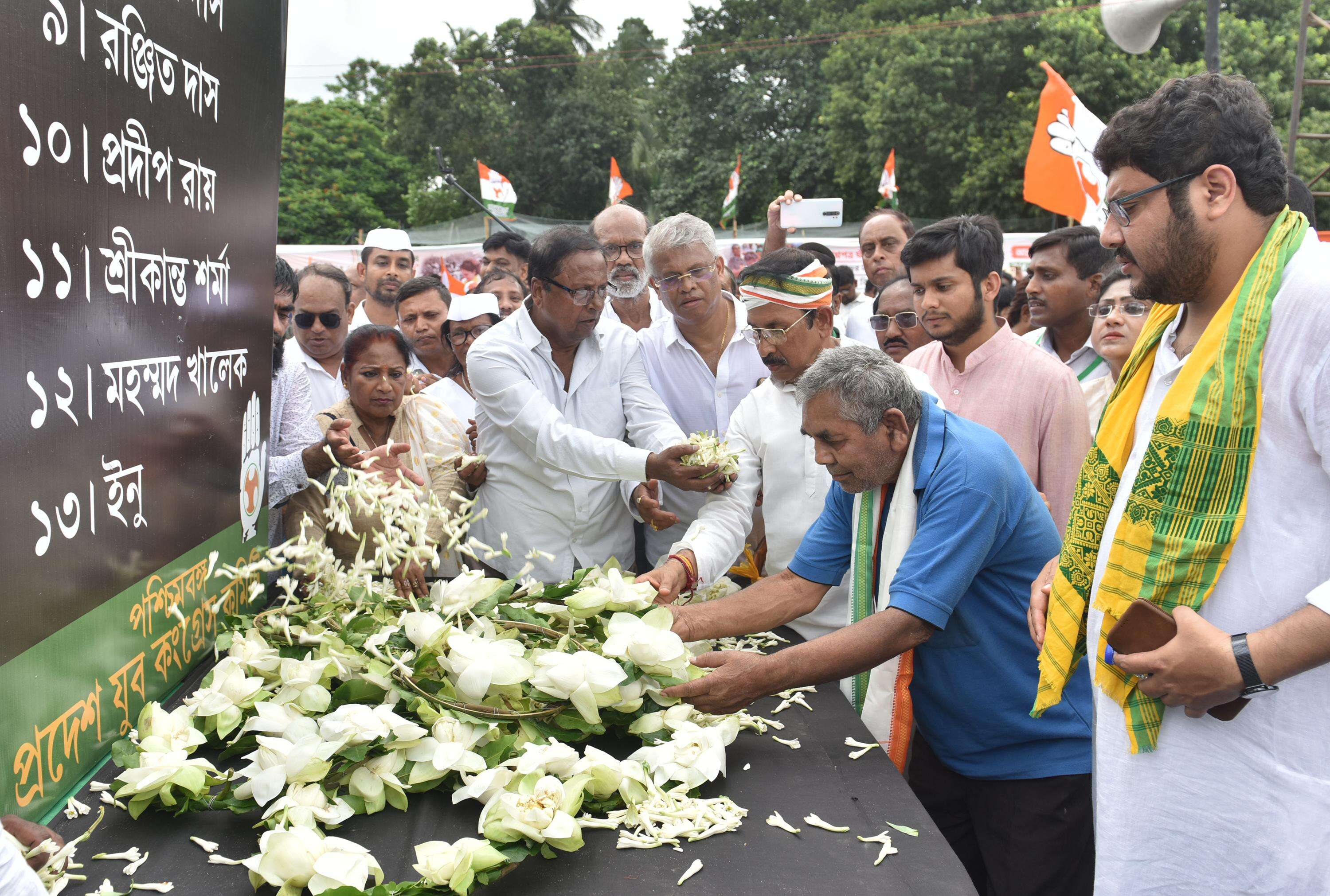
Congress commemorating Martyrs Day
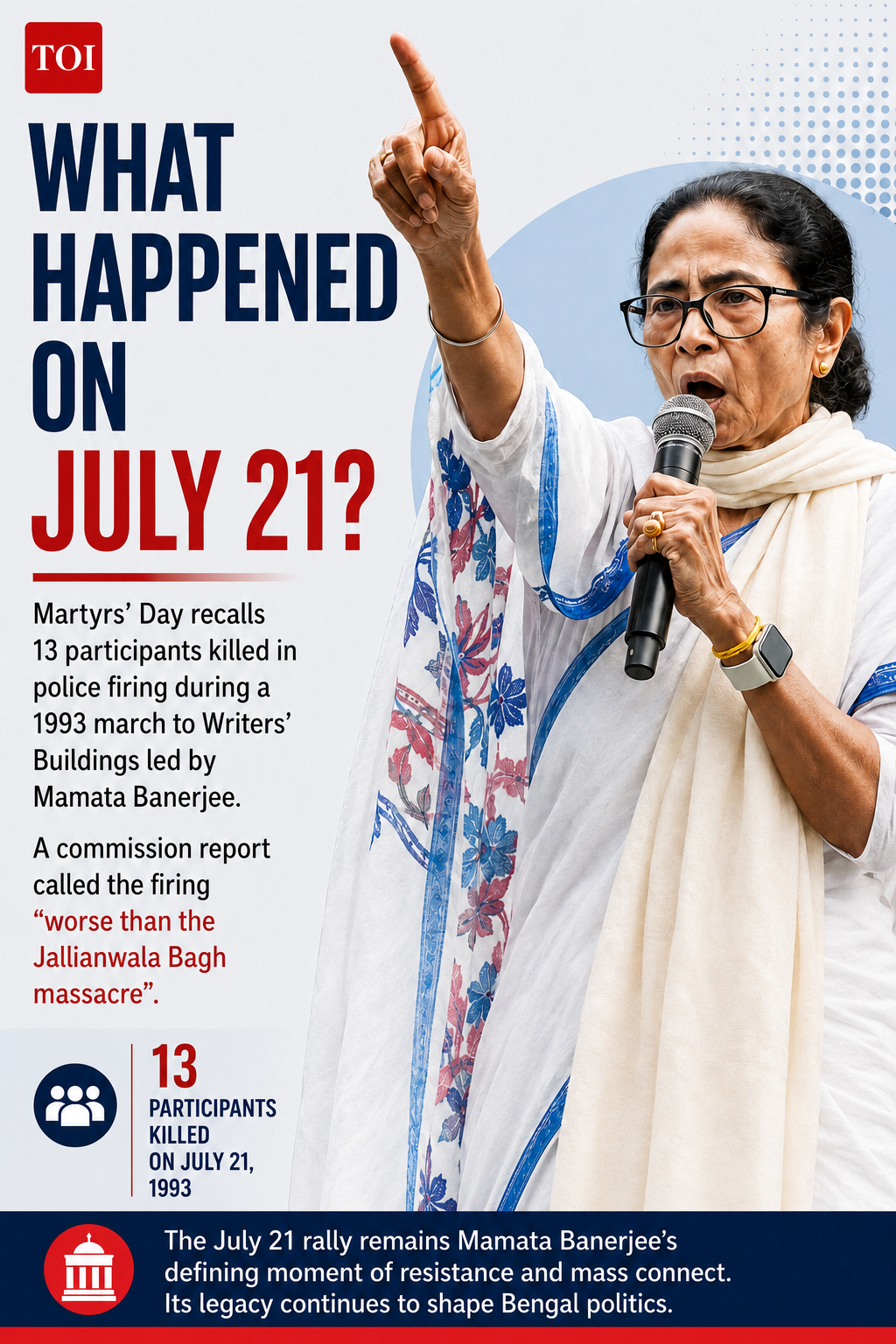
What happened on July 21?
Martyrs’ Day commemorates 12 Youth Congress workers who were killed in police firing during a procession towards Writers’ Buildings on July 21, 1993. A 13th participant remains missing and is commemorated alongside them. The march was led by Mamata Banerjee and, significantly, the demand was for mandatory photo identity cards for voters. A commission report recently tabled in the state assembly described the firing as “worse than the Jallianwala Bagh massacre”.Former registrar of Calcutta University and professor in the Department of South and Southeast Asian Studies at the same university, Dr Raja Gopal Dhar Chakrabarti, speaking to TOI, recalls that fateful day in 1993, when he believes Mamata protested against “Leftist anarchy”. The frenzy in the crowd was maddening, and many who wanted to join the protest could not reach the venue, he reminisces.According to Chakrabarti, who has diligently tracked the day since then, July 21 has, over the years, morphed into something much bigger. Mamata completely appropriated the event even after leaving the Congress and virtually turned it into the TMC’s annual political day. It measured not merely popular support but organisational obedience. This year, ironically, July 21 became a test of who represented the real TMC.The martyrs’ families, too, remained divided, with members of some families attending the Ritabrata Banerjee-led Trinamool event and others choosing Mamata’s programme. But the loyalty of those who mattered politically appeared to rest firmly with the Kalighat camp.
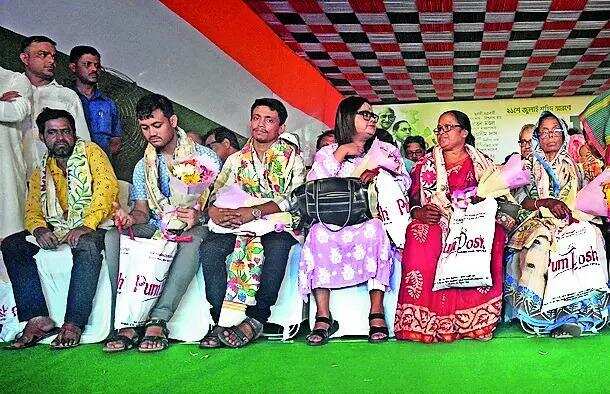
Some martyrs family went to Mamata’s event, others attended Ritabrata’s.
Speaking to TOI, political analyst and former Vidyasagar University vice-chancellor Dr.Sibaji Pratim Basu says that Mamata was never short of charisma, right from her early days. This year’s Martyrs’ Day merely reiterated that she still retains the ability to be a natural crowd-puller. Chakrabarti believes that, compared with Mamata’s heyday, this year’s July 21 was a much more tepid affair, but she undoubtedly managed to establish that support remains with her.In the assembly election, the TMC won 80 seats, polling 40.8% of the votes and falling 32.1 lakh votes short of the BJP’s overall tally of 2.92 crore. Thus, while the party received a royal thrashing, fuelled largely by anti-incumbency, its core vote bank remains robust.A lot of water has flowed down the Hooghly since May. The TMC has effectively broken into three parts, with the NCPI parliamentary bloc and the Ritabrata faction splintering from the original party. The NCPI bloc, fronted by Sudip Bandyopadhyay and Kakoli Ghosh Dastidar, has abandoned even the fig leaf of anti-BJP mobilisation that the MLAs led by Ritabrata continue to maintain in Kolkata. A large number of legislators have left Mamata’s camp, with her trusted aide Madan Mitra among the latest defectors. The precise strength of the competing factions remains contested, but the Mamata-led TMC is undoubtedly a much smaller political entity than it was immediately after the election.
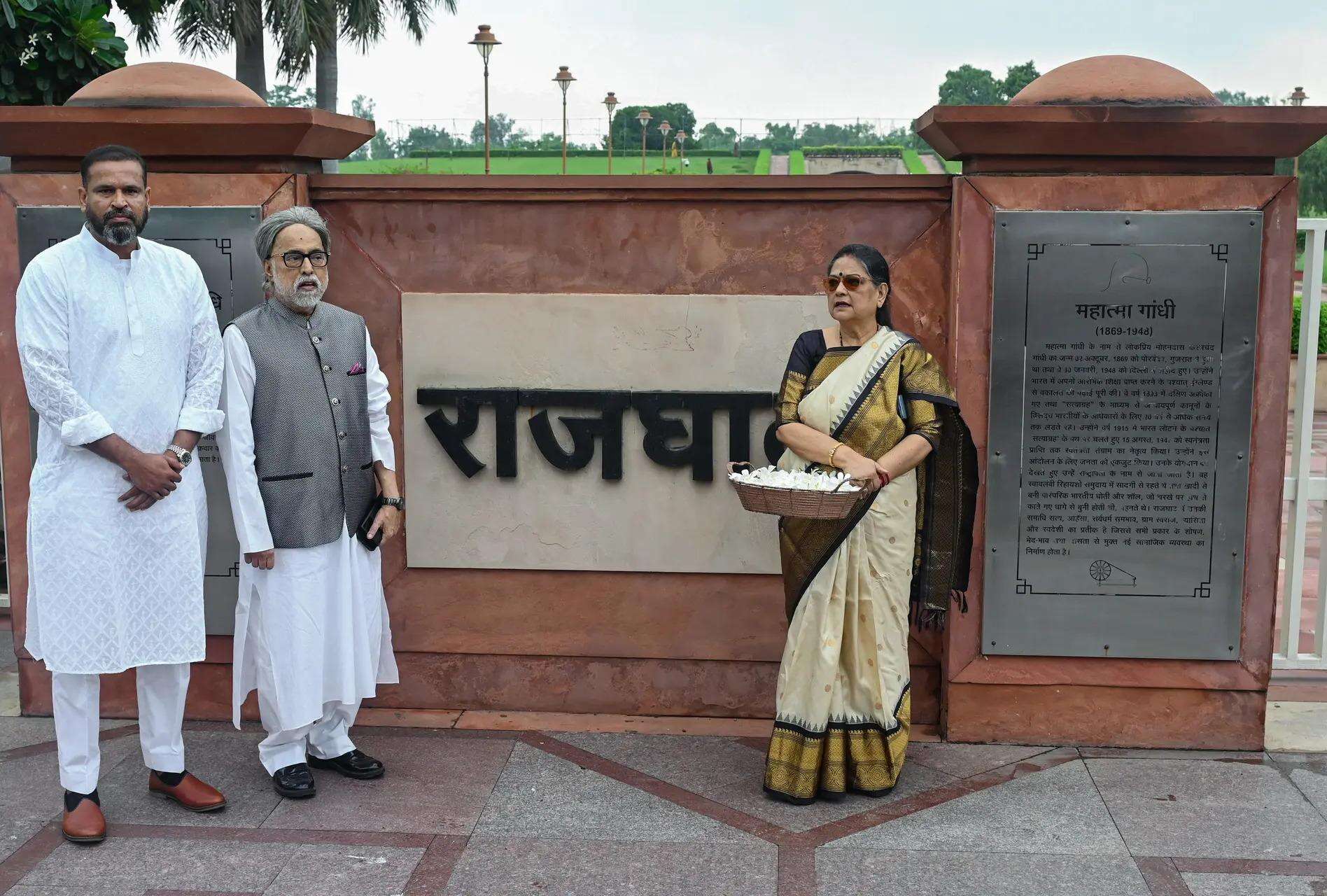
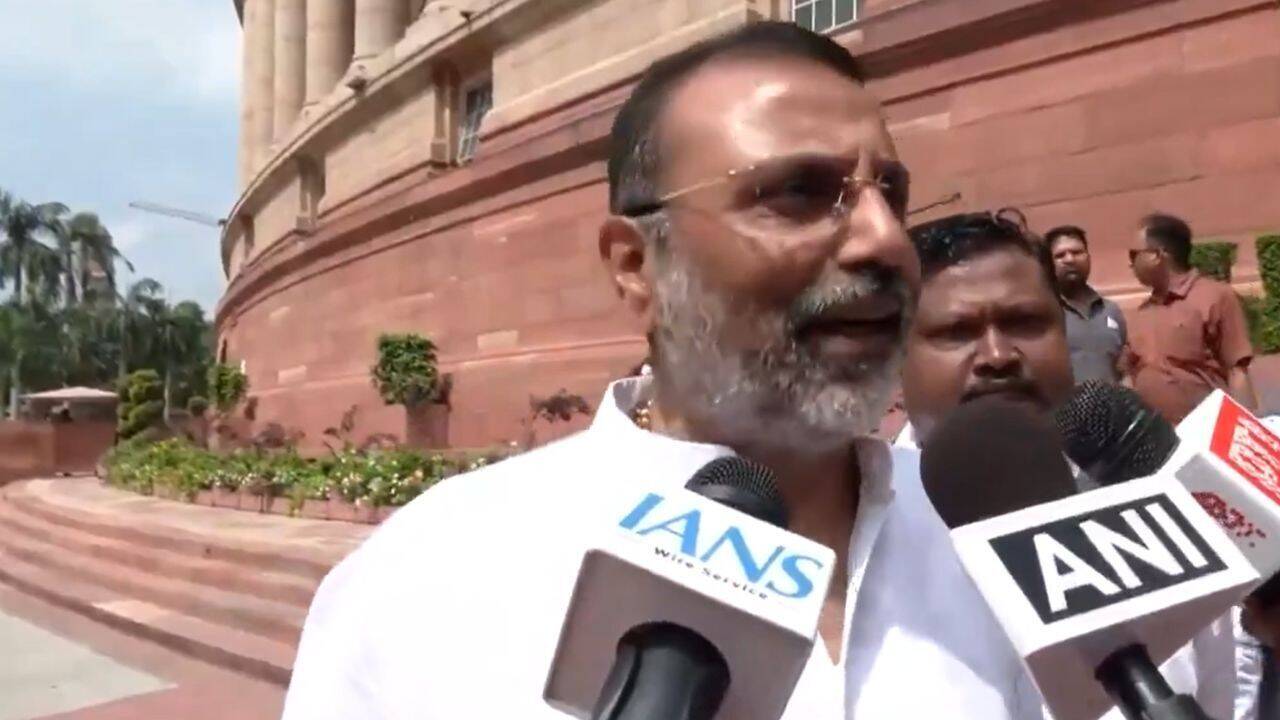
NCPI bloc at Rajghat
With future municipal and panchayat contests looming, its organisational presence could be squeezed further if Bengal’s earlier political pattern repeats itself. In that context, July 21 acquired additional importance. It was virtually a referendum in the people’s court.
Reaching for the old playbook
During her fiery speech, Mamata also doubled down on Abhishek Banerjee’s position in the party hierarchy. At the same time, she reached for tricks from her old playbook that made old-timers fondly turn back the clock by two decades.In 2004 and 2006, the TMC suffered two devastating electoral jolts. The backfiring of the “India Shining” campaign in 2004 meant that NDA ally TMC was reduced to a solitary Lok Sabha seat. In the 2006 assembly election, the party was obliterated, slumping to only 30 seats. Many had written Mamata’s political obituary. However, she rose like a phoenix, aided by some luck, the CPI(M)’s complacent governance and mounting anti-incumbency. But nothing came to her on a platter.
What happened on July 21
Political observers who closely followed the TMC’s rise during that period recall how Mamata, alongside Mukul Roy, took the long and arduous route of rebuilding the organisation through small meetings in the districts. She rode pillion on a motorcycle to reach places where ordinary people had been affected. Both the Singur and Nandigram movements could have fizzled out if not for her sustained campaigns. The focus on returning to the grassroots, pun intended, was reiterated by the former chief minister this time as well.According to Basu, Mamata managed to break the perception that the CPI(M) was the party of the poor and went on to become the toast of the subalterns. But this time, the competition is more formidable. However, Basu believes that the BJP’s honeymoon period has been incredibly short, although nothing will change on the ground before the 2029 Lok Sabha polls.Chakrabarti, too, echoes similar sentiments about the mood already souring against the BJP, especially over the mass deletions from the Annapurna scheme, and believes Mamata can become a strong challenger again.
Taking the long route
That is where the real test begins. With Bengal’s history of giving incumbents a long rope, her work is cut out for her. Rebuilding the organisation across 294 constituencies is a physically taxing proposition, believes Chakrabarti.Most importantly, who will play the role of Mukul Roy, silently building the organisation and ironing out the rough edges? Roy had largely controlled the organisation during Mamata’s first term and was once described by party insiders as the leader who could run it almost single-handedly. Abhishek Banerjee’s often flashy style of politics is not for the faint-hearted. It is more T20, whereas the need is perhaps for a good old-fashioned Test-match grind.Across Bengal, the TMC lost ground amid concerns over corruption, shoddy governance and the conduct of local leaders. According to Mamata, the corrupt have now left and there is nothing to worry about. That may energise those who stayed. It is not, by itself, an adequate diagnosis of defeat. But Basu believes Mamata still largely retains, among her supporters, the image of being untouched by the stench of corruption, which works in her favour. According to Chakrabarti, Mamata can regain traction but has to be careful about using Abhishek Banerjee. The noted political commentator is of the opinion that leaders may be sceptical about rejoining the TMC if Abhishek continues to be such a vital cog in the wheel.Mamata has, for now, firmly shut the door on those who deserted the party. She also unequivocally backed Abhishek, even asking workers to contact the MP if the need arose. Madan Mitra, speaking from the opposition camp, gave Mamata one month to “leave Abhishek’s hand” if she wanted the leaders back. Mamata, though, appears to be in no mood for reconciliation. She also issued a warning to Suvendu Adhikari, suggesting that she could reveal what he had done during his years as a TMC minister.
A new alliance arithmetic?
Another interesting facet of Mamata’s speech was her courting of INDIA bloc partners. This was in sharp contrast to her pre-election attitude, when the then chief minister, harbouring larger ambitions, was in no mood to give any ground to either the Congress or the Left. Circumstances have changed, and so has Mamata’s outreach. But will the Congress and the Left play ball? For the Left, the distance may be too great for it to hobnob with the party that displaced it and subsequently occupied much of its political space. For the Congress, however, the TMC remains a more natural ally.Mamata’s prominent photographs at the Congress’s Shahid Minar observance amounted to more than a subtle overture. The Congress used images of her role in the 1993 movement even while accusing the TMC of later turning Martyrs’ Day into a political instrument. It is no secret that the Congress high command has often been warmer towards Mamata than its state leadership. But with Mamata cut to size, the Congress could now seek a far more equitable arrangement in any future alliance. According to Chakrabarti, Muslims are unlikely to ever move towards the BJP. The educated among them may veer towards Naushad Siddiqui of the ISF, but the rest would choose between the TMC and the Congress. Thus, a future tie-up is very much within the realm of possibility.
The rebels’ narrowing road
For the breakaway faction, July 21 was a brutal reality check. Whatever the reasons behind its desertion of the mothership, it is undeniable that most of its leaders originally won because of Mamata’s support. Their options are narrowing. Returning would require Mamata to reopen a door she has publicly bolted. Contesting independently would require them to build a political identity that does not yet exist. Moving closer to the BJP would expose the hollowness of their continuing anti-BJP position. According to Basu, very few would be trusted even by the BJP because of what he describes as their political deceit.Chakrabarti is even more blunt in his assessment, saying that Ritabrata and the members of his rebel team have no future. The political scientist remains flummoxed about what exactly may have forced the likes of Firhad Hakim to cross over. What will keep Mamata worried is that even on July 21, there was a reported public bust-up with Kalyan Banerjee, who left the stage after a brief exchange. The TMC MP denied that there had been an altercation, but the episode nevertheless fed perceptions of continuing tension within the Kalighat camp.
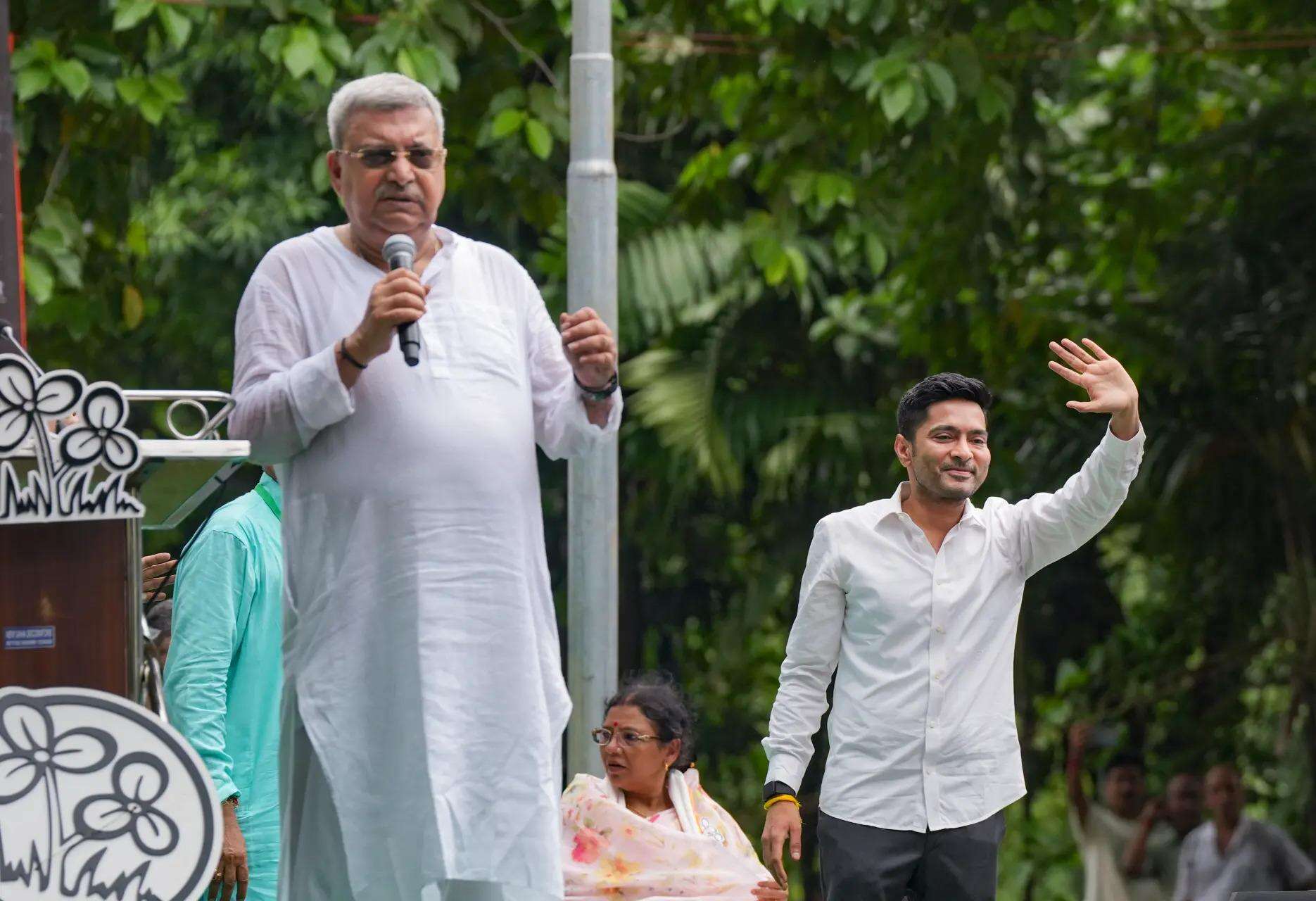
Kalyan Banerjee addressing the crowd
It may have been a small disagreement over speaking time. But the message it sent out may be much graver.
Beyond the street show
Most of those in the crowd appeared to have come on their own, driven by their love for Didi. Leaders such as Madan Mitra and Anubrata Mondal, who had once helped oversee the party’s district mobilisation, are now in the rival camp. But elections require ample funds and organisational heft, not merely the fervent zeal of the dedicated. That is where the TMC will encounter its next big challenge.At the meeting, there was repeated emphasis on Mamata having groomed generations of leaders and on her faith in the youth. But the ledger of the past must be reconciled before the future is planned. Beyond the usual rhetoric of the BJP stealing the election, the TMC needs honest introspection about why it was ousted from power. If the leadership knew about corruption, why did it not act? What will it do differently if the public gives it another chance?

According to Raja Gopal Dhar Chakrabarti, the difference between 2006 and 2026 is that, at the time, she was the challenger and people thought highly of her potential, irrespective of the electoral outcome. Now, after three terms in power, the novelty factor has worn off, and few may be willing to give her a second chance very soon.The physical demands of the intense running around needed to rebuild the party may also be extremely taxing for Mamata, Chakrabarti believes. Sibaji Pratim Basu disagrees and cites present Prime Minister Narendra Modi and Morarji Desai as examples of leaders who managed to dominate Indian politics at a more advanced age. July 21 showed that Mamata Banerjee can still own the street. It demonstrated that she is still up for a good political fight. For one afternoon, that was enough. Political resurrection, however, will be a long, tedious path. At 71, Mamata Banerjee will have to run the marathon again. Does she have the stamina for the long haul?Time will tell. Go to Source