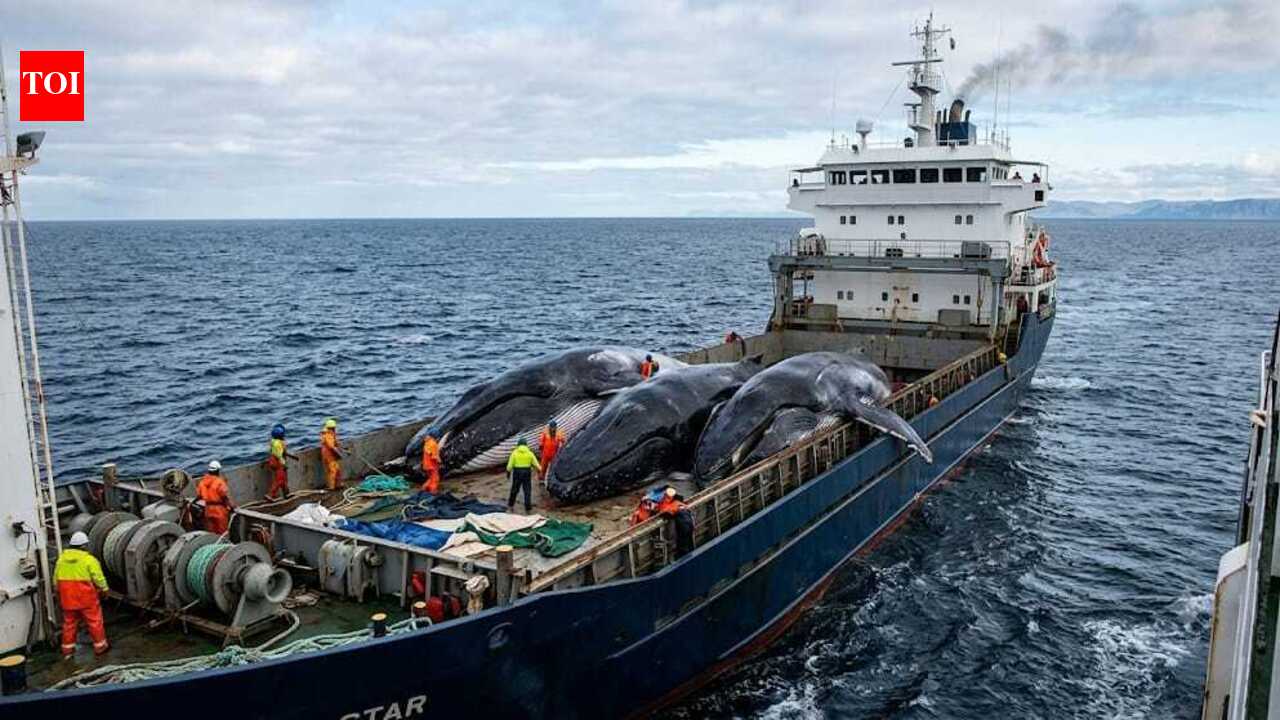

Image: AI Generated
For decades, the icy waters of Antarctica became the stage for one of the world’s most high-profile environmental confrontations. On one side was Sea Shepherd Conservation Society, whose activists chased, blocked and attempted to disrupt Japanese whaling vessels in a bid to stop the annual hunts. On the other was Japan’s whaling fleet, which maintained that its expeditions were conducted for scientific research before later resuming commercial whaling under revised policies. The confrontations attracted global attention through dramatic ship chases, helicopter footage and television documentaries. Yet despite years of activism, legal battles and international criticism, Sea Shepherd’s campaign gradually came to an end. Today, Japan no longer hunts whales in Antarctic waters, but not because the activists won. Instead, changes in international law, enhanced security measures and Japan’s withdrawal from an international treaty fundamentally reshaped the conflict.
How Sea Shepherd’s battle against Japan’s Antarctic whaling began
The conflict dates back to the early 2000s, although opposition to Japan’s Antarctic whaling programme had existed for decades. Following the International Whaling Commission’s (IWC) commercial whaling moratorium in 1986, Japan continued hunting whales under a provision allowing catches for scientific research, arguing that biological data were needed to manage whale populations. Much of the meat from these whales was later sold commercially, prompting criticism from conservation groups and several governments.Sea Shepherd made the Southern Ocean one of its primary campaign areas. Using fast vessels, inflatable boats and direct-action tactics, activists attempted to obstruct Japanese harpoon ships by positioning their own vessels between whales and the fleet, trailing ropes behind ships, launching smoke flares and documenting every stage of the hunt. As reported by BBC and The New York Times, the confrontations often lasted for weeks in some of the harshest maritime conditions on Earth, turning Antarctica into an annual flashpoint in the global debate over whaling.The campaign gained worldwide recognition through the television series Whale Wars, which followed Sea Shepherd’s missions and brought unprecedented public attention to the issue. Supporters viewed the activists as defenders of marine wildlife, while critics argued that their increasingly confrontational tactics endangered lives at sea.
Why Sea Shepherd ultimately lost the Antarctic whale hunt battle
The turning point came through a combination of legal rulings, operational changes and Japan’s increasingly sophisticated response to activist interference.In 2014, the International Court of Justice (ICJ) ruled that Japan’s JARPA II Antarctic research programme did not meet the criteria for scientific research and ordered the permits revoked. Japan temporarily suspended its Antarctic hunt but later introduced a revised programme with reduced quotas, arguing that it complied with the court’s decision.Sea Shepherd also faced mounting legal setbacks outside Antarctica. In 2015, the organisation agreed to pay 2.55 million yen (around US$20,500 at the time) to Japanese whaling operators after admitting it had breached a US court injunction that prohibited its vessels from approaching the Japanese fleet.As reported by The Guardian, the payment settled a contempt-of-court case stemming from the 2014–15 whaling season, when Sea Shepherd ships entered the exclusion zone around the fleet despite the injunction. The legal battle followed a 2013 ruling by the US Court of Appeals, which described some of Sea Shepherd’s tactics as acts of piracy and ordered the group to remain at least 500 yards (457 metres) away from Japanese whaling vessels.Meanwhile, Japan strengthened the protection of its whaling fleet. According to reports by BBC, Japanese vessels began using enhanced surveillance systems, satellite tracking and government-backed security measures, making it far more difficult for Sea Shepherd ships to locate or intercept the fleet in the vast Southern Ocean. Activists also faced mounting legal challenges and financial pressures, limiting their ability to continue annual campaigns.In 2017, Sea Shepherd Australia announced it would no longer pursue Japanese whaling vessels in Antarctica, acknowledging that the combination of military-grade surveillance technology and legal restrictions had made direct intervention virtually impossible. The organisation shifted its focus to other marine conservation campaigns while continuing to oppose commercial whaling through advocacy and public awareness.
Why Japan stopped Antarctic whaling but resumed commercial whaling elsewhere
A major shift occurred in 2018, when Japan announced it would withdraw from the International Whaling Commission after decades of disagreement over the body’s anti-whaling stance. The withdrawal took effect on 30 June 2019.From July 2019, Japan officially resumed commercial whaling for the first time in more than three decades. However, there was an important change: Japanese whaling vessels stopped operating in the Antarctic and instead hunted whales within Japan’s territorial waters and exclusive economic zone.According to historical records compiled by Facts and Details, drawing on reporting from international sources, Japanese officials argued that the move aligned whaling activities with domestic fisheries policy while avoiding the diplomatic disputes that had surrounded Antarctic expeditions. Conservation organisations, however, criticised the decision, arguing that withdrawing from the IWC weakened international whale conservation efforts.
What the Sea Shepherd campaign changed for global whale conservation
Although Sea Shepherd did not succeed in permanently ending Japanese whaling through direct action, the campaign had a lasting impact on public awareness of whale conservation.The annual confrontations transformed what had once been a relatively obscure policy debate into an international environmental issue followed by millions of people. Images of activist ships confronting harpoon vessels in Antarctic waters helped fuel broader discussions about marine biodiversity, international law and the ethics of whaling.The legal case before the International Court of Justice also established an important precedent by scrutinising whether scientific whaling programmes genuinely met research standards. While Japan ultimately ended Antarctic whaling for political and legal reasons rather than activist pressure alone, the years of campaigning kept global attention fixed on the issue and contributed to increased international scrutiny.Today, the Southern Ocean remains a whale sanctuary, and Japanese commercial whaling no longer takes place there. Yet the broader debate over sustainable whaling, cultural traditions and marine conservation continues, making the Sea Shepherd campaign one of the most influential environmental confrontations in modern maritime history. Go to Source