
Air filters trap biological particles along with ordinary dust and pollution, allowing laboratory sequencing to reveal environmental DNA
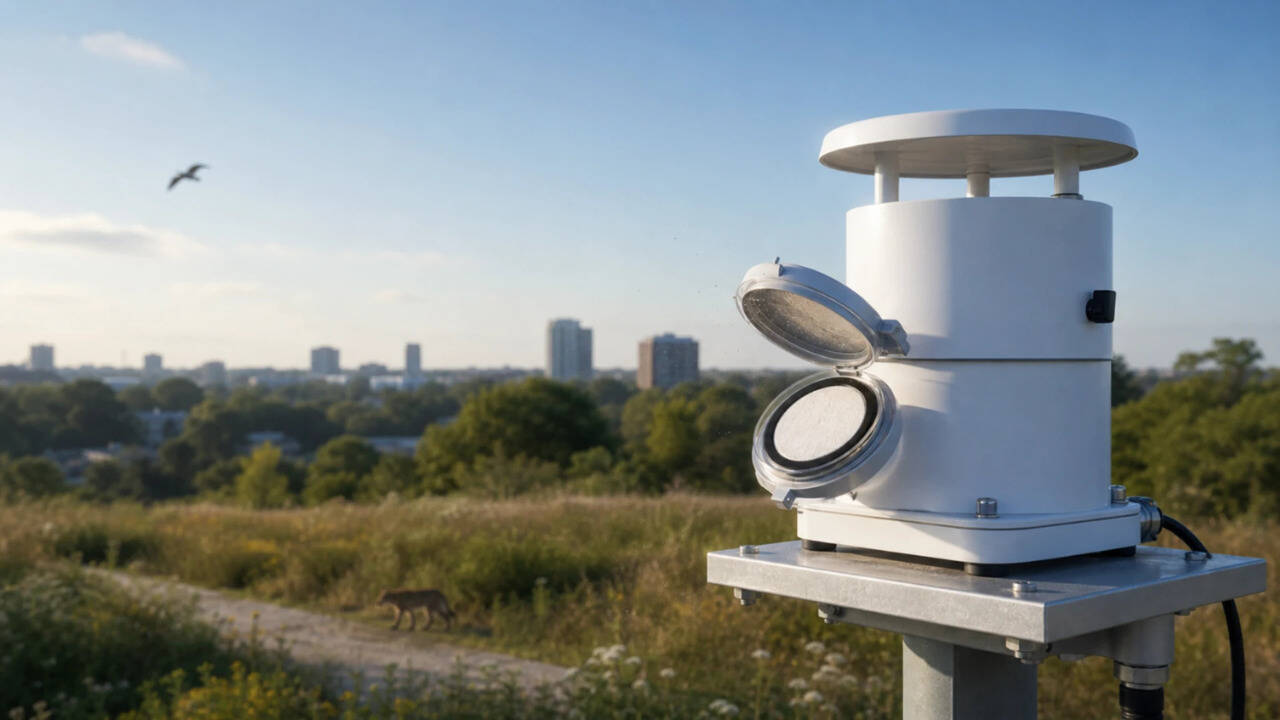
Every breath you take carries an invisible record of the living world, and scientists have discovered a way to read it using ordinary air filters.By studying the tiny particles trapped inside standard air-quality monitoring equipment, researchers can now detect nearby wildlife, track viruses, and even monitor human activity without ever seeing the organisms themselves. Every living thing constantly releases genetic material into the air through skin cells, hair, feathers, saliva, faeces, and spores. This material is known as environmental DNA, or eDNA.For many years, eDNA was mainly used to study water and soil. Now, the technology has moved into the air. Although biological material is highly diluted in the atmosphere and easily carried away by the wind, scientists have shown that they do not need complete genomes to identify a species. Small, broken pieces of DNA are often enough to match a sample with global genetic databases.
An accidental net for biodiversity
The journey to this discovery began in controlled environments. In 2022, two separate research teams in Britain and Denmark carried out experiments in zoos. By pulling air through special filters, the British team successfully detected DNA from 25 animal species. This included 17 zoo animals, nearby wild species, and animals used as feed, proving that vertebrate DNA can travel through the air and still be detected. The biggest breakthrough for large-scale wildlife research came in 2023. A study published in Current Biology revealed that national air-pollution monitoring stations had already been collecting this information without realising it. These public health stations regularly pull huge amounts of air through filters to measure soot, heavy metals, and other tiny particles.When researchers tested old filters collected from monitoring stations across the United Kingdom, they found a preserved biological record. The filters contained eDNA from more than 180 different groups of vertebrates, arthropods, plants, and fungi.Because these air-quality monitoring networks already exist, are publicly funded, and cover large areas, scientists could avoid building an entirely new global wildlife tracking system. Many governments also keep these pollution filters for years. Researchers found that useful eDNA remained on a filter stored at room temperature for eight months, suggesting that frozen archives may preserve decades of ecological history.
From barcodes to deep sequencing
Early eDNA studies relied on a method called metabarcoding, which uses the polymerase chain reaction to isolate and copy one small genetic region. Although it works quickly, metabarcoding can only detect organisms that match the selected genetic primer.A 2025 study published in Nature Ecology & Evolution advanced the technology by using shotgun sequencing, a method that reads all the DNA in a sample instead of focusing on one specific genetic barcode. Using this untargeted approach on outdoor air collected from a forest in Florida, researchers from the US Geological Survey and partner institutions mapped an entire ecosystem from a single air sample.The filter detected DNA from hard-to-find local wildlife, including a bobcat, bats, squirrels, moths, spiders, snakes, and an alligator. The bobcat’s mitochondrial DNA was detailed enough to connect it to a specific population in north-eastern Florida, showing that airborne DNA can reveal genetic differences within a species rather than simply confirming its presence. Using portable sequencing equipment, one researcher went from collecting an air sample to viewing cloud-based results in just two days.
Tracking pathogens from the sky
The move to shotgun sequencing also uncovered an invisible world of microscopic threats. In a long-read air sample collected in Dublin, researchers found genetic traces from 63 different viruses. They also recovered large portions of the genome of a virus linked to birds from pumped air samples and window swabs, along with several antimicrobial-resistance genes.This technology could lead to a new form of automatic public health monitoring. Continuous air filtering could show where plant, animal, or human diseases are spreading, helping agricultural agencies detect crop diseases or wildlife outbreaks before symptoms become widespread.However, the technology also has an important medical limitation. Finding viral DNA on an air filter does not prove that an infectious virus is actively spreading, that someone nearby is ill, or that transmission is taking place. DNA often remains long after an organism or virus has broken down. These findings are biological signals that must be interpreted by epidemiologists rather than treated as direct medical diagnoses.
The problem of human genetic bycatch
Because humans shed DNA just as easily as animals, the growing sensitivity of modern sequencing has raised major privacy concerns. In the 2025 Nature Ecology & Evolution study, researchers recovered detailed human genetic information from indoor air samples, identifying insertions, deletions, and more than 217,000 single-nucleotide polymorphisms after using targeted enrichment methods.Scientists call this human genetic bycatch. It means that deep sequencing of outdoor or indoor air will almost always collect genetic information from the people nearby. A 2023 study confirmed that human eDNA can now be easily collected from air, water, and even beach sand.For example, the Dublin air samples contained human-related traces, including DNA from food plants, cannabis, poppies, and fungi linked to psychoactive mushrooms. The University of Florida highlighted these findings but warned against drawing quick conclusions. Plant and fungal DNA can travel through the air because of wind, gardening, legal products, or commercial dust. As a result, detecting this DNA cannot legally or logically prove that a particular person used a substance or committed a crime.As DNA sequencing becomes more advanced, the risk of accidental surveillance also increases. A routine government-run pollution filter outside an apartment building or workplace could unintentionally collect the genetic information of people living or working nearby. Because of this, genetic researchers are calling for strict rules on when human DNA should be removed, how the information should be stored, and whether it should be permanently deleted from public biodiversity databases.
Mapping the invisible archive
Airborne eDNA is still not a perfect way to measure biodiversity. Weather creates major challenges. Wind changes where particles travel, rain clears DNA from the air, and sunlight damages fragile genetic material. Some species release large amounts of DNA, while others leave behind very little. A positive result does not prove an animal was standing next to the air monitor, and a negative result does not confirm that a species is absent from the area.Accurate identification also depends on reference databases. If a rare or poorly studied species has not had its genome mapped and added to global genetic libraries, its airborne DNA cannot be identified.Because of these limits, researchers see air filtering as a tool that supports, rather than replaces, traditional methods such as camera traps, sound monitoring, and field surveys. Its biggest advantage is its ability to collect DNA across both large areas and different heights. A single air filter can capture traces from animals that are nocturnal, microscopic, underground, hidden high in forest canopies, or simply too dangerous for researchers to approach. Go to Source