
Image: AI generated
Long before satellites, weather radars and computer models transformed cyclone forecasting, communities across the Pacific relied on nature itself for early warning signs. In Fiji, many Indigenous farmers still observe the behaviour of plants, insects, birds and the sea to anticipate severe weather months before cyclone season begins. While modern forecasting remains essential, traditional ecological knowledge continues to play an important role in helping remote communities prepare for disasters. As climate change intensifies tropical cyclones across the Pacific, scientists and meteorological agencies are increasingly recognising that centuries-old environmental observations can complement modern forecasting systems rather than compete with them. BBC Future recently explored how this knowledge is helping strengthen climate resilience in Fiji.
How Fijians use nature to predict approaching cyclones
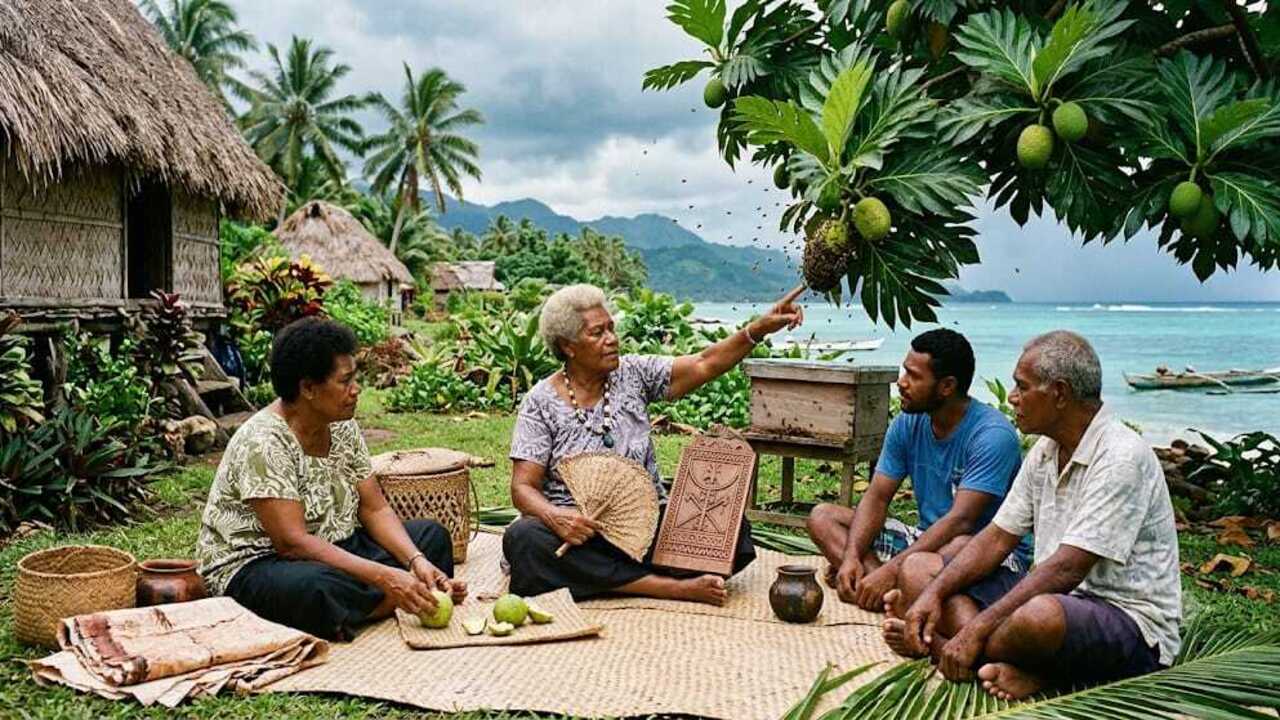
According to BBC Future, many Fijian farmers begin watching the natural world as early as July, months before the cyclone season, which typically runs from November to April. One of the best-known indicators is the behaviour of wild yam vines. Climate resilience officer and farmer Marika Radua explains that when the vines creep along the ground instead of climbing upwards, it is believed they are protecting themselves against strong winds, signalling that a cyclone season is likely ahead. Some of the other early warnings that are traditionally observed are that of bees and hornets making nests too close to the ground, several fruits on the same stalk of the breadfruit tree, twisted leaves of the plantain rather than straight ones, and unusual occurrences in banana plants. Fishermen watch out for warm temperatures in the sea, change in sea current, and death of fish in the sea. In the days preceding the cyclone, one can observe the behaviour of seabirds, which fly much closer to the ground and land on the shorelines.This kind of observation is not based on a single indicator; rather, it involves the observation of the entire environment through the knowledge handed down through stories and songs. This kind of knowledge is referred to as traditional ecological knowledge.
Why scientists are taking Indigenous knowledge seriously
As reported by BBC Future, Fiji is among several Pacific Island nations working to integrate traditional environmental knowledge with scientific weather forecasting. In 2024, the United Nations Office for Disaster Risk Reduction (UNDRR) announced that it would incorporate Indigenous observations into its forecasting efforts, describing the combination of modern science and traditional knowledge as “a total package”. Fiji joins countries including Vanuatu, Tonga, Samoa, Niue and the Solomon Islands in participating in regional programmes that document and evaluate traditional warning systems. The initiative is supported by the Secretariat of the Pacific Regional Environment Programme (SPREP), which has been collecting reports of natural indicators from communities since 2016. Climate traditional knowledge officer Siosinamele Lui says these observations are especially valuable because many remote islands lack continuous meteorological monitoring equipment. By combining local environmental knowledge with scientific forecasts, authorities hope to provide earlier and more accessible warnings to vulnerable communities. Researchers stress that traditional indicators are not intended to replace satellite data or weather models. Instead, they can provide additional context and encourage preparedness, particularly in isolated areas where official warnings may arrive late or communication networks are limited.
Lessons from Cyclone Winston and the future of climate resilience
The value of Indigenous forecasting became especially evident during Cyclone Winston, Fiji’s most powerful recorded tropical cyclone, which struck in 2016. According to research ‘Traditional knowledge for climate resilience in the Pacific Islands,’ villagers in Tailevu Province noticed several unusual natural signs months before the cyclone arrived. These included hornets nesting unusually low, breadfruit growing in uncommon clusters, warmer coastal waters, seabirds flying inland and other environmental changes that local communities recognised from earlier generations. The advance warning encouraged some communities to reinforce homes, store food and drinking water, and move livestock to safer locations before official alerts were issued. Researchers believe these locally observed indicators can buy valuable preparation time as climate change increases the intensity of tropical cyclones across the Pacific. Climate scientist Joeli Veitayaki of the University of the South Pacific and geographer Patrick Nunn told BBC that traditional ecological knowledge represents centuries of empirical observation rather than folklore. Because these practices have been retained across generations, they offer insights into environmental patterns that continue to be relevant today. As Marika Radua said, living in harmony with nature remains central to building resilience against a changing climate: “It’s not just about traditional knowledge. It’s about living in harmony with nature.” Go to Source