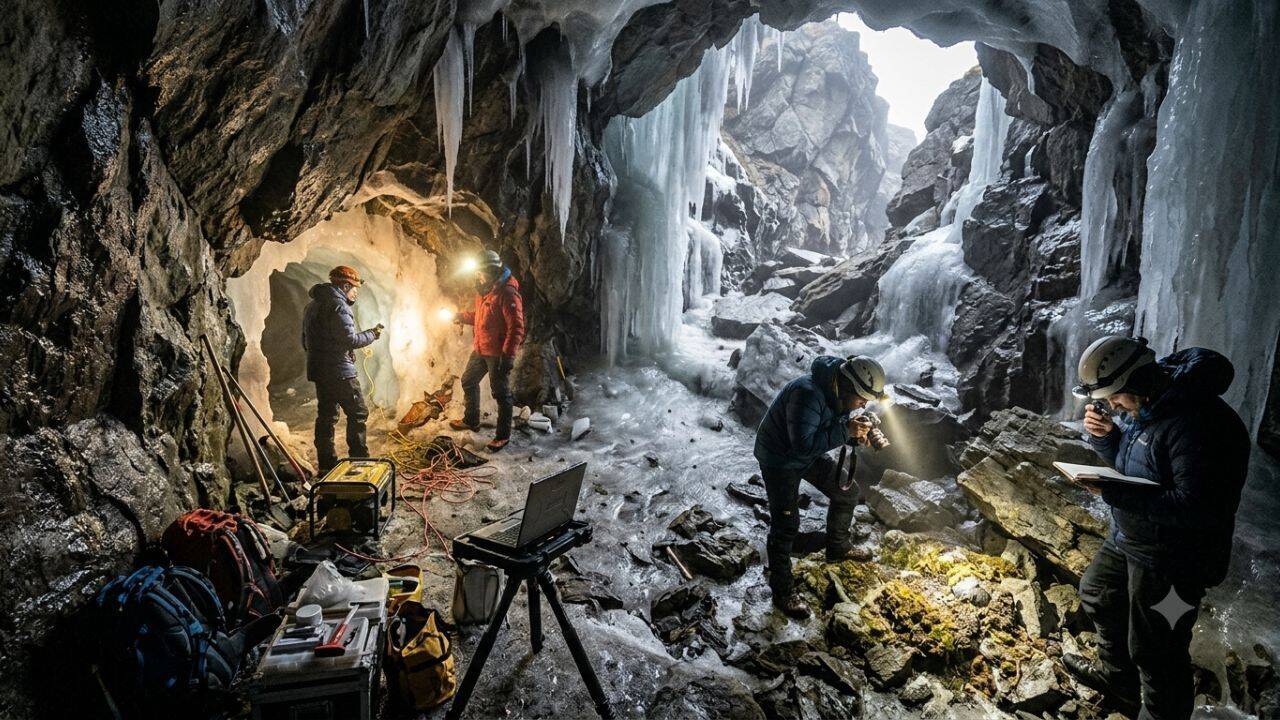

Long before the Arctic looked the way it does now, a stretch of Norway’s northern coastline supported an unexpectedly rich mix of wildlife. That picture has emerged from a cave where thousands of years of natural deposits quietly protected the remains of animals that lived during a comparatively mild phase of the last Ice Age. The site has offered an unusually complete record of life in an environment that rarely preserves such ancient evidence. By piecing together bones, sediments and genetic material, scientists have been able to reconstruct a coastal ecosystem that included creatures from the sea, the tundra and freshwater habitats simultaneously. The findings extend well beyond identifying individual species. They provide a glimpse of how entire Arctic communities responded when changing climates reshaped the landscapes they depended on, and why some populations disappeared instead of adapting.
A 75,000-year-old ecosystem emerged hidden beneath Norway
The journal published in PNAS, titled ‘A 75,000-y-old Scandinavian Arctic cave deposit reveals past faunal diversity and paleoenvironment’, reveals that the discovery comes from Arne Qvamgrotta, a cave on Norway’s northern coast that remained largely unexplored for decades after it was exposed during tunnel construction in the 1990s. Although its entrance had been known for years, the deposits inside were left largely undisturbed until archaeological excavations carried out in 2021 and 2022 revealed what had been preserved beneath the sediments. Those excavations uncovered the remains of 46 species spanning mammals, birds and fish. Together they represent what is currently the oldest known record of an animal community from the European Arctic dating to a warmer interval around 75,000 years ago. The study describing the findings has been published in the Proceedings of the National Academy of Sciences.
The species that reveal an ancient Arctic habitat
The collection paints a far more varied picture of the region than a frozen wilderness. Marine animals shared the coastline with birds and land mammals, suggesting an environment where several habitats existed side by side.Among the identified species were polar bears, walruses, bowhead whales and harbour porpoises. Bird remains included Atlantic puffins, common eiders and rock ptarmigans, while Atlantic cod appeared alongside freshwater fish, pointing to rivers and lakes across the surrounding tundra. Reindeer also occupied the landscape, taking advantage of ground that had become accessible after glaciers retreated.One of the more unexpected discoveries was the presence of collared lemmings. Although the species survives elsewhere, it disappeared from Europe long ago, and until now there had been no evidence that it had ever lived in Scandinavia during this period.
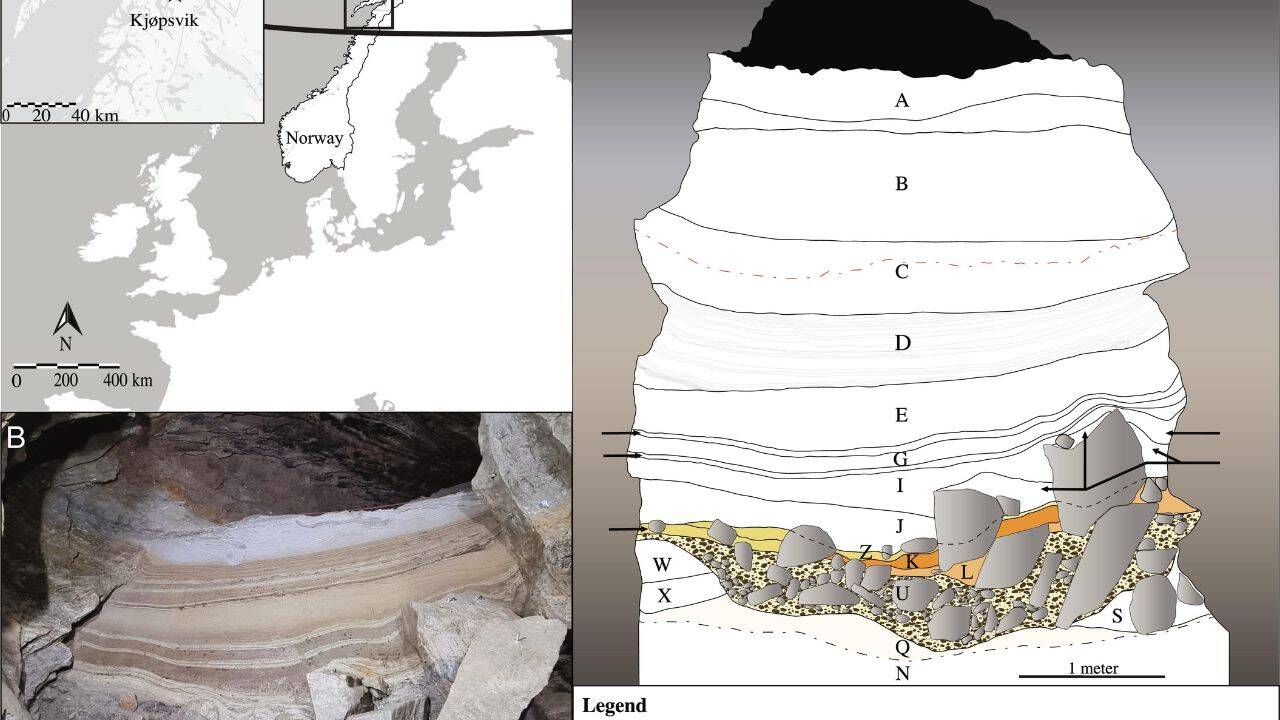
PC: PNAS
The ecosystem hidden inside the cave sediments
Each species contributes another piece to the environmental picture. Freshwater fish indicate inland water bodies beyond the cave, while bowhead whales and walruses imply that sea ice still formed offshore. At the same time, harbour porpoises, which generally avoid heavy ice, suggest those frozen conditions were seasonal rather than permanent.Instead of a landscape locked beneath ice year-round, the region appears to have experienced changing conditions that created opportunities for a wide range of animals. Coastal waters, open tundra and freshwater systems would all have been available within relatively short distances, allowing different species to occupy the same broader ecosystem.That combination helps explain why such a broad collection of remains accumulated in one location.
DNA hints at a lost chapter
The bones offered more than physical identification. Genetic analysis allowed scientists to compare these ancient animals with later populations.The results suggest that many of the lineages represented inside the cave did not survive once colder conditions returned. Rather than persisting through later climate shifts, they appear to have vanished as advancing ice reshaped the landscape and reduced available habitat.For a region where well-preserved animal remains older than about 10,000 years are exceptionally uncommon, the cave fills an important gap in the fossil record. It captures a period that has previously been understood only in fragments.
What happened when the climate changed
The evidence suggests that these animals expanded into northern Norway after glaciers withdrew during the warmer interval. When colder conditions eventually returned, that opportunity disappeared.Instead of simply relocating, many populations seem to have become trapped as advancing ice covered the region again. Suitable habitats were no longer connected in ways that allowed easy movement, leaving some communities unable to establish themselves elsewhere.That pattern carries particular interest because it reflects the response of species already adapted to cold environments. Even they struggled when their surroundings shifted beyond the limits they could tolerate. Go to Source