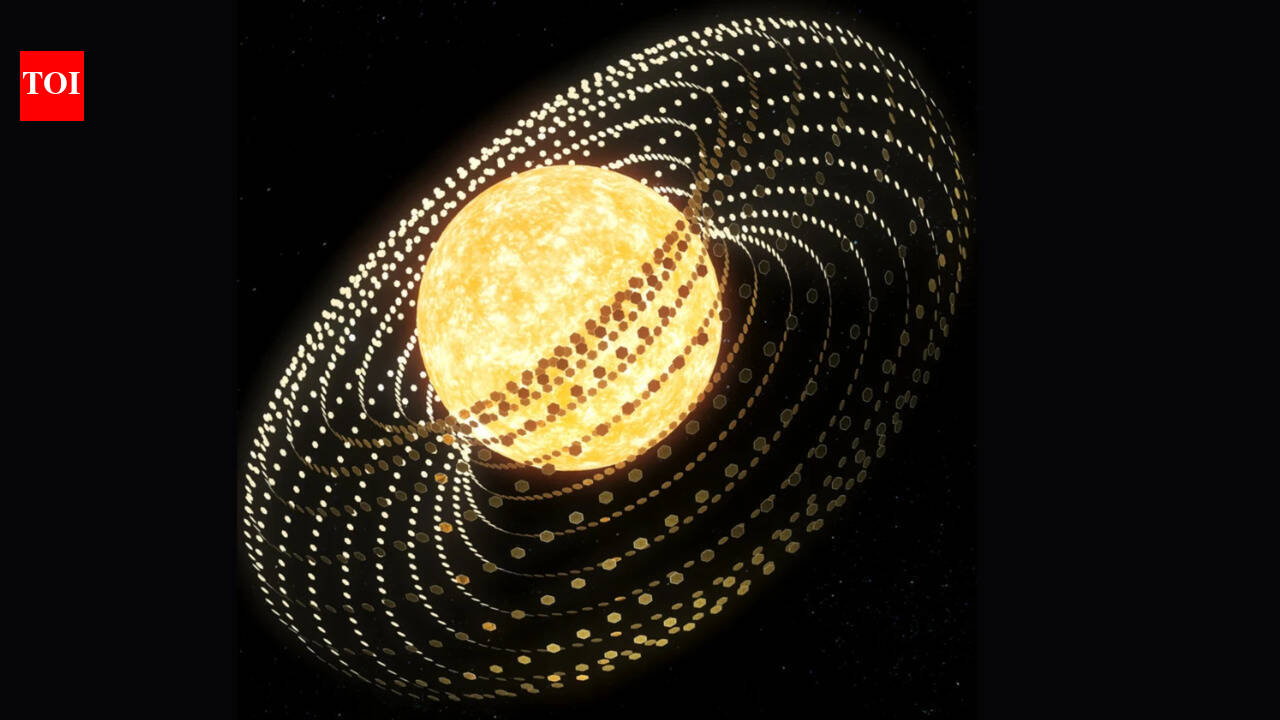

Are Milky Way’s coldest stars actually alien megastructures? New study explores
Some of the coldest objects currently listed as stars in the Milky Way may not be stars at all. A new study by astrophysicist Amirnezam Amiri from the University of Arkansas suggests that these extremely cold objects could instead be giant energy-harvesting structures built by advanced alien civilisations. According to the research, these objects match the expected behaviour of engineered systems that collect a star’s energy and release the leftover heat as infrared radiation.The study is set to be published in the journal Universe and it offers a new mathematical method to search for these possible alien structures. The idea was first proposed by physicist Freeman Dyson in 1960. Instead of a single giant shell surrounding a star, modern scientists now favour the idea of a ‘Dyson swarm‘, made up of millions of separate solar collectors orbiting the star. Researchers believe this design is far more practical than a solid sphere, which would be nearly impossible to build.According to Amiri’s study, red dwarfs and white dwarfs would be the best stars for an advanced alien civilisation to build such a system around.
Red dwarfs and White dwarfs could be the best choice
Red dwarfs are the most common stars in the Milky Way. They burn their nuclear fuel very slowly, allowing them to remain stable for trillions of years. This gives any advanced civilisation plenty of time to build and maintain a large energy-collecting system. Because red dwarfs are much smaller than stars like the Sun, they also require far fewer materials to surround.
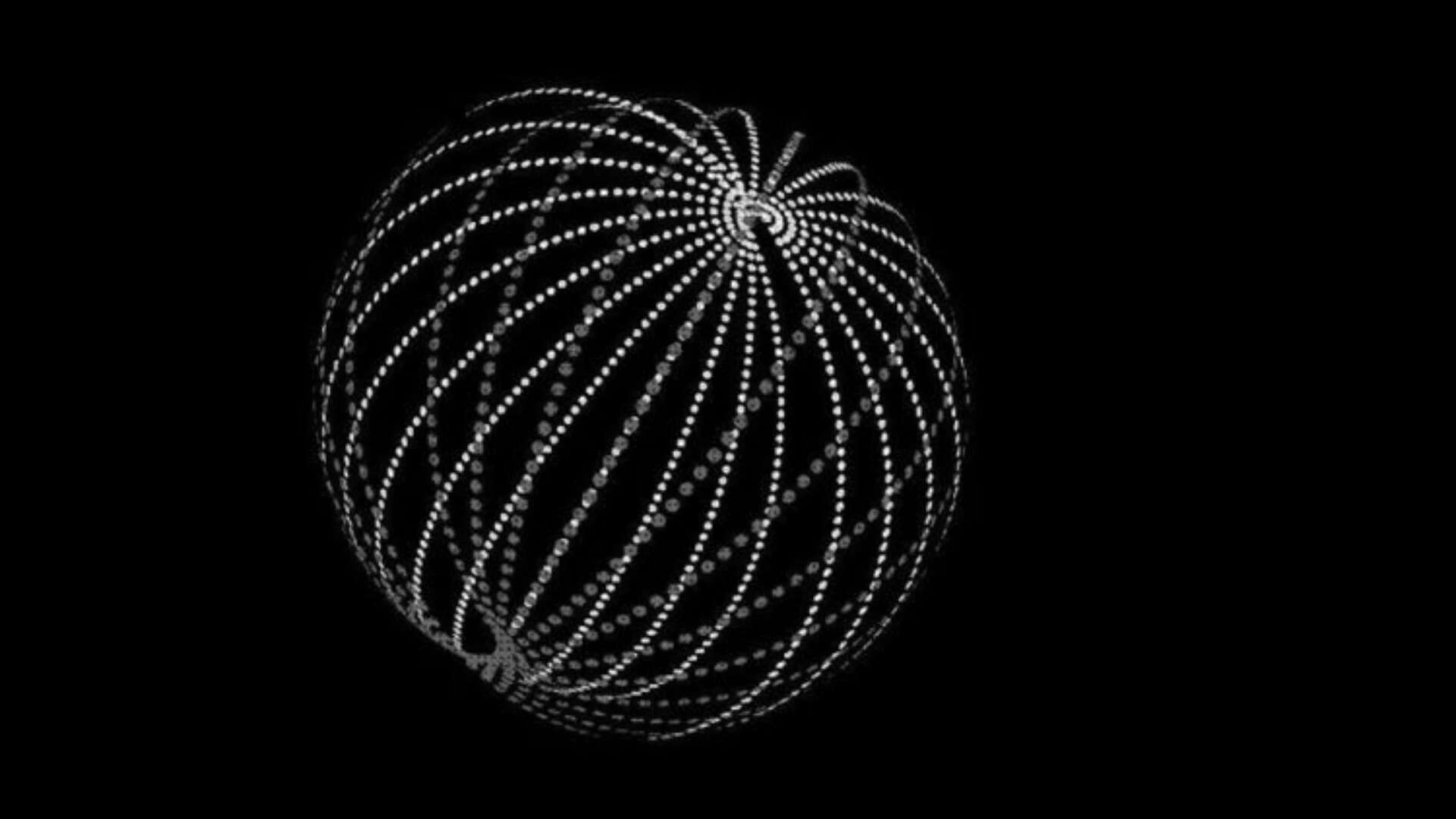
How a hypothetical Dyson Swarm system would look like
Astronomers are already searching for these exact signs. The James Webb Space Telescope, with its powerful infrared instruments, is one of the main tools being used. At the same time, projects such as Project Hephaistos are analysing millions of older observations from missions including the Wide-field Infrared Survey Explorer (WISE).In May 2024, Project Hephaistos identified seven possible Dyson sphere candidates from a survey of about five million stars, all centred on red dwarfs. One candidate was later ruled out after researchers found that a distant supermassive black hole happened to line up behind the star. That leaves five candidates still being studied.Amiri’s new model gives astronomers a clearer way to test these objects and determine whether they are simply unusual natural systems or possible signs of advanced alien technology. Go to Source