
Every spring, thousands of frogs, toads, newts and salamanders across France leave their winter shelters in the woods and head toward ponds and wetlands to breed. The trouble is that many of these migration routes now cut straight across busy roads, and amphibians are painfully slow and easy to miss in the dark. To fix this, French authorities and conservation groups have started building small underground tunnels, known locally as crapauducs, that let amphibians pass safely beneath the road instead of crossing on top of it. What began as a handful of local experiments has slowly grown into a nationwide effort involving departments, regional parks and volunteers working together.
What is a crapauduc and how does it work
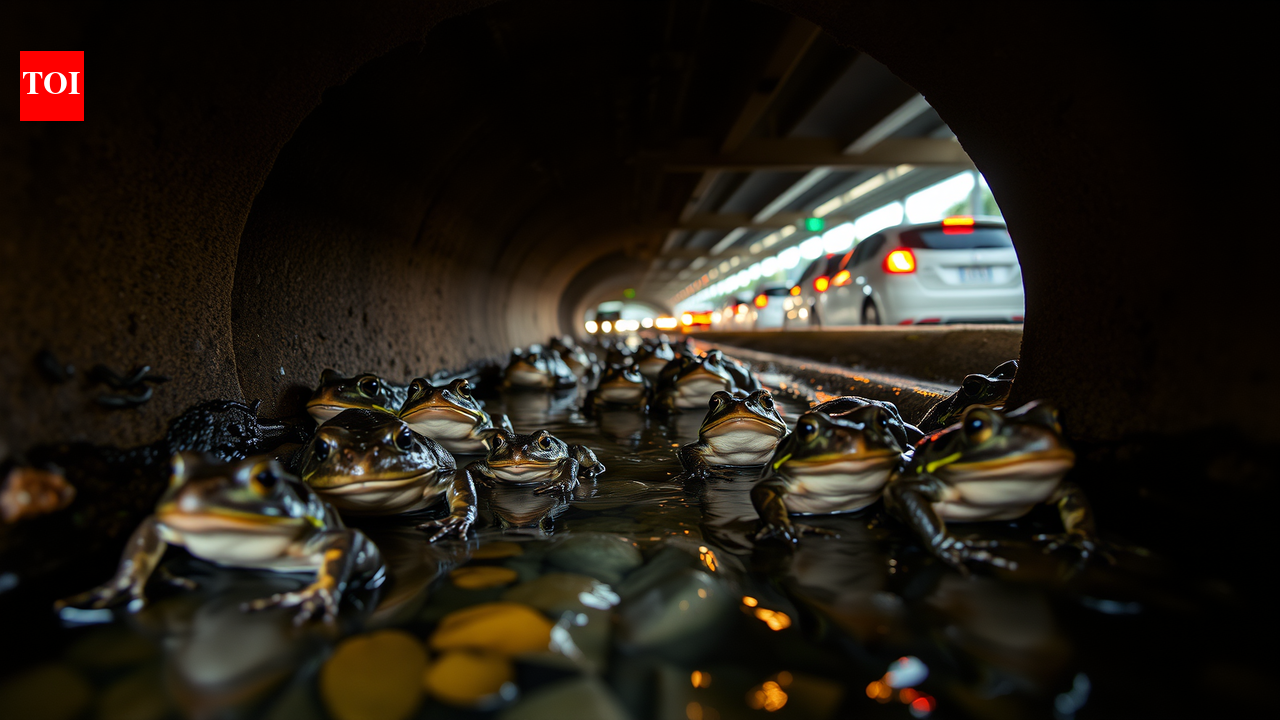
A crapauduc is essentially a narrow underpass built specifically for small animals, most often amphibians, that connects one side of a road to the other without forcing them to cross the tarmac. Low guiding walls or fences are placed along the roadside to funnel the animals toward the tunnel entrances rather than letting them wander onto the road itself. As explained by the Seine-et-Marne departmental government, these permanent structures are designed to restore an ecological corridor that has been broken by road construction, allowing amphibians to move freely between forest habitats and the wetlands where they breed.
Why amphibian road mortality became a serious problem in France
All amphibian species in France are legally protected, yet road mortality remains one of the biggest threats they face during the breeding season. Since these animals migrate mostly at night during mild, damp weather, drivers often do not even notice them on the road. In one commune in the Gard region, officials estimated that around 40 per cent of migrating amphibians die trying to cross roads without any protective measures in place. This kind of loss adds up quickly for small, localised populations of frogs, toads and salamanders, some of which depend on a single pond for their entire breeding cycle every year.
From crapaudromes to permanent amphibian tunnels
Long before permanent tunnels became common, many French communities relied on a simpler method known as a crapaudrome, which uses temporary plastic barriers along the roadside to stop amphibians from crossing. The animals fall into buckets placed at intervals along the barrier, and volunteers manually carry them across the road each morning before releasing them safely on the other side. This system still exists in many parts of the country, but it requires constant human effort every single day of the migration season. Crapauducs were developed as a longer term solution, allowing amphibians to cross entirely on their own without needing volunteers to intervene daily.
Crapauduc project in La Capelle-et-Masmolène, Gard
In the commune of La Capelle-et-Masmolène in the Gard, local authorities built the area’s first crapauduc after learning that roughly ten amphibian species, including fire salamanders, use the surrounding woods and wetlands to breed. According to a report by France 3 Occitanie, the project cost around 130,000 euros and was funded through a European programme, with construction managed by the regional nature conservatory of Occitanie. Interestingly, the tunnels also double up as drainage channels, helping prevent flooding on a road that used to get waterlogged during heavy rain, which made the project useful for residents as well as wildlife.
Do amphibian tunnels actually help frogs and salamanders cross safely
Scientists have also studied how well amphibians use these tunnels once they are built. A peer reviewed study published in the journal Frontiers in Ecology and Evolution tracked fire salamanders, great crested newts and water frogs moving through French amphibian tunnels using tiny tracking tags and sensors installed along the tunnel floor. The research found that crossing behaviour varied noticeably between species, with some animals moving steadily through while others paused, turned back, or took much longer routes before finally making it across. This kind of detailed monitoring helps engineers understand how tunnel length, design and even sound can be adjusted to make these crossings more effective for different amphibian species.
Amphibian crossing projects growing across France
Today, similar amphibian crossing projects can be found in regions ranging from Normandy to the Somme to the forests around Paris, often supported by regional biodiversity agencies, departmental governments and local nature associations working together. Some roads are even temporarily closed to traffic during peak migration nights as an additional safety measure. While crapauducs alone cannot solve every challenge amphibians face, from habitat loss to pollution, they represent one of the more practical and visible ways engineers and ecologists have found to reduce a very specific and very deadly obstacle standing between these animals and their breeding grounds each spring. Go to Source