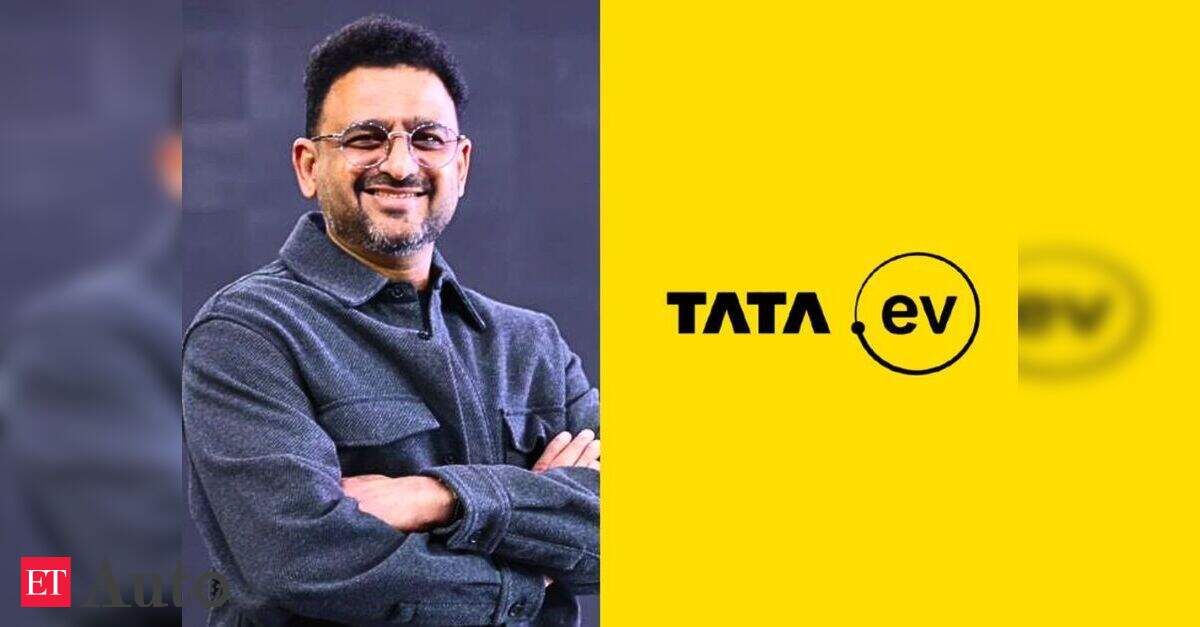

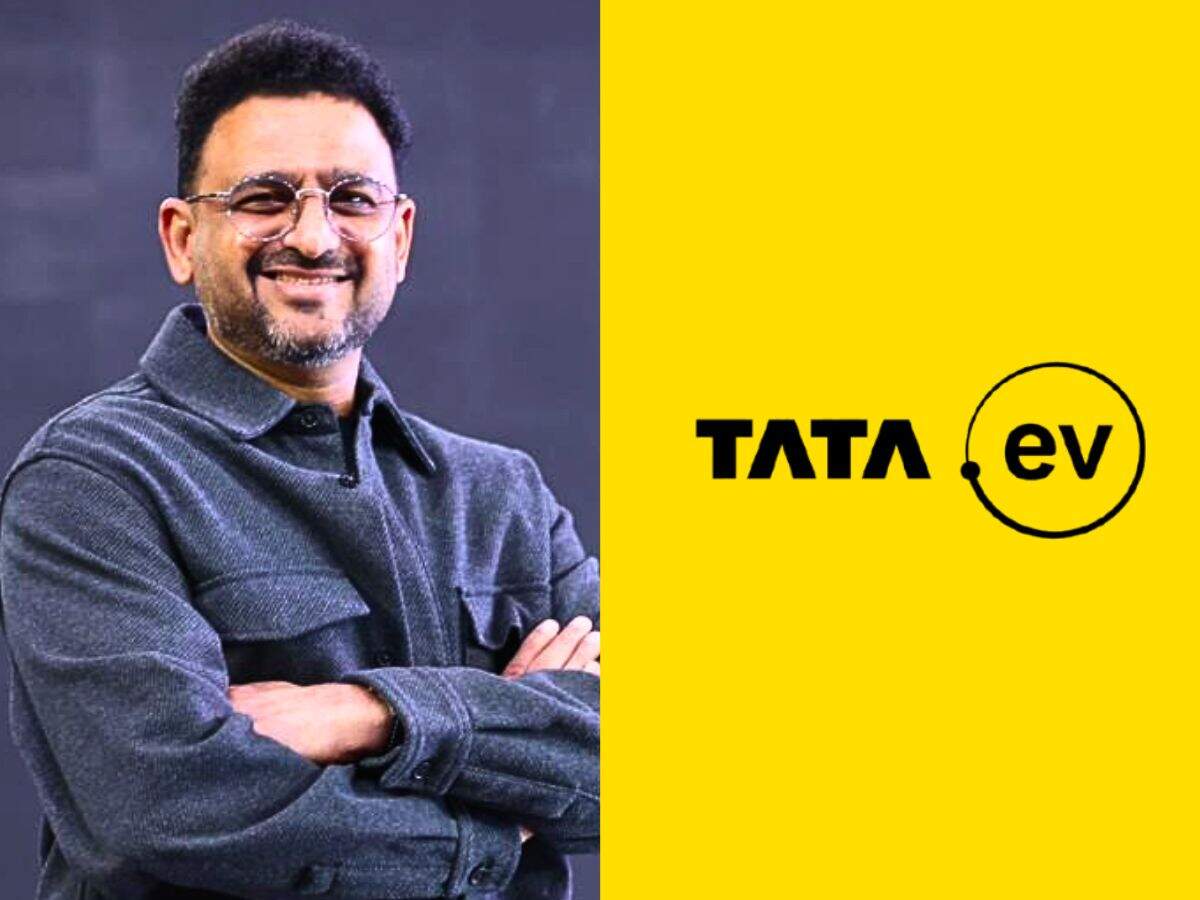
 Vivek Srivatsa, Chief Commercial Officer of Tata Passenger Electric Mobility.
Tata Motors had its strongest year ever in FY26, selling highest annual volumes of over 92,000 EVs. At the centre of the company’s next phase is the Sierra EV, the reincarnation of one of India’s iconic car nameplates from the 1990s.
Ahead of its launch, ET spoke to Vivek Srivatsa, Chief Commercial Officer of Tata Passenger Electric Mobility Limited, about who the car is built for, how Tata plans to address the resale value anxiety that still haunts many EV fence-sitters, and what the company’s investor deck projecting Gen Z buyers to nearly double by 2030 actually means for product strategy.
On Sierra EV and who it is built for
When asked about Sierra EV’s positioning, Srivatsa said, “we are focusing on the mid-SUV buyer. It is usually a customer who has a family of four, who is either running his own business or employed, with an income of more than one lakh rupees a month. Usually living in tier-one, tier-two cities. A typical well-to-do upper-middle-class family. This is probably their second or third car. They want a car which flags their status in society, but at the same time they do not want to compromise on the practicality aspect.”
Tata’s own investor presentation from its Investor Day 2026 shows this segment is exactly where the company sees the bulk of future volume. The mid and high SUV segments together grew over 20 per cent in H2 FY26, and the company’s own data projects SUVs crossing 60 per cent of the total passenger vehicle market by FY31.
Srivatsa added that the timing of the Sierra’s arrival was deliberate. “In the last six months, since the West Asia conflict heightened, EV interest is growing dramatically. Our own inquiries have grown three times. Sierra offers a very good mid-SUV in an EV package, which is actually missing in the market. That is why it becomes the right car at the right time.”
On EV’s resale value
When asked Srivatsa about EV resale anxiety, he said, “resale value is something the Indian car buyer anchors on when buying, and I am talking about the ICE category. People buy a car thinking that in four or five years I will sell it and upgrade.” However, he argued that EVs require a different mental framework altogether.
“EVs should be bought more with a gadget mindset rather than an automotive mindset. We don’t buy our phones or laptops keeping in mind resale value. It is more about, I pay money for what I get, and the more I use it the better value I get out of it.”
He pointed to an interesting customer behaviour that Tata has been observing. When the company offers loyalty bonuses to its existing EV customers and invites them to upgrade, many of them hold on to their old EV and pass it down within the family rather than selling it. That, he said, reflects how EV ownership psychology is already evolving.
But he also acknowledged that a used EV market will eventually need to be built, and that it cannot happen without some joint effort.
“At some point we will have to build a used EV market, not just for resale value but also to make EVs more affordable for smaller towns. If the government is willing to incentivise that, it will definitely make the job easier. Used car finance is very expensive today. Maybe the government can mandate something around used EV finance and reduce the interest burden.”
On Tata’s own responsibilities, he said the company needs to build customer confidence around battery health. “Having some kind of process to assure the customer about battery life and warranty, having additional warranty for used EVs, is something we can do as a manufacturer.”
On West Asia crisis & fuel prices driving EV sales
When asked about what actually is driving the current surge in EV consideration in India, Srivatsa said, “the biggest surge in EV demand has happened during the West Asia crisis where there was an imminent risk that fuel availability might be impacted. We started seeing queuing up and rationing of fuel at fuel pumps, and there was a little bit of panic. EV is seen as a safer option where you can just charge at home.”
On the topic of ethanol-blended fuel and whether confusion around compatibility and mileage is nudging fence-sitters toward EVs, he said, “ethanol blending is a peripheral part, but I don’t think that is motivating customers to move from ICE to EV. That is too trivial an aspect.”
On flex-fuel vehicles specifically, he saw no conflict with EV adoption. “Flex fuel is still ICE. That fundamentally remains an ICE option. I don’t think flex fuel and EV adoption have any direct relationship.”
On Battery-as-a-Service: entry-level tool, not a universal play
Tata introduced Battery-as-a-Service (BaaS) with the Punch EV, allowing buyers to purchase the car without the battery pack and pay for battery usage separately, bringing the upfront sticker price down considerably.
Srivatsa said the model will extend across the range but that it matters most where it solves a real problem.
“We will see it across all the products, but it makes more sense in the entry segment because that is where accessibility is a bigger issue. At higher price points, accessibility is not such an issue. But I should say that penetration of BaaS is extremely low, because ultimately it is an EMI option, a battery EMI option. It is just a financial tool.”
On protecting each model’s lane
With Nexon, Punch, Curvv, Harrier and now Sierra all existing in Tata’s EV lineup, the question of overlap is natural. Srivatsa said, “it is important to realise that the EV market is really expanding very fast now and no longer does one product completely cannibalise the other. Even on the EV side, people are saying I want an entry EV, I want a hatch, I want a small SUV, I want a mid SUV. As the market matures and grows, it is growing fast because there are more options. Since these products are already coexisting on the ICE side, similarly they will coexist and mutually benefit each other on the EV side as well.”
The company is targeting 15 nameplates by FY31, with six new nameplates and over 20 refreshes planned, while aiming for 20 per cent market share overall.
Gen Z and the next wave of buyers
Tata’s investor presentation shows Gen Z’s share among car buyers is expected to rise from 14 per cent in 2025 to 32 per cent by 2030. That is a near-doubling within five years.
Srivatsa said, “Tata is one of the companies making more effort to understand Gen Zs and move technology and design upwards to cater to our younger and more evolved buyer in the future. For example, in 2020 when we went electric with the Nexon, no other manufacturer had gone in that direction. Today EVs are seen as a prime solution for Gen Z.”
On EVs closing the price gap with petrol cars
Tata’s own data shows that EV penetration for the company stood at 40 per cent or more of its own sales in FY26. The company’s FY31 ambition is to push that to 30 per cent EV penetration across its total volume. But the sticker price differential between EVs and ICE equivalents remains a live concern for buyers.
Srivatsa said, “we should look at on-road price. EVs are automatic transmission, they don’t have a clutch. So the comparison should be on-road with the relevant automatic transmission vehicles. In that case it is around 20 per cent. If you look at a 10 lakh car, it is only 2 lakh difference in price, not 5 lakh.”
The company’s investor deck sets out a clear target: price parity for EVs with ICE equivalents in the mid and premium SUV segments, with the Curvv, Harrier and Sierra specifically cited as the vehicles where that parity will first be achieved.
What Tata is banking on with the Sierra is that when that buyer walks into a showroom and sees a mid-SUV with AWD (all-wheel drive), a revived nameplate, and a price that is inching closer to its petrol equivalent, the decision becomes a little easier than it was even a year ago.