

Saturday, July 4, 2026
39.8 C
New Delhi

US summer heat: 5 cooling tricks people around world have used for generations

US summer heat: 5 cooling tricks people around world have used for generations

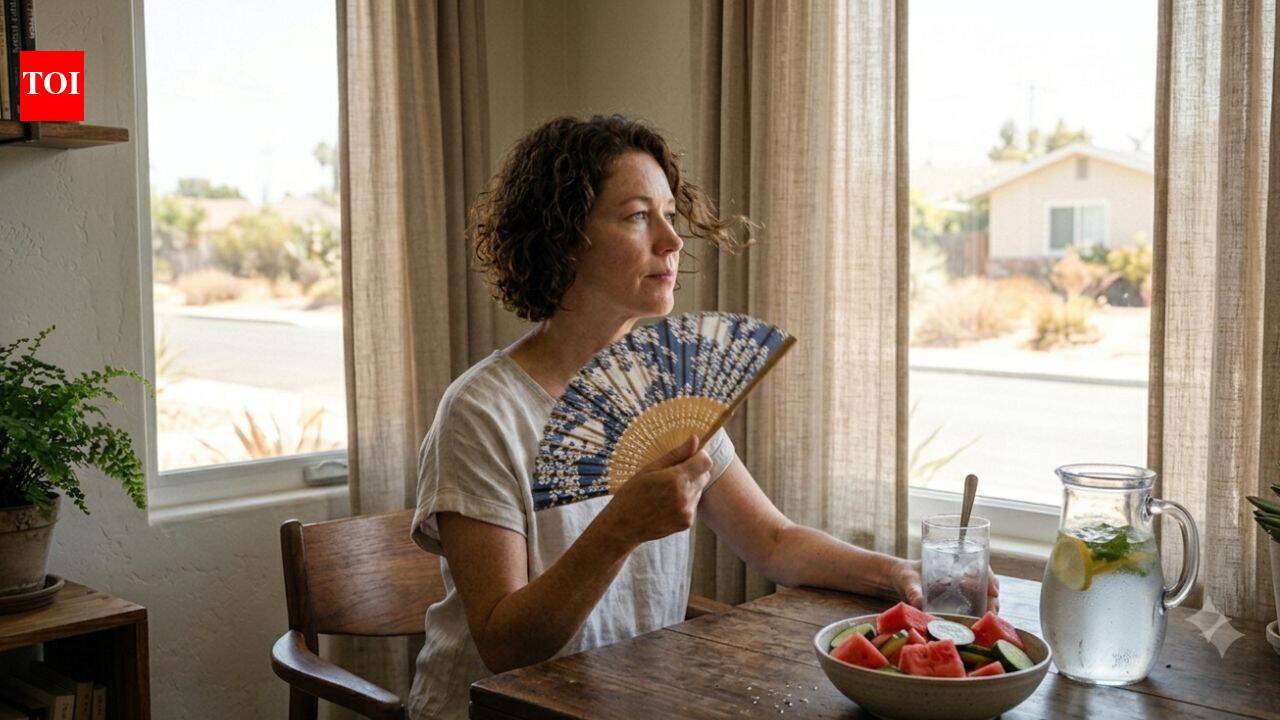
Representational AI photo

For millions of Americans, summer has always meant backyard barbecues, baseball games and long sunny evenings. But this year, the season is looking very different.A powerful heatwave is expected to grip large parts of the United States over the Fourth of July weekend, with the National Weather Service warning that more than 100 million people could face dangerous temperatures. In some places, the heat index could climb to 46°C (115°F), making even a short walk outside risky.Unlike India or many countries closer to the equator, large parts of the US, the UK and northern Europe have spent generations preparing for cold winters, not scorching summers. Older houses are also designed to trap warmth. Air conditioning is common in some parts of the US, especially in the South, but far less so in the Pacific Northwest and many older cities. In the UK, it is still rare in homes.As temperatures keep breaking records, people are hunting for ways to cool down without sending electricity bills soaring. Some are buying portable coolers and blackout curtains.In such a scenerio, it is worth to have a look at ideas that have existed for hundreds of years in countries where living with extreme heat has always been part of daily life.

Keep the sun out before it gets in

Anyone who has spent a summer in India knows the routine. Windows are opened at sunrise to let in the cool morning air. By late morning, curtains, blinds and shutters are pulled shut before the afternoon sun begins to bake the house.It may sound simple, but it is one of the oldest ways of keeping indoor temperatures down. During a heatwave, sunlight streaming through windows can quickly turn a room into a greenhouse.That is why it is advised to keep curtains closed during the hottest part of the day, especially on windows that receive direct sunlight. Blackout curtains and reflective window films have become popular because they help block heat before it enters the home.

Cool the air naturally with water

Long before electricity became common, Indian homes had their own version of natural air conditioning. Woven screens made from khus or vetiver grass, were placed over windows and sprinkled with water throughout the day.As hot air passed through the damp grass, it cooled before entering the room. The earthy fragrance was an added bonus. The same principle still powers modern evaporative coolers sold today.Japan has a similar tradition called uchimizu, where people sprinkle water outside homes and streets during hot afternoons. The evaporating water helps cool the surrounding air. The technology may have changed, but the science hasn’t.

Wear more, not less

When visitors first see long robes worn across the Middle East and North Africa, they often assume they must feel unbearably hot. However, loose clothing creates a layer of moving air between the fabric and the skin.The airflow helps the sweat evaporate, while also protecting the body from direct sunlight. Also, cotton clothes breathe better than tight synthetic fabrics that trap heat.

Eat water-rich foods

In many parts of Africa and India, summer meals typically feature water-rich fruits and vegetables that help the body replace the fluids lost through sweating.Watermelon is a favourite in countries such as Nigeria, Ghana and Sudan; while cucumbers, oranges and other seasonal fruits are often eaten during the hottest months. These foods are loaded with water and minerals that are lost in extreme heat.

Fan the Japanese way

Not every solution needs to be high-tech. Long before battery-powered fans appeared, people in China and Japan carried folding fans wherever they went. They were light, reusable and needed no electricity.Even today, they remain one of the simplest ways to create instant airflow while waiting for a train, walking outdoors or sitting through a power cut. Go to Source
Hot this week

Ethiopia’s Danakil Depression looks like another planet and scientists know exactly why

Few places on the planet look less like Earth than the Danakil Depression, a scorched, sunken stretch of northeastern Ethiopia where the ground bubbles with acid, glows in shades of yellow and green, and sits low enough to trap some of Read More

Why houses in the Philippines stand on wooden stilts to survive floods, typhoons and extreme heat

Long before concrete and steel arrived in the Philippines, Filipino communities had already worked out how to live comfortably in a hot, humid and flood-prone archipelago; they simply raised their houses off the ground. Read More

‘I don’t think it is possible’: Keir Starmer says next PM cannot spend less time on diplomacy

Starmer has advice for his successor on managing foreign affairs (File photo) Outgoing British Prime Minister Keir Starmer has defended the amount of time he devoted to international affairs during his tenure, arguing that his succ Read More

Tamil Nadu sends 50 Bangladeshi nationals to Bengal for deportation

Police said the group consists of 44 men and six women who had been lodged at the special detention camp. Read More

‘Made right decision at every level’: PM Modi says ‘diplomacy and dosti’ helped India to tackle energy crisis

NEW DELHI: Prime Minister Narendra Modi on Saturday said that India’s friendship and diplomacy with other countries helped it tackle the biggest energy crisis of the 21st century, triggered by the war between Iran and the United Read More

Topics

Ethiopia’s Danakil Depression looks like another planet and scientists know exactly why

Few places on the planet look less like Earth than the Danakil Depression, a scorched, sunken stretch of northeastern Ethiopia where the ground bubbles with acid, glows in shades of yellow and green, and sits low enough to trap some of Read More

Why houses in the Philippines stand on wooden stilts to survive floods, typhoons and extreme heat

Long before concrete and steel arrived in the Philippines, Filipino communities had already worked out how to live comfortably in a hot, humid and flood-prone archipelago; they simply raised their houses off the ground. Read More

‘I don’t think it is possible’: Keir Starmer says next PM cannot spend less time on diplomacy

Starmer has advice for his successor on managing foreign affairs (File photo) Outgoing British Prime Minister Keir Starmer has defended the amount of time he devoted to international affairs during his tenure, arguing that his succ Read More

Tamil Nadu sends 50 Bangladeshi nationals to Bengal for deportation

Police said the group consists of 44 men and six women who had been lodged at the special detention camp. Read More

‘Made right decision at every level’: PM Modi says ‘diplomacy and dosti’ helped India to tackle energy crisis

NEW DELHI: Prime Minister Narendra Modi on Saturday said that India’s friendship and diplomacy with other countries helped it tackle the biggest energy crisis of the 21st century, triggered by the war between Iran and the United Read More

‘Transgression’: BJP meets Tamil Nadu governor over 2 ‘private individuals’ at CM Vijay’s official meeting, seeks action

Tamil Nadu CM C Joseph Vijay (File photo) NEW DELHI: The BJP’s Tamil Nadu unit on Saturday approached governor Rajendra Arlekar, seeking action against two “private individuals” for allegedly attending a cabinet me Read More

Monsoon Session 2026 to begin on July 20, Parliament to sit until August 13

Both the Lok Sabha and the Rajya Sabha will sit during the nearly four-week session, during which the government is expected to take up key legislative business and other matters of public interest. Read More

‘Cruelty at its peak’: PoJK leader seeks support of Indians in protest against Pakistan

In PoJK, the JAAC has accused Pakistani authorities of denying people their basic rights. Read More

Related Articles