

Last Updated:
Gyanendra Shah’s formative years were largely spent in India, where he attended St Joseph’s School in Darjeeling before completing his graduation in Kathmandu


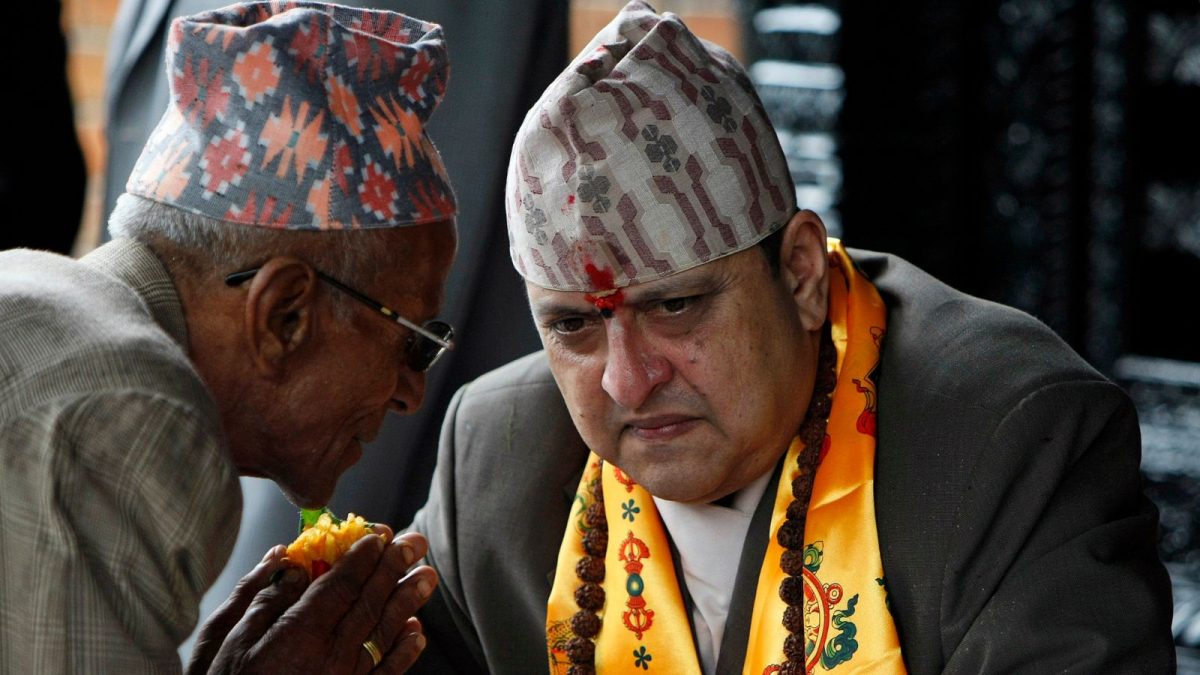
Former Nepal King Gyanendra Shah has retained substantial wealth despite losing the crown. (AP File Photo)
Former King Gyanendra Shah returned to Nepal on Sunday amid a wave of youth-led protests demanding systemic reform, good governance, and an end to corruption. The 77-year-old deposed monarch was welcomed with a show of public enthusiasm upon his return to Kathmandu, after spending two months in Pokhara.
Thousands of supporters gathered outside Tribhuvan International Airport, holding placards demanding the restoration of the monarchy. Some bore slogans such as, “We want our king back”, “End the federal republican system and re-establish the monarchy” and “The king and the country are dearer than our lives”.
Recommended Stories
The crowd’s fervour also included calls for Hinduism to be reinstated as the state religion, a stark contrast to the public sentiment when the monarchy was abolished amid nationwide protests. Gyanendra Shah was received at the airport by senior leaders of the Rastriya Prajatantra Party (RPP), the primary political force advocating for the return of the monarchy. Among those present were RPP President Rajendra Lingden, Rastriya Prajatantra Party-Nepal chief Kamal Thapa, and other senior party figures.
Addressing the nation through his dialogue secretariat on Tuesday, Shah urged that the growing movement “must not turn violent, must not descend into chaos, and must not be infiltrated by any external forces”. He emphasised that the grievances of the younger generation could be addressed internally through sincere dialogue and national unity.
A Monarch Twice Crowned
Gyanendra Shah’s ascension to the throne was marked by tragedy and political upheaval. He first became king at the age of three in 1950 due to political instability. His early childhood was spent in isolation at his grandmother’s residence, following astrological advice that his presence with Crown Prince Mahendra’s second child could bring misfortune. Coins were minted in his name, and he received Rs 3,00,000 for personal expenses during this period. A year later, power returned to his family.
His second and more permanent coronation followed the murder of his elder brother, King Birendra Bir Bikram Shah, and most of the royal family in 2001. Initially a constitutional monarch with limited powers, Gyanendra assumed full executive control in 2005, dissolving parliament, jailing politicians and journalists, and using the army to enforce rule during a state of emergency. The king’s tenure coincided with a Maoist insurgency, which he failed to quell despite promises to restore peace within three years.
The Fall Of The Monarchy
Street protests in 2006 forced Gyanendra to relinquish power. Subsequently, Nepal’s multiparty government negotiated a peace agreement with Maoist insurgents, ending a decade-long civil war that claimed thousands of lives. In 2008, Nepal’s parliament formally abolished the monarchy, transitioning the country into a secular federal republic. Gyanendra vacated the Narayanhiti Palace and moved to the Nagarjuna Palace, historically a summer residence of the royal family, where he now resides permanently.
Education And Personal Life
Gyanendra’s formative years were largely spent in India, where he attended St Joseph’s School in Darjeeling before completing his graduation in Kathmandu. He cultivated a reputation as an environmentalist, engaging in conservation efforts for forests and wildlife. In 1970, he married his second cousin, Komal Rajyalakshmi Devi, and the couple had two children.
Despite relinquishing the crown, Gyanendra continues to possess substantial wealth. While properties inherited from the state were returned, the former king maintains extensive personal assets. His investments span luxury hotels, including the Soaltee Hotel, whose value in 2008 was estimated at over $100 million.
He also holds significant shares in companies such as Himalayan Goodricke, Surya Nepal Tobacco, and Annapurna Hotel, along with tea estates in Nepal, an entire island in the Maldives, and stakes in a Nigerian oil company. Gyanendra’s portfolio also includes Nirmal Mahal in Maharajganj, priceless heritage from the Shah and Rana dynasties, as well as valuable jewels and artifacts.
Gyanendra’s rise to power has long been shrouded in controversy. Suspicions arose around the royal massacre, with some alleging he orchestrated the killings. Although the official investigation attributed responsibility to Crown Prince Dipendra, Gyanendra’s demolition of Tribhuvan Sadan, the site of the massacre, fuelled public skepticism. While democracy has been in place for 17 years, political instability and frequent government changes have prompted segments of the Nepali population to reminisce about monarchical rule, with rumours resurfacing that a restoration could stabilise the nation.
Legacy Of The Shah Dynasty
The Shah dynasty’s rule in Nepal dates back to 1768, tracing its lineage to Rajput ancestors from India. Gyanendra Shah, often described as the world’s last Hindu king, symbolises both the grandeur and the turbulence of Nepal’s monarchical past, a history now intertwined with personal wealth, political intrigue, and the nation’s ongoing debate over governance.
Kathmandu, Nepal
September 09, 2025, 16:18 IST
Loading comments…
Read More


