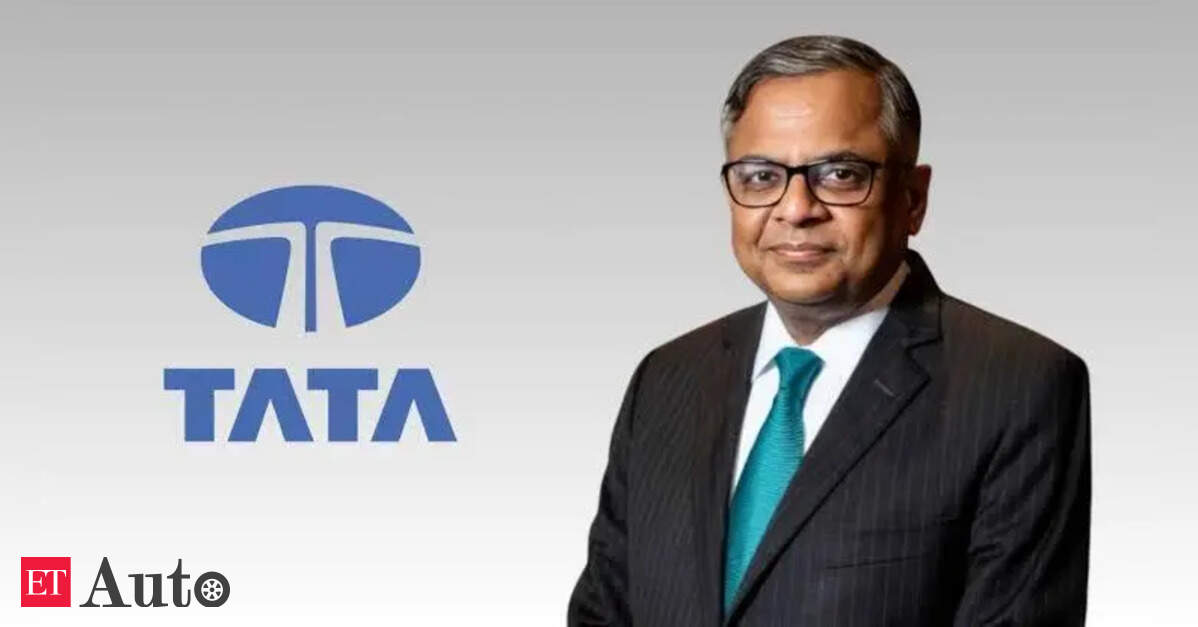

 Natarajan Chandrasekaran, Chairperson of Tata Sons
Tata Motors Passenger Vehicles (TMPV) is confident of delivering industry-leading growth in FY27 despite ongoing macroeconomic and geopolitical uncertainties, supported by a robust pipeline of new launches and a multi-powertrain portfolio, Chairman N Chandrasekaran said in the company’s FY26 annual report.
“Looking ahead, we enter FY27 with confidence, supported by a robust pipeline of new launches and multi-powertrain offerings. Our focus will remain on delivering industry-leading growth, deepening our commitment to safety, sustainability, quality and customer delight, while becoming resilient and staying agile amid macroeconomic and geopolitical uncertainties,” Chandrasekaran said in his letter to shareholders.
Tata Motors, JLR to deepen collaboration
Chandrasekaran said TMPV and its British luxury vehicle arm Jaguar Land Rover (JLR) would continue to collaborate across manufacturing, technology and talent development to improve scale efficiencies and strengthen capital discipline.
“TMPV and JLR will continue to collaborate on manufacturing, technology and people, enhancing scale efficiencies, accelerating learning and reinforcing capital discipline,” he said.
He highlighted the commencement of operations at Tata Motors’ new Panapakkam facility in Tamil Nadu as an early example of the benefits emerging from such collaboration, creating opportunities for shared manufacturing and operational efficiencies.
EV leadership and balanced strategy
Chandrasekaran noted that India’s mobility landscape is being shaped by changing consumer aspirations, infrastructure development and increasing acceptance of cleaner technologies.
“The sustained demand supports the ICE portfolio and the continued momentum in EVs reflects growing customer confidence in new technologies, underscoring the strength of a balanced, multi-powertrain strategy,” he said.
Tata Motors retained its leadership position in the domestic electric passenger vehicle market during FY26, crossing the cumulative milestone of 2.5 lakh EVs and accounting for nearly two-thirds of all EVs sold in India to date.
The automaker sold more than 92,000 electric vehicles in FY26, registering 43.4 per cent growth over the previous year.
Focus on technology and sustainability
Chandrasekaran said rapid advances in artificial intelligence, digital technologies and software are transforming how mobility products are designed, experienced and supported.
“At the same time, the transition to clean energy, heightened expectations on safety, and the reconfiguration of global supply chains are redefining competitiveness,” he said.
Reiterating the company’s sustainability goals, he said Tata Motors remains committed to achieving net-zero emissions by 2040 and will continue investing in products, platforms and ecosystems that support accessible zero-emission mobility while improving conventional powertrains.
JLR targets stronger profitability
On Jaguar Land Rover, Chandrasekaran said FY26 was a challenging year due to a combination of internal and external disruptions. Going forward, the luxury carmaker will continue to pursue its House of Brands strategy while working to reduce its breakeven volume levels.
He said JLR aims to bring its breakeven point back to 300,000 units over the next two years despite pressures from tariffs, currency fluctuations and commodity inflation.
The company will also focus on upcoming product launches, including the Range Rover Electric and Jaguar Type 01, while continuing to strengthen its modern luxury positioning.