
Reported by: Shakeel Sobhan with AFP, Reuters | Edited by: Dmytro Hubenko
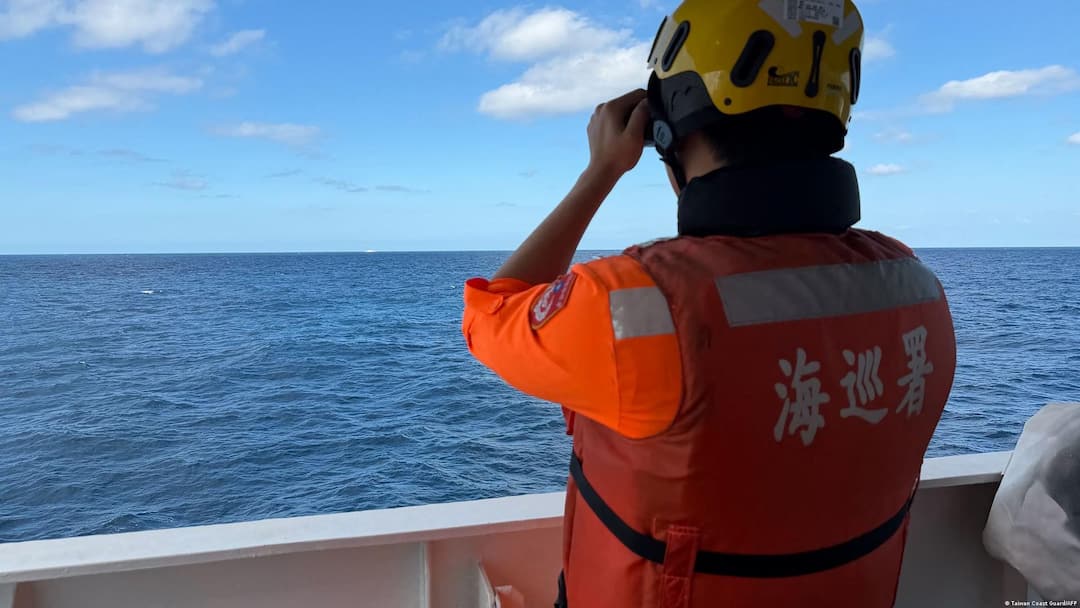
Taiwan’s coast guard said on Sunday it had deployed vessels in response to a Chinese operation east of the island.
Taipei said it detected four Chinese government vessels departing from Xiamen and dispatched more than five coast guard ships for surveillance.
National Security Council Secretary-General Joseph Wu posted a video on X where the coast guard is broadcasting to Chinese vessels: “This is not your waters. You don’t belong here. Turn around and leave, now.”
Warning that the Chinese operation “violates international law,” the Taiwanese coast guard said in a statement that it “has deployed the necessary vessels to respond appropriately.”
“China does not enjoy any sovereign rights in the waters east of Taiwan,” the statement said.
Taipei says Beijing trying to ‘provoke’ Taiwan
Beijing had launched a “law enforcement operation” in the region after planned talks between Japan and the Philippines to draw a boundary there, according to Chinese state media.
The operation was “a necessary action taken against Japan and the Philippines’ unilateral announcement they would start ‘negotiations on delimiting a maritime boundary” near Taiwan, Chinese state media Xinhua reported.
China claims Taiwan as its territory, which Taipei rejects.
On Saturday, Taiwan said a Chinese coast guard ship and a survey ship had conducted their first coordinated operation near the Taiwan-controlled Pratas Islands in the South China Sea.
Taipei described the move as a deliberate provocation aimed at creating a “false illusion” of Chinese jurisdiction over the area.
Japan, Philippines cooperation draws China ire
The escalating tensions come amid closer cooperation between Japan and the Philippines over maritime disputes with China.
Last month, Tokyo and Manila agreed to begin talks “to delimit the maritime boundary” of an economic zone and continental shelf between them, drawing criticism from Beijing.
Meanwhile, China has also increased coast guard and navy deployments in the South China Sea, leading to frequent confrontations with the Philippines.
(Disclaimer: This report first appeared on Deutsche Welle, and has been republished on ABP Live as part of a special arrangement. Apart from the headline, no changes have been made in the report by ABP Live.)