Saturday, February 14, 2026
14.1 C
New Delhi

What Was Operation Gibraltar That Sparked The India-Pakistan War Of 1965

Curated By :

Last Updated:

On September 6, the Indian Army crossed into Pakistan’s Lahore sector, sparking fierce battles across Punjab, Rajasthan, and Kashmir during the 1965 war


font

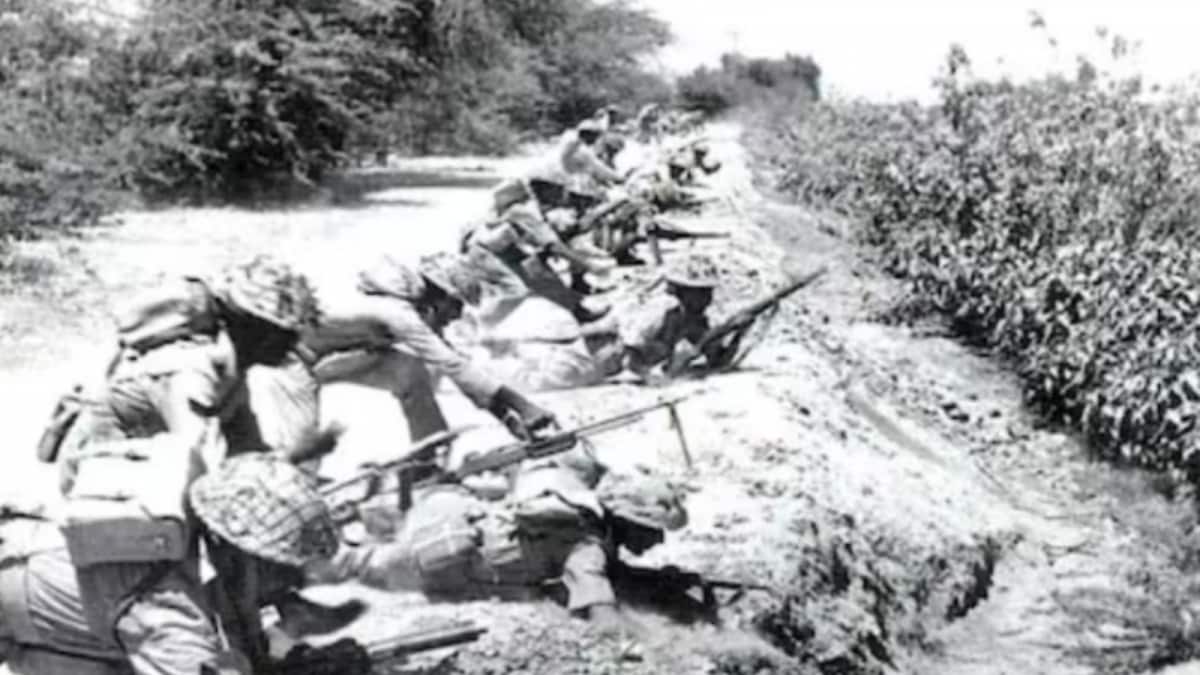
The war lasted for 17 days and featured one of the largest tank battles since the Second World War. (Wikimedia Commons)

The war lasted for 17 days and featured one of the largest tank battles since the Second World War. (Wikimedia Commons)

Tensions between India and Pakistan erupted into a full-scale conflict in 1965, marking the start of the Indo-Pakistani War. September 6, 1965, marked the first major confrontation since the 1947 partition, following years of smaller skirmishes, including Pakistan’s earlier attempts to capture Kashmir.

The war lasted for 17 days and featured one of the largest tank battles since the Second World War. The conflict was triggered by Pakistan’s Operation Gibraltar, a secret plan aimed at inciting rebellion in Jammu and Kashmir by sending thousands of soldiers disguised as local rebels. Pakistan hoped this would create instability and help them capture the region.

Recommended Stories

India, in response, launched an attack on Lahore, taking Pakistan by surprise and reaching the outskirts of the city, which shook the Pakistani defence.

Understanding The Indo-Pakistani War Of 1965

The Indo-Pakistani War of 1965 officially began on September 6, when the Pakistani army launched Operation Grand Slam, targeting Akhnoor in Jammu and Kashmir. The conflict followed rising tensions after Pakistan’s Operation Gibraltar in August, which sent armed infiltrators into Kashmir to incite rebellion against Indian rule. India responded decisively, and the situation quickly escalated into a full-scale war.

Army Moves Across Border

On September 6, the Indian Army crossed the international border into Pakistan’s Lahore sector, initiating fierce battles in various regions, including Punjab, Rajasthan, and Kashmir. Major confrontations occurred in Asal Uttar, Khemkaran, and Sialkot. Both countries deployed infantry, armoured units, and air forces, resulting in heavy damage and economic losses on both sides. Despite both nations claiming victory, Pakistan’s objective of capturing Kashmir remained unfulfilled, while India gained an edge in some strategic areas.

UN Steps In To Enforce Ceasefire

The conflict drew international attention, leading to a United Nations-enforced ceasefire on September 23, 1965. Diplomatic intervention by the United Nations and the mediation of the Soviet Union resulted in the signing of the Tashkent Agreement on January 10, 1966, between Indian Prime Minister Lal Bahadur Shastri and Pakistani President Ayub Khan. Under the agreement, both countries agreed to return each other’s occupied territories.

The war demonstrated India’s military strength and resilience, disproving Pakistan’s expectation of support from the Muslims of Kashmir. It highlighted that while India seeks peace, it is capable of responding effectively to threats to its security. The conflict not only marked a military victory but also restored confidence in India’s capability following the setback of the 1962 war.

News india What Was Operation Gibraltar That Sparked The India-Pakistan War Of 1965
Disclaimer: Comments reflect users’ views, not News18’s. Please keep discussions respectful and constructive. Abusive, defamatory, or illegal comments will be removed. News18 may disable any comment at its discretion. By posting, you agree to our Terms of Use and Privacy Policy.

Loading comments…

Read More

Go to Source

Hot this week

EC to begin tour of poll-bound states

EC will kick off its visits to poll-bound states to assess poll preparedness, with a tour of Assam from Feb 16 to 18, according to sources in the commission. Read More

2 journalist bodies condemn Rahul Gandhi talk on media impartiality

NEW DELHI: Two journalist bodies on Saturday criticised Congress neta Rahul Gandhi for questioning the impartiality of mediapersons, saying political leaders must use respectful language while addressing the press, especially in publi Read More

EC asks West Bengal govt to comply with its directives by February 17

NEW DELHI: EC has directed West Bengal chief secretary Nandini Chakravarty to comply with its directives regarding payment of honorarium to BLOs, appointment of suitable SIR/poll-related officers, the rescinding of unilateral transfer Read More

‘Lucky to be alive’: British woman survives 30ft plunge at Wales waterfall, demands stricter safety measures

A 50-year-old British woman has said she feels “lucky to be alive” after plunging nearly 30 feet off a narrow, eroded path at a popular waterfall trail in Wales, an area that has seen multiple fatalities in recent years. Read More

Brooklyn subway horror: Man pushes woman onto tracks, punches another before arrest

A 25-year-old man allegedly went on a violent rampage inside a Brooklyn subway station on Saturday morning, pushing one woman onto the tracks and punching another in the face before being taken into custody, police said. Read More

Topics

EC to begin tour of poll-bound states

EC will kick off its visits to poll-bound states to assess poll preparedness, with a tour of Assam from Feb 16 to 18, according to sources in the commission. Read More

2 journalist bodies condemn Rahul Gandhi talk on media impartiality

NEW DELHI: Two journalist bodies on Saturday criticised Congress neta Rahul Gandhi for questioning the impartiality of mediapersons, saying political leaders must use respectful language while addressing the press, especially in publi Read More

EC asks West Bengal govt to comply with its directives by February 17

NEW DELHI: EC has directed West Bengal chief secretary Nandini Chakravarty to comply with its directives regarding payment of honorarium to BLOs, appointment of suitable SIR/poll-related officers, the rescinding of unilateral transfer Read More

‘Lucky to be alive’: British woman survives 30ft plunge at Wales waterfall, demands stricter safety measures

A 50-year-old British woman has said she feels “lucky to be alive” after plunging nearly 30 feet off a narrow, eroded path at a popular waterfall trail in Wales, an area that has seen multiple fatalities in recent years. Read More

Brooklyn subway horror: Man pushes woman onto tracks, punches another before arrest

A 25-year-old man allegedly went on a violent rampage inside a Brooklyn subway station on Saturday morning, pushing one woman onto the tracks and punching another in the face before being taken into custody, police said. Read More

Who is Narges Mohammadi? Nobel Peace Prize winner transferred to Zanjan prison amid health concerns

Iranian authorities have transferred Nobel Peace Prize laureate Narges Mohammadi without prior notice to a prison in northern Iran, raising fresh concerns over her health and treatment in detention. Read More

Barack Obama breaks silence on Trump’s racist video, says shame is ‘lost’

Former President of the United States of America, Barack Obama has spoken out for the first time about the racist video of him and his wife Michelle that was posted by Trump on Truth Social recently. Read More

Sikh student assaulted after being mistaken for ‘Hindu’ at San Jose State University, Hindu groups condemn attack

A Sikh student was assaulted on the campus of San Jose State University after being mistaken for Hindu, prompting condemnation from Hindu advocacy groups and renewed calls for stronger campus security. Read More

Related Articles