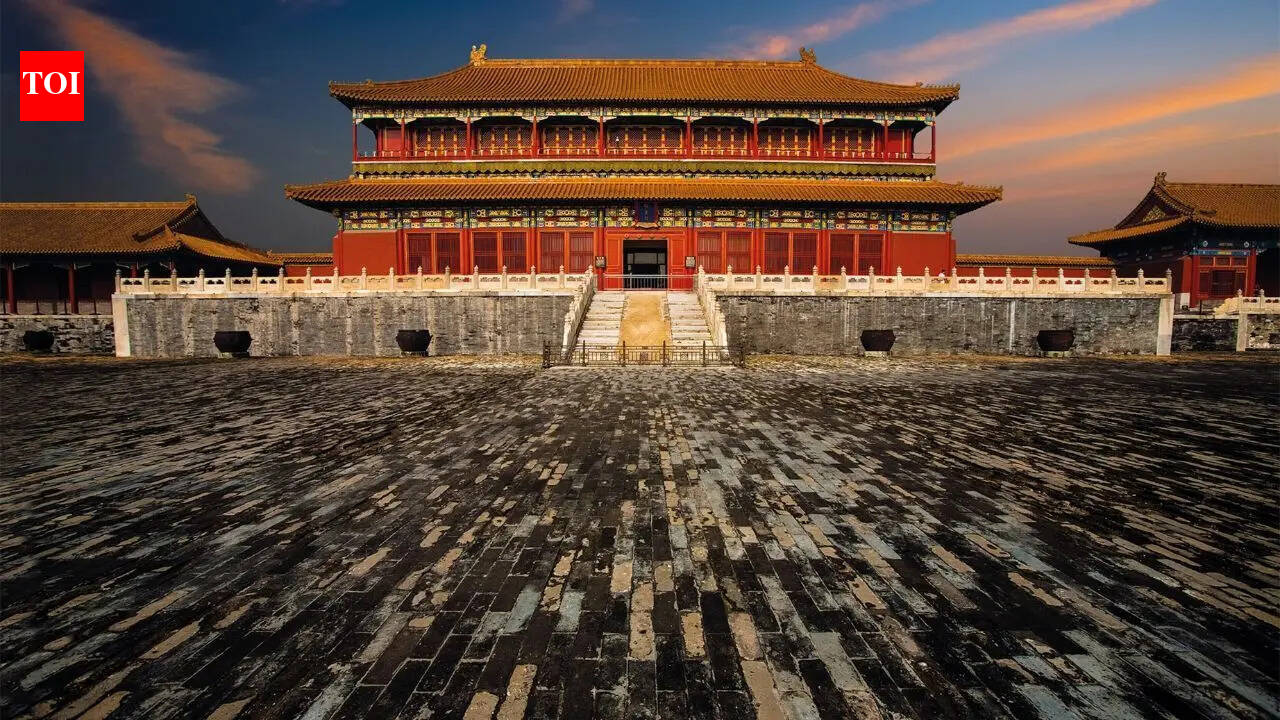

PC: National Geographic
At the centre of Beijing sits a place that once functioned as a city within a city. From above, the Forbidden City appears orderly and measured, enclosed by walls and surrounded by water. On the ground, however, it reveals something more complicated: a carefully managed world designed to organise power, family life, ritual, and government within a single vast enclosure.For centuries, entry was restricted to a small portion of society. Decisions affecting an empire were made here, ceremonies unfolded according to strict rules, and generations of emperors spent their lives behind its gates. Although the palace complex now receives streams of visitors rather than officials and servants, its layout still reflects the priorities of the political system that created it. Every courtyard, hall and residence formed part of a larger vision about authority, hierarchy and order.
How a dynastic power struggle gave rise to the Forbidden City
The origins of the Forbidden City are tied to one of the most turbulent episodes of the Ming dynasty. Early in the fifteenth century, a power struggle reshaped the direction of imperial China. After securing the throne, the ruler known to history as the Yongle Emperor sought to establish his authority on firmer ground. Part of that effort involved relocating the centre of government from Nanjing to Beijing. The move was not simply administrative. It required the construction of an entirely new political and ceremonial landscape capable of projecting imperial power across a vast territory.Work on the palace complex drew enormous resources and labour. By the time construction was completed in the early 1400s, Beijing possessed a new focal point around which court life would revolve. The precinct occupied a huge area, protected by walls and a broad moat, creating a self-contained environment where government, ritual and domestic life could coexist under close control.
The philosophical design behind the Forbidden City
The arrangement of the Forbidden City was far from accidental. Its planners worked within a long tradition of Chinese political and philosophical thought that linked architecture to social structure.Buildings were positioned according to established ideas about hierarchy and cosmic balance. The placement of halls, gates and residential compounds reinforced distinctions between ruler and subject, male and female, public duty and private life. Architecture became a visible expression of how society was expected to function.The scale of individual structures also communicated status. Certain buildings were permitted greater height, wider courtyards and more elaborate decorative features. These choices were governed by architectural traditions that assigned particular forms to particular ranks. The result was a landscape in which hierarchy could be read directly from the built environment.Even today, walking through the complex means moving through a sequence of spaces that subtly signal who once belonged where.
Inside the southern gates where governance became ritual performance
The southern section of the Forbidden City formed the public side of imperial rule. This was where government ceremonies took place and where the emperor appeared in his formal capacity as sovereign.Visitors entering through the main southern gate would encounter an immense open space leading towards the principal audience halls. The scale remains striking. Wide courtyards and elevated terraces create an impression of distance between ordinary individuals and the institutions of power.Officials arriving for court audiences often began their day long before sunrise. Gatherings took place according to rigid schedules, reflecting the discipline expected within the imperial bureaucracy. By the time formal proceedings commenced, many participants had already spent hours waiting within the palace grounds.The largest halls served as stages for state ceremonies, imperial celebrations and major announcements. Their purpose extended beyond practical administration. They were intended to communicate stability and authority through ritual performance and architectural grandeur.
Life behind the formal halls
Beyond the public spaces lay a different world.The northern section of the complex functioned primarily as the residence of the imperial household. Here, attention shifted away from state affairs and towards family relationships, daily routines and courtly customs.Several major palaces occupied the central axis. One was associated with the emperor, another with the empress, while a smaller structure between them hosted important family ceremonies. The arrangement reflected traditional ideas about harmony between complementary forces and the respective roles expected of imperial men and women.Despite their symbolic importance, some of these grand residences proved less practical for everyday living. Vast ceremonial buildings could feel cold and impersonal. Over time, emperors sometimes preferred smaller and more manageable quarters located elsewhere within the complex. Changes of residence gradually altered how certain buildings were used, transforming former living spaces into ceremonial settings.This adaptability became part of the palace’s history. Although the overall plan remained remarkably stable, its occupants continued to reshape the way particular rooms and buildings functioned.
Inside the hidden world of imperial court life
The lives of imperial consorts unfolded within a network of residential compounds positioned around the central palaces. These spaces were highly structured and reflected the rigid hierarchy that governed court society.Rank determined accommodation, privileges and access. Architecture reinforced those distinctions. Individual compounds were enclosed and carefully organised, creating separate domestic worlds connected to the larger court.Yet the palace was never entirely frozen in tradition. During the nineteenth century, significant alterations were carried out under the influence of Empress Dowager Cixi. Renovations affected parts of the inner court and changed arrangements that had previously reflected older philosophical ideals.Such modifications may seem modest when viewed against the scale of the entire complex, but they reveal how political realities could leave their mark on architecture. Buildings that appeared permanent were still subject to the ambitions and preferences of powerful individuals.
The hidden private world inside the Forbidden City’s imperial walls
The Forbidden City accommodated more than the reigning emperor and his immediate household. Provision was also made for retired rulers, senior members of the imperial family and dowager empresses.Special residences occupied parts of the eastern and western sectors. Some of these were built late in the history of the complex and reflected the personal wishes of particular emperors. Retirement within the palace walls did not necessarily mean withdrawal from influence, and these spaces often retained political significance.Religious practice formed another layer of life within the precinct. Temples and shrines stood alongside residential and ceremonial buildings. Buddhism and Daoism both had a presence, while the Qing rulers introduced traditions associated with their own cultural background.As a result, the Forbidden City was not solely a seat of government. It was also a place of worship, family life and personal devotion.
How the end of imperial rule transformed the Forbidden City’s purpose
The fall of the Qing dynasty in the early twentieth century transformed the future of the palace. Imperial rule ended, but the former rulers remained within parts of the complex for a period before finally leaving.A new chapter began when the site was converted into a museum. The transition involved a fundamental change in purpose. Spaces once reserved for emperors and courtiers became accessible to the public, allowing millions of people to encounter a place that had previously been closed to almost everyone.Conservation brought fresh challenges. Historic structures required ongoing repair, while curators faced decisions about how best to present the palace and its collections. Some buildings retained restored interiors intended to evoke their historical appearance. Others found new life as exhibition galleries displaying artworks and treasures associated with China’s imperial past.The balance between preservation and accessibility remains an ongoing process rather than a completed task. Go to Source