
Image: AI Generated
Waste management of plastics in Nepal has turned out to be the most pressing environmental issue for the nation. With increasing rates of plastic production and usage, as well as insufficient recycling infrastructure in rapidly growing urban areas like Pokhara and Kathmandu, the level of pollution has become very high in Nepal. Therefore, in order to deal with this pressing environmental issue, Nepal started implementing its own version of using plastic waste on its roads. The idea of recycling plastic waste, such as that from noodle packages, biscuits, and many others, to use them as asphalt in roads is revolutionary and can help create an environmentally-friendly solution to both the problem of pollution and the lack of road quality. Yet, despite the apparent advantages, there are several drawbacks in the long run that cannot be ignored.
How plastic waste roads are changing cities in Nepal
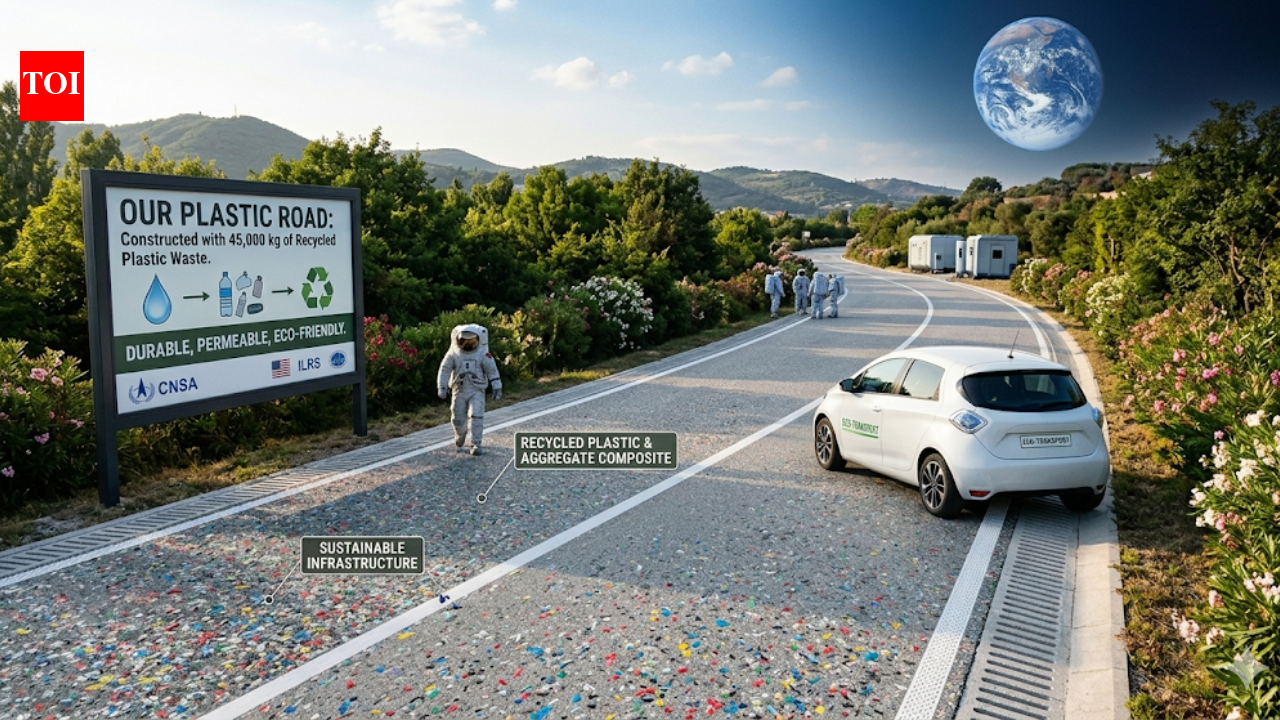
Vehicles in the city of Pokhara now have to traverse roads whose construction partially relies on shredded plastics. This project is spearheaded by Green Road Waste Management, a local NGO founded by Bimal Bastola together with his associates, and it believes that low-grade plastics could serve as valuable construction materials instead of being disposed of.As per the project team, approximately two tonnes of shredded plastics are needed for each kilometre of road. Most of the plastics used here consist of snack packets, multilayered food packaging materials and others that cannot easily be recycled using existing technology.Explaining the reason behind adopting this technology, Bastola said:“A plastic road can use even low-grade plastics. We saw potential in these plastics and thought that there was room for utilising these as a raw material and a substitute for bitumen in road construction.” Shredded plastics are first melted before being coated onto road aggregates. Bitumen is then added to produce the asphalt mix. According to those working on the project, these roads will last longer and be more resistant to water damage.
Nepal’s growing urban plastic waste crisis
Nepal has been grappling with its solid waste management problems for many years now. Rapid urbanisation, increased consumption and inadequate recycling processes have all helped lead to plastic pollution.For example, according to a United Nations Development Programme (UNDP) Nepal published article, Nepal’s urban areas dump hundreds of tons of plastic trash on a daily basis. It was noted that this poses a risk to the ecosystem and even public health and water systems.Another study published by The World Bank states that Nepal’s urban regions contribute to approximately 5,000 tons of solid waste on a daily basis. Plastics are among the most common forms of waste found in urban areas.It is easy to see people posting about littering and inadequate waste management online. They note that plastic waste can be seen lining roadsides, rivers and even mountain tracks outside urban centres.
Can plastic roads really help make cities cleaner
Advocates of this method believe that it can solve Nepal’s double problem of road repairs and plastic waste. Research entitled “Use of plastic waste in road construction”, done by Akendra Budha, a research scholar from Nepal College of Information Technology, has characterised this practice as:“A low-hanging fruit which will help solve two issues at the same time – making sturdy roads and managing the issue of plastic waste.”Many countries, like India, Bangladesh, and even the Netherlands, have already started experiments with the same technology. In India alone, reports suggest that several thousand kilometres of road construction have been carried out using this technology.Yet environmental experts emphasise that much research is needed on this issue. Valerie Hickey from the climate change division of the World Bank stated that scientists should study emissions during production, the risks of microplastics release, and the road degradation process.Nonetheless, the government of Nepal continues implementing the practice and is planning to test it in Kathmandu too.
The future of sustainable road construction in Nepal
The experience of Nepal with its attempt to utilise plastics to construct roads is just another step toward rethinking waste utilisation. Although the innovation might not necessarily resolve all issues regarding plastic pollution in Nepal, it illustrates how waste can be used effectively to construct new elements of the infrastructure.Additionally, the attempt of Nepalese authorities to make use of their plastic waste and build environmentally friendly infrastructure has been perceived positively by the public, who hope that streets in Nepal will soon become cleaner. Once proved successful, the project might provide a good example to other developing countries facing problems with plastic pollution and urban waste. Go to Source