


An AI-generated image
Pregnancy and childbirth bring with them a range of transformative changes for a woman that are physiological, psychological, and emotional all at once. From the time of conception to carrying a life in her womb for months, the journey alters not just her body, but also reshapes and readjusts her emotional and mental wiring to this profound new life event.Added to this deeply personal transition is the societal pressure to constantly prove oneself as a “good mother.” Often, even those closest to her find their attention shifting entirely to the newborn, while the new mother, navigating this huge life transition, finds herself caught in a whirlwind of identity transition, emotional upheaval, physical exhaustion, and persistent sleep deprivation.Yet, amid the chaos and uncertainty, many mothers also describe discovering a new sense of resilience, emotional depth, and connection with their child. But layered over this experience is an unbroken cognitive load of constant planning, feeding schedules, doctor visits, sleep cycles, routines, and worry. Over time, this sustained mental effort gives shape to what is commonly referred to as “mommy brain or mom brain.”
What is “Mommy Brain”?
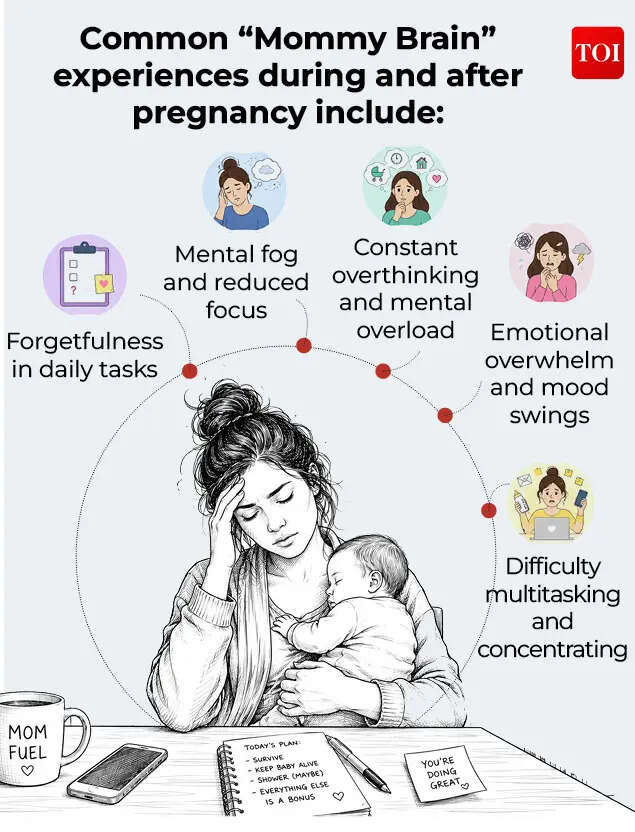
“Mommy brain” is a commonly used term to describe the forgetfulness, mental fog, and reduced concentration many women report during pregnancy and after childbirth. It often shows up in small, everyday moments in misplacing things, forgetting words mid-sentence, difficulty focusing, or feeling mentally scattered while trying to manage multiple tasks at once. For many women, it is less about a loss of ability and more about a constant sense of divided attention.
–
The science behind “mommy brain”
A longitudinal brain-imaging study published in Nature Neuroscience tracked women from pre-conception through pregnancy and up to two years postpartum. The research found an average 4% reduction in gray matter volume across several brain regions, along with increased structural integrity in white matter connections. These changes were linked with hormonal fluctuations, particularly rising estrogen and progesterone, as well as sleep disruption and the cognitive demands of pregnancy and early caregiving.The study, part of the broader Maternal Brain Project, is considered significant because it followed participants longitudinally rather than relying on before-and-after snapshots. Researchers observed that while gray matter volume partially rebounds after childbirth, it does not always return fully to pre-pregnancy levels, suggesting both temporary and longer-term brain adaptations.Scientists involved in the research describe these changes not as decline, but as neural “recalibration.” Brain regions involved in memory, attention, and decision-making appear to reorganise during pregnancy, while areas linked to empathy, vigilance, and responsiveness to infant cues become more finely tuned. A similar pattern of brain reorganisation has been observed during adolescence, when the brain undergoes structural refinement as it matures from childhood to adulthood.
Inside the lived experiences of new mothers
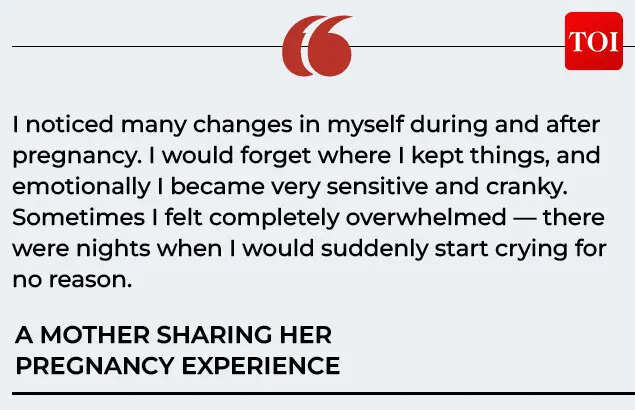
To understand how this experience translates into everyday life, TOI reached out to several new mothers. Their names have been kept anonymous, as requested, to protect their privacy.One mother describes how pregnancy and delivery bring constant physical changes that make daily activities difficult. The body, she says, feels in a state of continuous adjustment, and even routine work starts to feel heavier than before.
–
Postpartum life adds another layer. Lack of sleep, slow recovery, constant tiredness, and new responsibility come together to create a quiet build-up of mental stress in everyday life.At the same time, support makes a difference. A young mother shares that having a supportive family and an understanding partner helps her find small pockets of rest, which feel especially important during this phase.Another mother, in her postpartum phase, describes the emotional shift she experienced after childbirth. She recalls feeling overwhelmed in the early weeks, with sudden mood changes and a sense of emotional instability that took time to understand and accept.She also speaks about the physical and cognitive changes that accompanied this phase, including nausea, mood swings, and forgetfulness. “It’s a phase that changes women completely from start to end,” she says, reflecting on how disorienting the transition felt initially.With time, she says, the journey slowly settled as she grew into motherhood, describing her child as becoming the centre of her world.Another mother talks about the quieter, everyday version of “mommy brain”, forgetfulness, scattered focus, and mental overload that becomes part of daily functioning.“I’ve noticed that my memory and focus aren’t as sharp as they used to be before becoming a mom. I forget small things more often, like why I walked into a room, or what I was about to say mid-conversation,” she says.
–
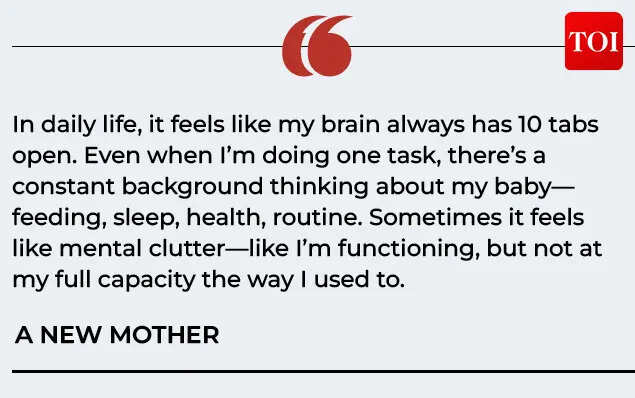
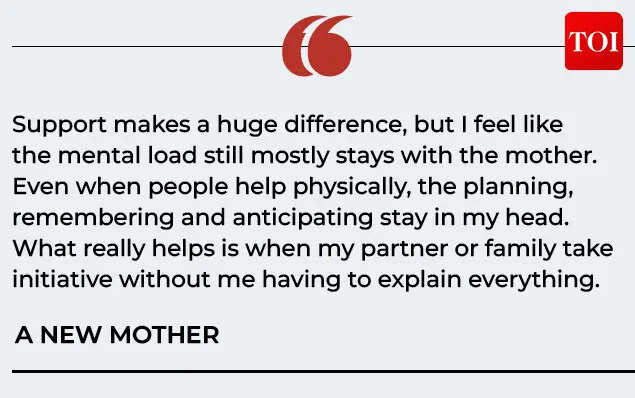
She explains it not as a loss of ability, but as divided attention. “In daily life, it feels like my brain always has 10 tabs open. Even when I’m doing one task, there’s a constant background thinking about my baby, feeding, sleep, health, routine. So it’s not exactly that I’ve become less capable, but more like my attention is constantly divided.”Sleep loss, she adds, is one of the biggest triggers, making even simple days feel mentally heavier. She also points to the invisible mental load of motherhood, saying that even when physical help is available, the responsibility of planning, remembering, and anticipating often remains with her.
–
Over time, she says, it has not disappeared, but it has become easier to navigate. What has helped most, she adds, is learning to slow down, accept imperfection, and speak about what she feels instead of carrying it alone.
What the experts say
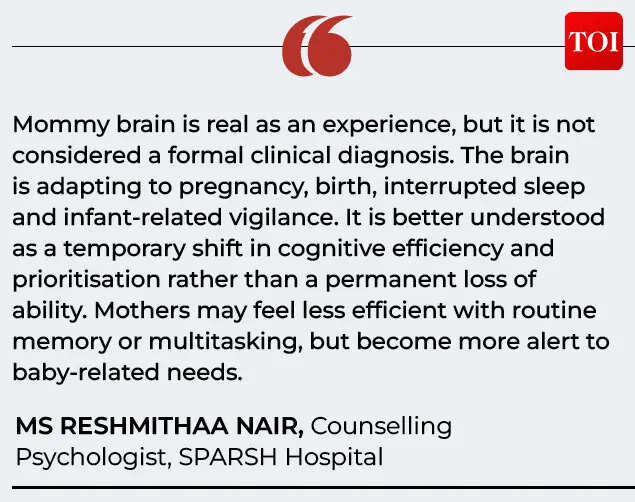
To understand whether “mommy brain” is only a perception or a measurable change, TOI spoke to counselling psychologist Ms. Reshmithaa Nair, Sparsh Hospital, Bengaluru, who says it is a widely recognised experience among new mothers, though not a formal clinical diagnosis.“Mommy brain is real as an experience, but it is not considered a formal clinical diagnosis. Most women report forgetfulness, poor attention, and mental fog during pregnancy and postpartum,” she says, adding that research shows mixed findings, with some studies noting mild measurable changes in memory and executive function.
–
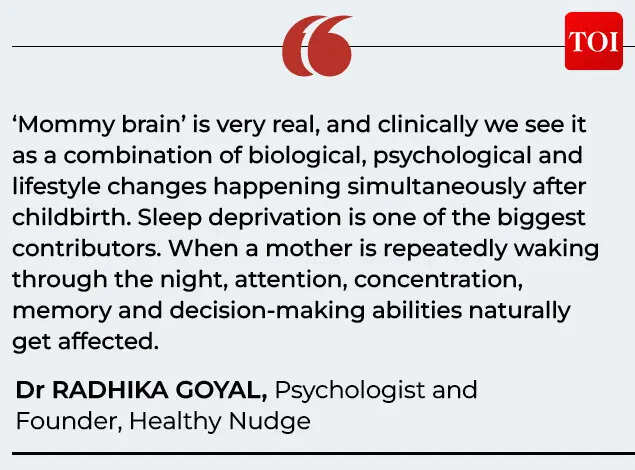
She explains that the most affected areas include memory, attention, working memory, and executive functioning, the mental skills involved in planning, multitasking, and decision-making, largely influenced by hormonal shifts, sleep disruption, and caregiving demands.Importantly, she stresses that this does not indicate a loss of intelligence. Instead, it is a temporary shift in cognitive efficiency and prioritisation as the brain adapts to pregnancy and early motherhood. Neuroimaging studies, she adds, point to brain remodelling rather than decline.Most women see gradual improvement within a few months postpartum, depending on sleep, stress levels, and support. She recommends basic interventions such as rest protection, reducing multitasking, and medical checks if fatigue persists.Adding the psychological perspective, Dr. Radhika Goyal, psychologist and founder of Healthy Nudge, says the experience is shaped by multiple overlapping factors rather than a single cause.“‘Mommy brain’ is very real, and clinically we see it as a combination of biological, psychological, and lifestyle changes happening simultaneously after childbirth. It is rarely caused by one factor alone,” she says.
–
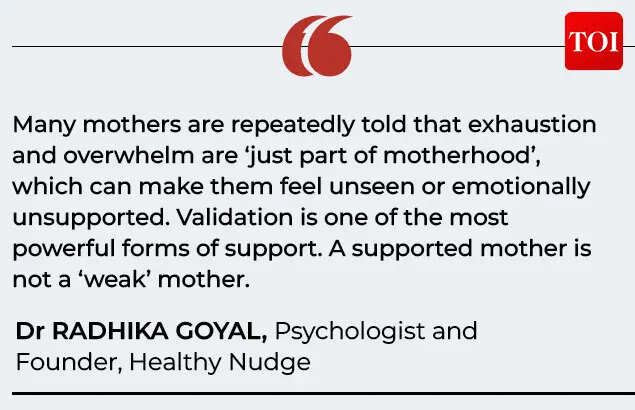
She highlights sleep deprivation as one of the strongest contributors. Repeated night waking, she explains, directly affects attention, memory, and decision-making. Alongside this, the emotional and cognitive load of caregiving keeps the brain in a constant state of alertness.“The brain remains in a state of hypervigilance. New mothers are constantly monitoring feeding schedules, safety, health concerns, routines, and emotional bonding with the baby,” she adds.Dr. Goyal also points to identity transition as a key psychological shift. Beyond caregiving, mothers are adjusting to an entirely new sense of self.“A woman is not only caring for a baby; she is psychologically adapting to an entirely new role and lifestyle. This transition can create emotional overwhelm, self-doubt, and mental exhaustion,” she explains.Hormonal changes, she adds, further affect mood regulation, stress tolerance, and cognitive clarity, which contributes to feelings of mental fog and emotional overstimulation.Dr. Goyal also emphasises that validation is one of the most powerful forms of support during the postpartum period. She notes that many new mothers are often told that exhaustion and overwhelm are simply “part of motherhood,” which can leave them feeling unseen or emotionally unsupported.
–
Instead of minimising their experience, she says families should acknowledge that postpartum recovery is physically and psychologically demanding.She adds that practical support is just as important. Mothers are often not only exhausted from childcare but also from carrying the invisible mental load of planning, remembering, anticipating, and organising everything around the baby and household. Partners, she says, can help meaningfully by taking initiative rather than waiting for instructions.She warns against comparisons such as “other mothers manage it” or “this is what women have always done,” noting that such statements often increase shame rather than resilience.“A supported mother is not a weak mother,” she emphasises, adding that psychological support during postpartum recovery directly benefits both maternal mental health and infant wellbeing.
When it may be more than mental exhaustion
While mild forgetfulness and fatigue are common after childbirth, Dr. Goyal cautions that concern arises when symptoms become persistent and begin to affect daily functioning.She explains that postpartum depression and anxiety often present as deeper emotional distress rather than temporary cognitive fatigue.Families should look out for signs such as:
- persistent sadness or emotional numbness
- withdrawal from the baby or surroundings
- excessive guilt or feeling like a “bad mother”
- panic, intrusive thoughts, or constant anxiety about the baby
- loss of interest in previously enjoyed activities
- persistent feelings of hopelessness or helplessness
- inability to sleep even when the baby rests
- extreme emotional exhaustion that does not improve
“One of the most overlooked signs is when the mother stops expressing her needs and begins functioning only in survival mode,” she says. “Families often mistake this for strength, when clinically it may indicate emotional shutdown or burnout.”She stresses that early intervention is crucial, adding that postpartum mental health conditions are treatable when identified with empathy rather than judgment. Families must seek professional counselling or medical help when these signs persist.
Why this conversation matters
A mother carries her child not only in her womb but in her heart and mind forever. Long before those little feet learn to walk, they are guarded by an instinct that never switches off. Before tiny fingers learn to grasp food without letting it slip, a mother is already feeding, already anticipating, already giving, and even before the child has a language for the world, a mother already hears him. She goes through pain and tears, blood and fear, to bring a new life into this world, and she never stops caring, her heart intrinsically intertwined with the joy she has brought into being.And yet, this new chapter of life also reshapes the mind in ways that are rarely seen but deeply felt. What is often called “mommy brain” lives in this space where attention is divided, memory feels scattered, and thought is constantly anchored to another life. It is not absence, but an ongoing state of holding, planning, remembering, and caring all at once.But even this experience must be understood with compassion and not expectation or dismissal. Every new mother must be held enough so she can let go of the unseen burden of following the footsteps of an “ideal” mother. She should not be taught to trade her health completely for the sake of being a good mother or to carry shame for needing support or going through mental fog. Alongside the newborn, she too finds herself in a completely altered mind and life and deserves to feel supported, seen, and understood.On Mother’s Day, perhaps the truest celebration lies here, not in perfection or the glorification of a woman as a being who never gets exhausted, but in recognition and honour of everything that continues silently, the cognitive load, the emotional labour, and the recalibration of self that motherhood brings, along with a deeper understanding of what she goes through as a human being, and in supporting and validating her experience. Go to Source