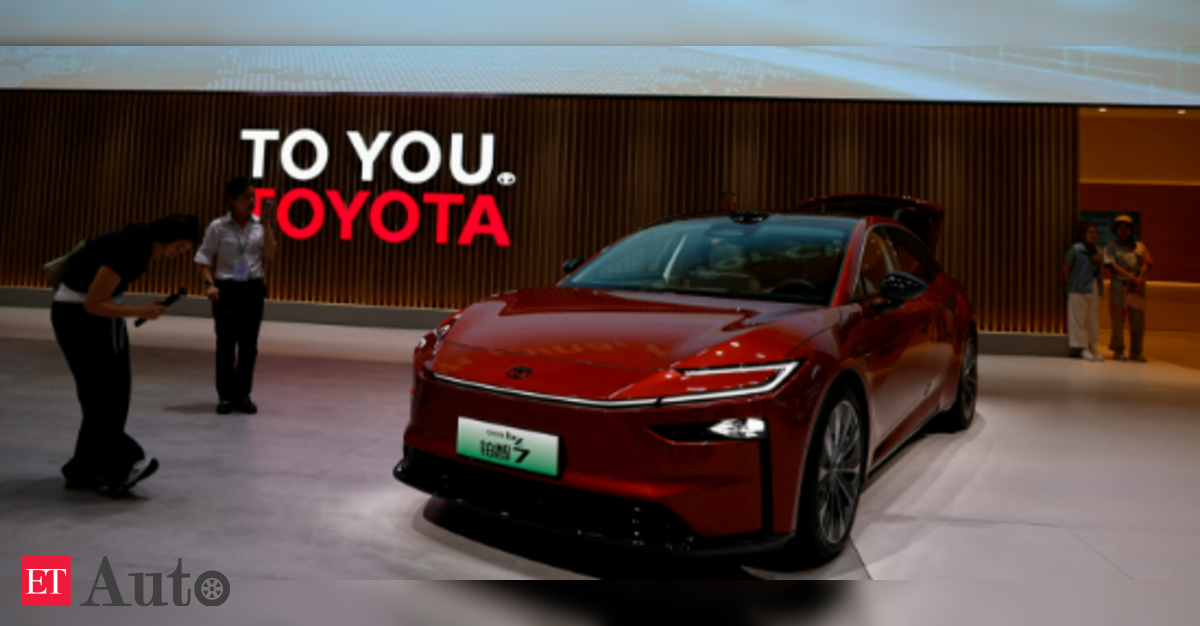

 The automaker expects sales of hybrids to exceed 5 million vehicles for the first time ever this year.
Toyota expects fallout from the Iran war to cost it around $4.3 billion this financial year, the world’s largest automaker said on Friday, in one of the biggest warnings yet on the impact of the crisis on global companies.
Toyota reported an almost 50 per cent drop in quarterly earnings and said it expects full-year profit to decline by a fifth in the year that just started, as rising costs and supply snarls from the war outweighed surging demand for hybrid vehicles.
The automaker expects sales of hybrids to exceed 5 million vehicles for the first time ever this year. The results highlight the lopsided impact of the Middle East crisis, with higher energy prices driving more customers to fuel-efficient cars but not in enough numbers to offset underlying cost pressures.
Toyota reported an operating profit of 569.4 billion yen ($3.6 billion) for the three months to March 31, compared with 1.1 trillion yen a year earlier. For the current fiscal year, it expects an operating profit of 3 trillion yen.
That outlook was well below the 4.59 trillion yen median forecast in an LSEG poll of 23 analysts. Toyota shares declined after the report and ended down around 2.2 per cent at their lowest close since mid-October.
“It’s not about stepping on the brakes completely, but about identifying waste one by one and changing structures piece by piece, carrying out reform,” new CEO Kenta Kon, who assumed his role last month, told a briefing.
Kon praised Toyota’s ability to deliver nearly 3.8 trillion yen in operating profit in the financial year that just finished despite significant changes in the operating environment.
Middle East impact
In total, the impact of the Middle East crisis will be around 670 billion yen ($4.3 billion) in the year to the end of March 2027, Toyota said. That exceeded estimates given by many major companies so far, including airlines.
The estimate assumes a full-year impact of about 400 billion yen from higher material and fuel costs, and roughly 270 billion yen from lower volumes and logistics delays, Toyota said.
The latest surge in energy prices heaps further pain on an industry already grappling with US tariffs and the rise of Chinese automakers. Volkswagen CEO Oliver Blume said this week tariffs represent a burden of 5 billion euros ($5.9 billion) a year on the German group’s operating profit.
Toyota said last week its sales in the Middle East fell sharply in March after shipments to the region were disrupted.
The outlook is the first issued by Toyota under Kon, who faces the challenge of steering the automaker through the impact of US President Donald Trump’s tariffs, which cut operating profit in the year just ended by 1.4 trillion yen.