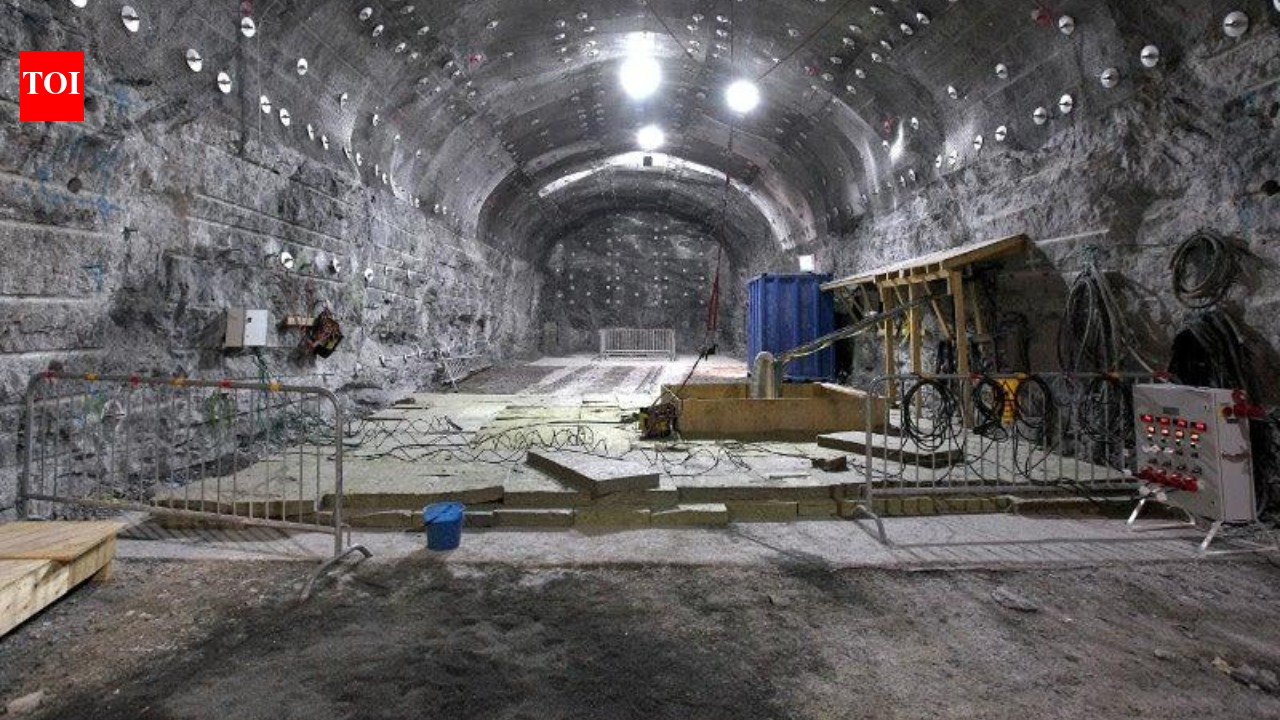

Finland is on the verge of switching on what could become one of the most consequential infrastructure projects in the history of nuclear energy, a permanent underground repository designed to store highly radioactive waste for tens of thousands of years. Built deep beneath the island of Olkiluoto, the facility represents a long-awaited answer to a problem that has shadowed nuclear power since its earliest days, what to do with spent fuel once it is no longer usable. As countries return to nuclear energy to meet climate goals and rising electricity demand, Finland’s solution could offer a working model for safely isolating radioactive waste from people and the environment over geological timescales.
The nuclear waste problem and Finland’s underground solution
Since the 1950s, nuclear reactors around the world have generated vast quantities of spent fuel. Globally, this has reached roughly 400,000 tonnes, much of which is currently stored in temporary facilities such as cooling pools and dry casks. These systems are designed for safety, but not permanence.The challenge lies in the nature of the waste itself. Spent nuclear fuel remains dangerously radioactive for thousands of years, emitting heat and radiation long after it has been removed from reactors. Managing it requires solutions that extend far beyond typical human planning horizons.Finland’s answer is a deep geological repository, a system that isolates waste deep underground in stable rock formations. The Onkalo facility is located about 400 to 450 metres below the surface in bedrock that is approximately 1.9 billion years old.The design relies on a multi-layered safety approach. Spent fuel is first sealed in metal canisters, which are then encased in corrosion-resistant copper capsules. These are surrounded by bentonite clay, a material that swells when wet and helps block water movement. The entire structure is embedded within solid rock, creating multiple barriers between the waste and the biosphere.This layered system ensures that even if one barrier fails over time, others continue to contain the radiation.
Why go 400 metres underground?
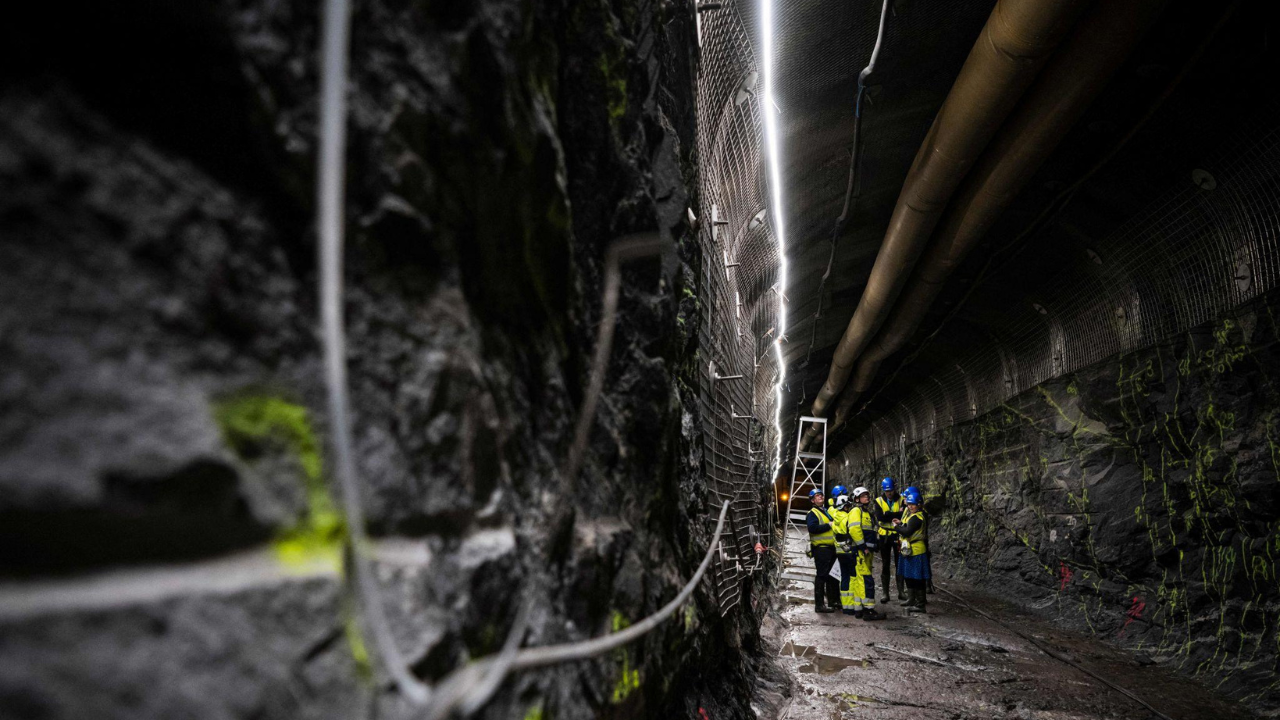
Depth is critical to the safety of the repository. At around 400 metres below ground, the facility is far removed from surface-level risks such as extreme weather, human activity and most environmental disturbances.The surrounding bedrock has remained stable for billions of years, making it one of the most reliable natural barriers available. Underground conditions also limit exposure to oxygen and water flow, both of which could accelerate material degradation over time.Importantly, this depth provides protection not just for current generations, but for distant future societies that may not even understand the dangers of buried nuclear waste.
The science behind long-term safety
Designing a facility that must remain secure for up to 100,000 years requires an unusual blend of engineering and geological science. Researchers have studied everything from copper corrosion rates to ice-age cycles that could reshape the landscape thousands of years from now.The concept is based on passive safety. Unlike many industrial systems, the repository does not rely on active monitoring or maintenance once it is sealed. Instead, it is designed to remain stable without human intervention, using natural and engineered barriers to contain the waste.Scientists have also modelled groundwater movement, seismic activity and long-term climate shifts to ensure that radioactive materials remain isolated under a wide range of possible future scenarios.
Why Finland succeeded where others struggled
Many countries with nuclear programmes have yet to build permanent waste repositories. Finland’s progress is often attributed to a combination of policy, planning and public trust.A key factor was a national decision requiring that all nuclear waste be managed within the country. This created a clear responsibility and avoided delays linked to international disposal debates.Equally important was local acceptance. Communities near the site were involved early in the decision-making process, and transparency helped build confidence in the project’s safety.Decades of consistent policy and scientific research allowed Finland to move from concept to construction without the political reversals seen elsewhere.
A turning point for nuclear energy
As the world searches for low-carbon energy sources, nuclear power is gaining renewed attention. It offers reliable, round-the-clock electricity generation with minimal direct emissions. However, the unresolved issue of waste disposal has long been one of its biggest drawbacks.Finland’s repository could change that equation. By demonstrating that permanent, safe storage is achievable, it addresses a critical concern for policymakers and the public.The facility will not solve the global waste problem on its own. It is designed to hold about 6,500 tonnes of Finland’s spent fuel. However, it establishes a working blueprint that other nations can adapt.Once fully operational, the repository will receive spent fuel gradually over the coming decades. After it reaches capacity, the tunnels will be sealed and left undisturbed.From that point on, the system is expected to function independently, containing radioactive materials as they slowly decay over thousands of years.The idea is simple but profound. Build a system so robust that it can outlast civilisations, requiring no maintenance, no oversight and no memory of why it exists.Finland’s nuclear waste vault represents more than a technical achievement. It is an experiment in long-term responsibility, a rare example of modern society planning for consequences that extend far beyond its own lifetime.In doing so, it may have solved one of nuclear energy’s most persistent problems, bringing the world closer to a future where clean energy and long-term safety can coexist. Go to Source