
India’s EV story, on the surface, is one of rapid acceleration. Electric vehicle sales jumped 84 per cent year-on-year in FY26 to 24.5 lakh units, data from Federation of Automobiles Dealers Association (FADA), showed, as reported by The Times of India.
The surge was powered by new model launches, improving supply chains and rising urban acceptance. The direction is unmistakable: electric is gaining ground.
“India’s transition to electric mobility is gaining pace, and we are seeing that momentum clearly reflected in our performance,” said Nalinikanth Gollagunta, CEO – Automotive Sector, Mahindra & Mahindra.
The company crossed 50,000 eSUV deliveries in roughly a year, with March 2026 emerging as its highest-ever monthly sales.
Yet the scale tells a more sobering story. Across all vehicle segments and across companies, EVs accounted for just 7.6 per cent of sales in 2024, still far from the government’s target of 30 per cent by 2030, according to data from a Niti Aayog report.
After nearly a decade to reach this level, India now needs to add over 20 percentage points in just five years. The curve is steep, and the easy gains have already been made.
“EV journey in India is progressing well and directionally moving in line with the government’s targets. That said, the inherent challenge in the sector keeps the penetration levels low, some of which include elevated upfront costs, slower pace of improvement in EV ecosystem, evolving consumer awareness, cautious lending environment, etc.,” said Srikumar Krishnamurthy, Senior Vice President and Co-Group Head, Corporate Ratings, ICRA Limited.
The Rs 7 lakh dilemma: India’s electric dream runs into a price wall
Step into a car showroom in Delhi and the future feels within reach—sleek, silent, electric. But then comes the number. For something as mainstream as a Hyundai Creta, the petrol version starts at about ₹12.8 lakh on-road, diesel climbs to roughly Rs 15 lakh, and the electric variant pushes close to ₹19.5 lakh. That’s a gap of ₹7 lakh over petrol before a single kilometre is driven, according to an analysis done by The Times of India.
Over time, the equation shifts. Drive 15,000 km a year, and the electric version quietly begins to claw back its premium through sharply lower running costs. Electricity at ₹7 per unit versus petrol at ₹100 per litre changes the ownership math in ways that are hard to ignore. But for most Indian buyers, the decision is still made at the point of purchase, not over five years. And that is where India’s electric vehicle (EV) transition runs into its first—and perhaps biggest—roadblock.
Mahindra touched an optimistic tone here. “The customer conversation is shifting from consideration to adoption, driven by firsthand experience of our products – from a 500 km real-world driving range and ultra-fast charging that delivers 20–80 per cent in just 20 minutes, to the reassurance of a lifetime battery warranty,” added Gollagunta.
The price barrier in India’s EV road
The affordability gap among Indian buyers remains stubborn. An average electric car in India starts at around Rs 13 lakh, nearly three times the entry price of a conventional petrol vehicle. While incentives and lower running costs soften the blow, they rarely eliminate it. For a market where value-for-money is not just a preference but a necessity, the EV proposition often feels like a long-term bet in a short-term economy.
This creates a classic Indian paradox—EVs are cheaper to own, but expensive to buy. For fleet operators or high-mileage users, the math works. For the average middle-class household, it often doesn’t.
“The companies are already doing their bit by bringing in more products in the market which increases customer choices and thereby customer looking beyond ICE vehicles. However the same has to come at a faster pace then what is happening currently to drive EV adoption,” said Hemal Thakkar, Senior Director & Senior Practice Leader, Crisil Intelligence.
“Also, the communication from the OEMs with respect to EVs as a product need to be enhanced to educate the customer better,” added Thakkar.
Issues with charging and infrastructure: More plugs but no less problems
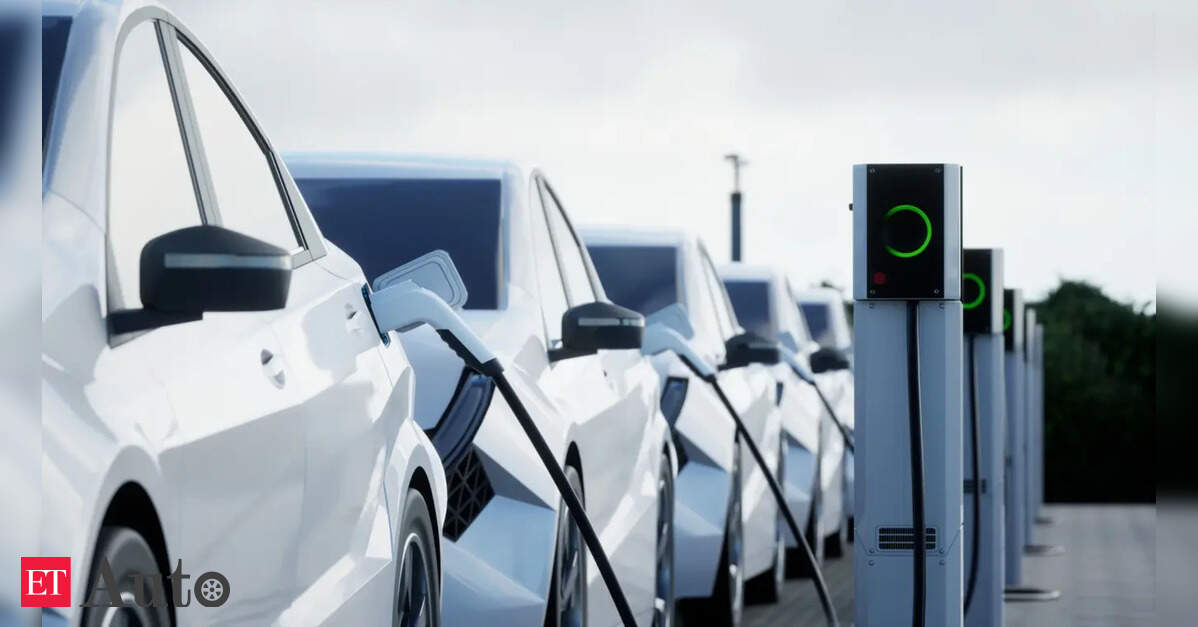
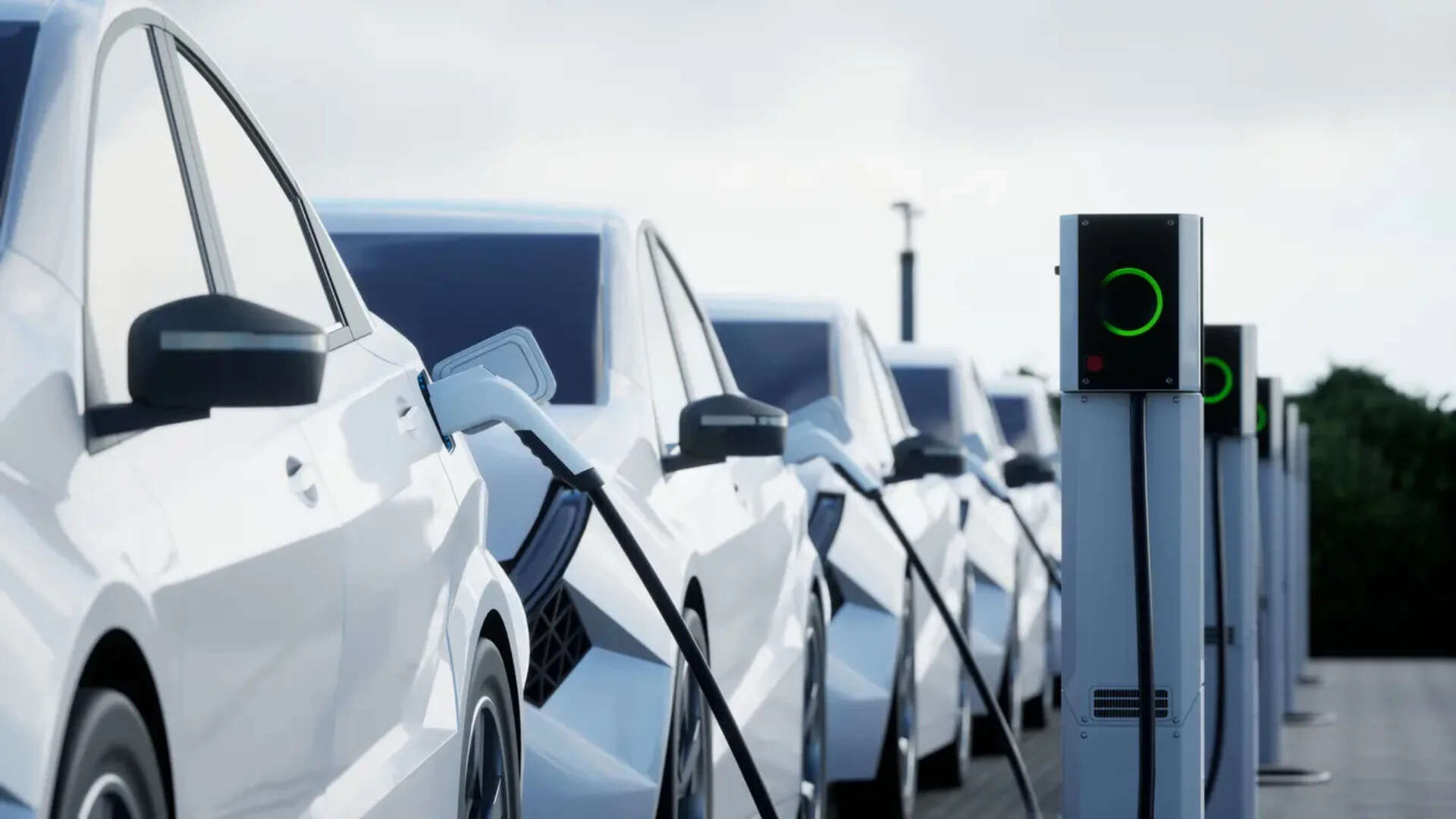
On paper, India’s charging infrastructure is expanding. Over 29,000 public charging stations have been installed in the past five years, including more than 8,800 fast chargers, a PIB press release showed.
“As charging infrastructure continues to expand nationally, our Charge_IN network is actively enabling ultra-fast charging across key Indian highways, supporting the next phase of EV adoption in the country,” Mahindra told ET Online.
Setting up a charging station is now an unlicensed activity, opening the door to private investment. Government schemes continue to push deployment. Infrastructure, long seen as the Achilles’ heel, is improving—but unevenly.
Policy has liberalised the sector, allowing private players to set up charging stations without licensing barriers. Yet availability remains patchy, especially beyond major cities, and utilisation is inconsistent. In some places, chargers are scarce; in others, they sit underused. Range anxiety hasn’t vanished—it has simply become more selective.
“On a reference check with China where EV penetration has risen sharply in the last few years, key factors contributing to the growth include sustained policy measures towards incentivising EV buyers, investments in charging infrastructure and technology, strong consumer awareness, supportive lending environment etc.” said Krishnamurthy.
When it comes to rural India, the story changes a bit. Let’s consider the Karnataka example.
The Bangalore Electricity Supply Company (Bescom), Karnataka’s main electricity distributor, set out with an ambitious plan to seed EV charging infrastructure across all 31 districts through a public-private partnership model.
The idea was straightforward: crowd in private capital, accelerate network rollout, and build the backbone for the state’s electric mobility push beyond its urban strongholds.
But the market response was far more cautious than policymakers anticipated. Even after repeated deadline extensions and a more generous incentive framework, private operators have stepped forward in just nine districts—Bengaluru Urban, Bengaluru Rural, Mysuru, Dakshina Kannada, Hassan, Shivamogga, Chikkamagaluru, Haveri and Belagavi—collectively covering less than a third of the state.
“Companies say it’s not viable to set up stations in all districts because of the low number of EVs there,” a senior Bescom official was quoted by Deccan Herald as saying.
The skew underscores a familiar pattern: investor interest is clustering around relatively urbanised or economically active pockets, leaving large swathes of the state still waiting for the basic infrastructure needed to support EV adoption.
The entry playbook for foreign investors: High voltage opportunity, high friction market
India’s electric vehicle story is increasingly hard to ignore for global investors. The upside is compelling—rapid demand growth, strong policy backing, and a market that is still far from saturation. But this is not a plug-and-play opportunity. Beneath the headline numbers lies a complex operating environment where pricing pressures, policy shifts, infrastructure gaps and supply chain dependencies can quickly erode even the most optimistic business case.
For foreign entrants, success in India’s EV market will hinge less on ambition and more on precision. It demands a granular understanding of consumer behaviour across income segments, a clear reading of evolving regulatory frameworks, and a sharply localised product and pricing strategy. This is where specialised automotive and market-entry advisory firms come into play—offering on-ground intelligence, policy navigation and end-to-end strategy that can help companies avoid costly missteps.
Breaking into India’s EV ecosystem is not just about selling vehicles; it is about aligning with a rapidly evolving ecosystem—from charging networks to domestic manufacturing mandates. Those who invest the time to decode the market stand to gain from one of the world’s most significant mobility transitions. Those who don’t may find that the barriers to entry are just as powerful as the opportunities.
India’s policy push: The strength in the EV journey
Policy support, meanwhile, has been both a catalyst and a complication. A web of schemes—from FAME incentives to the Rs 10,900-crore PM E-DRIVE programme, production-linked incentives for advanced automotive technology, and battery manufacturing subsidies—signals strong state backing. There is a clear push not just to sell EVs, but to build an entire domestic ecosystem around them.
“I think on the policy front the Central government has taken commendable steps like reduced GST (5 per cent), incentives under FAME and PLI while many state governments have also provided demand incentives & incentives for investment in the state to boost EV manufacturing,” said Thakkar.
At the same time, frequent recalibrations of targets and incentives have injected a degree of uncertainty into the investment climate, leaving manufacturers and suppliers navigating a moving goalpost.
The supply chain issue that needs to be addressed
Behind every EV is a battery. And behind every battery is a supply chain India doesn’t control. Beneath the surface lies a deeper structural vulnerability: supply chains. India remains heavily dependent on imports for lithium and other critical minerals that power EV batteries.
Domestic demand for lithium-ion batteries is largely met through imports, exposing the sector to global disruptions. Recent moves by key suppliers, like China, to tighten export controls on battery materials and technology underscore the fragility of this dependence.
In effect, India is trying to electrify its mobility while outsourcing the core of that transition.
In a written reply in Parliament, Minister of State for Heavy Industries Bhupathiraju Srinivasa Varma flagged India’s continued dependence on overseas supply chains, noting that the country’s entire domestic demand for lithium-ion batteries is currently met through imports.
Citing inputs from the Society of Indian Automobile Manufacturers, he underlined the structural gap in critical minerals, with India heavily reliant on imports of key inputs such as lithium—an essential component for EV batteries—highlighting a key vulnerability in the country’s clean mobility ambitions.
“Recent policy developments in China, specifically the decision to impose export controls and licensing requirements on high-performance lithium-ion batteries, cathode materials, artificial-graphite anodes, and associated manufacturing technology, could tighten near-term global supply conditions,” he said.
India’s EV adoption pattern is far from uniform
Adoption patterns reflect these constraints. Electric two-wheelers and three-wheelers have surged, driven by clear cost advantages and predictable usage cycles. Buses are gaining traction with policy support. Passenger cars are inching forward. But electric trucks—especially for long-haul logistics—have barely taken off. The transition is not uniform; it is segmented, shaped by economics as much as ambition.
There is also a softer, less quantifiable barrier: trust. For many consumers, questions linger around battery life, replacement costs, resale value and real-world performance. Awareness is improving, but not fast enough to match policy momentum. The EV, for a large part of the market, remains an unfamiliar technology wrapped in a premium price tag.
Back to the buyer: Petrol, diesel, or electric?
For now, the decision still circles back to that showroom dilemma. The choice still feels less like a leap into the future and more like a calculated compromise. Petrol offers affordability, diesel offers efficiency, and electric offers promise—if you can afford to wait for it to pay off. If you’re cost-conscious upfront, petrol wins. If you want efficiency without range anxiety, diesel holds ground. If you’re thinking long-term—and can afford the entry price—electric starts to make sense.
“India’s EV journey is expected to ramp up with continued policy support, consumer EV awareness, and reduction in operating costs for which scale up of industry volumes, scaleup of ecosystem and localisation initiatives are required,” added Krishnamurthy.