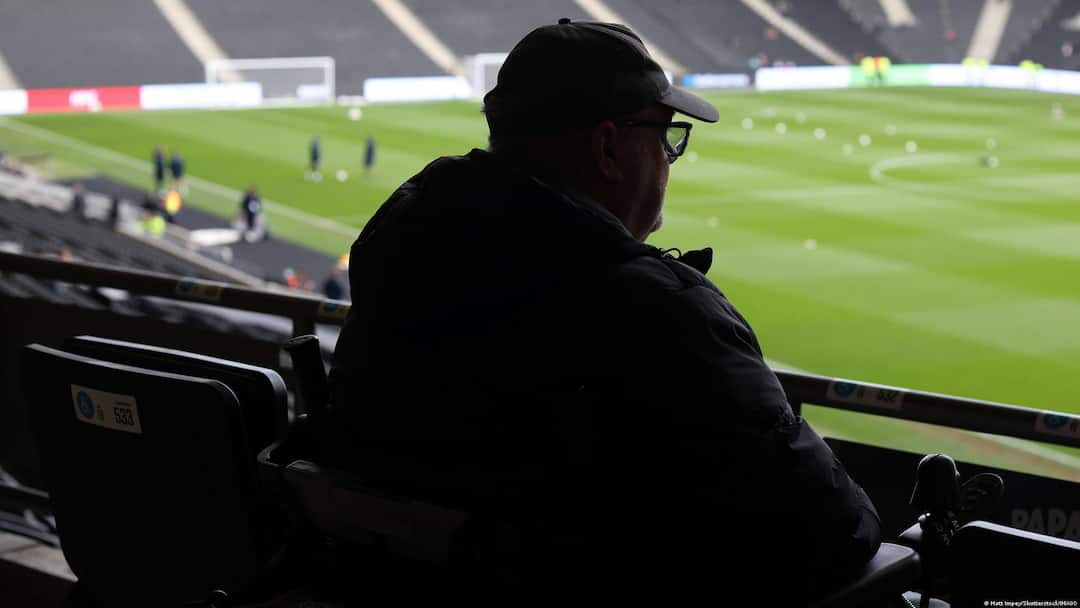

- Disabled fans face exclusion from 2026 World Cup due to ticketing.
- Higher costs for tickets, companions, and parking disadvantage fans.
- Qatar World Cup offered better accessibility and pricing for fans.
Interviews and editing by: Dave Braneck
People with disabilities are being shut out of the 2026 World Cup, according to fans and rights campaigners.
In stark contrast to previous tournaments, this year’s event in the US, Canada and Mexico, has no separate ticket ballot, is charging for companions who usually go free and has failed to provide free or reduced cost accessible parking. And that’s without mentioning the cost of the tickets themselves.
“I originally was going and thinking America would be amazing, and Canada and Mexico too. I’ve been many times. I know you can get about, the transport is all set up, hotels, everything is accessible, so you didn’t have any of that worry. But now the whole thing about ticketing… it’s just impossible to get tickets,” England fan Jo McNicol told DW.
“I just think they’ve priced people out. They’ve not restricted it, so anyone can get a wheelchair ticket, an accessible ticket. You don’t have to prove you need one, which is what you normally do.”
Profit before people?
McNicol has been a regular at club matches and international tournaments for many years and was at the last World Cup in Qatar, where she found the accessibility “fabulous”. There, she said, fans with disabilities were given a proportion of the available tickets to purchase upon proof of their disability, as is also generally the case in sporting events in Europe.
Given that, McNicol booked a flight and rented a campervan for a trip this year. But she has been unable to secure tickets through the ballot system run by tournament organizers FIFA and is now unlikely to attend.
The organization has come under fire for excessive profiteering. This has included: the high initial prices of tickets, adding new higher categories to tickets without announcement, moving people’s seats after purchase, making transport and parking much more expensive than normal and profiting from a 15% levy on buyer and seller in a newly-introduced resale portal.
With category 4 tickets, the cheapest, seemingly not available for disabled fans — perhaps because they are found in the furthest, highest corners of the ground — McNicol and those like her can only access category 3 and above through said portal. This is despite no matches having been announced by FIFA as sold out. The BBC reported earlier this month that the cheapest category 3 ticket for England’s opening match is $898 (€762), up from a face value of $265.
Disabled fans pay twice
James Flanagan from advocacy group Football Supporters Europe said tickets in Qatar were available to fans with disabilities for about $10 and that FIFA’s current policies are a “step back” that is “excluding people with disabilities from the tournament.”
With many requiring assistance at matches, Flanagan said charging for a companion was an extra penalty.
“Charging for a companion ticket, which FIFA have included in their policies, effectively doubles the cost,” he told DW. “Accessible parking will also not be discounted. All of this will challenge fans with disabilities, and time is running out to change.”
FIFA have not responded to a series of questions from DW nor to FSE. But their website does confirm the issues raised by fans and FSE.
“They won’t even guarantee that the PA [companion] ticket is going to be next to you,” said McNicol, who uses a wheelchair. “But you need them. If I drop something on the floor, I can’t pick it up. If I want to use the bathroom, I need help. And also you just want to sit with someone that you want to sit with, rather than sit with a bunch of strangers. You want that choice.”
Fans ignored by FIFA
FIFA’s policy is that “companions will be seated as close to you as possible. However, the exact seat location cannot be guaranteed, and FIFA Ticketing cannot ensure that it will be immediately adjacent to your seat.”
Flanagan sees this as unacceptable. “It is not a choice that people have to have a companion with them. That is a necessity, and it’s an unfair financial burden on people with disabilities. We believe that the policy contradicts FIFA’s own commitments on inclusion and human rights,” he said.
“FIFA needs to listen to people with disabilities, and I don’t think fans are being consulted.”
With public transport limited at many venues, parking is also a bone of contention for fans with disabilities. While FIFA’s general accessibility policy does make note that disabled parking “should be provided and located next to the stadium or close by” it does not suggest is should be free or subsidized. And it isn’t.
“Currently, fans are being asked to fork out extortionate prices for match tickets, but also $150 to $300 on an accessible parking depending on the venue,” added Flanagan. “The prices that these fans have to pay are just not acceptable.”
Disclaimer: This report first appeared on Deutsche Welle, and has been republished on ABP Live as part of a special arrangement. Apart from the headline, no changes have been made in the report by ABP Live.