
 The carmaker also conducted a detailed study two years ago to better understand the requirements of women employees. Based on the findings, infrastructure upgrades were introduced.
Manesar: The Indian auto industry, which accounts for almost half of India’s manufacturing GDP, reflects a huge discrepancy in gender diversity with the ratio skewed towards male workforce.
Country’s largest carmaker, Maruti Suzuki India, wants to tread a path that is more inclusive – both on the shopfloor and at the top of the ladder.
The company’s top executive said the carmaker is planning to hire more women at its Gurgaon, Manesar plant and at the under-construction Gujarat plant.
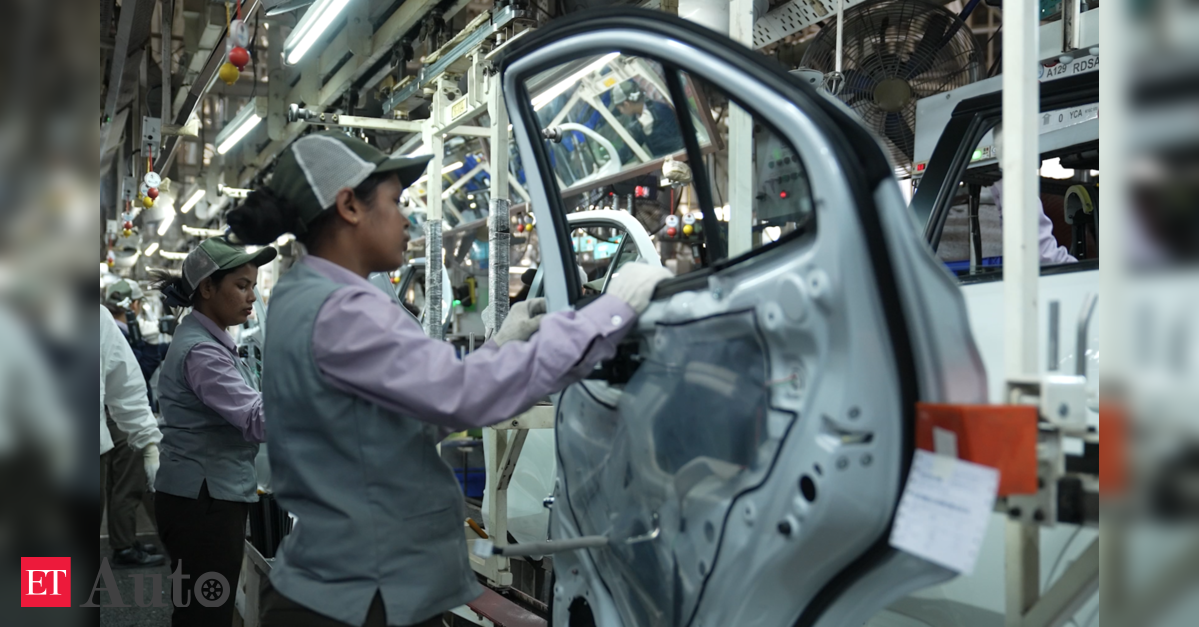
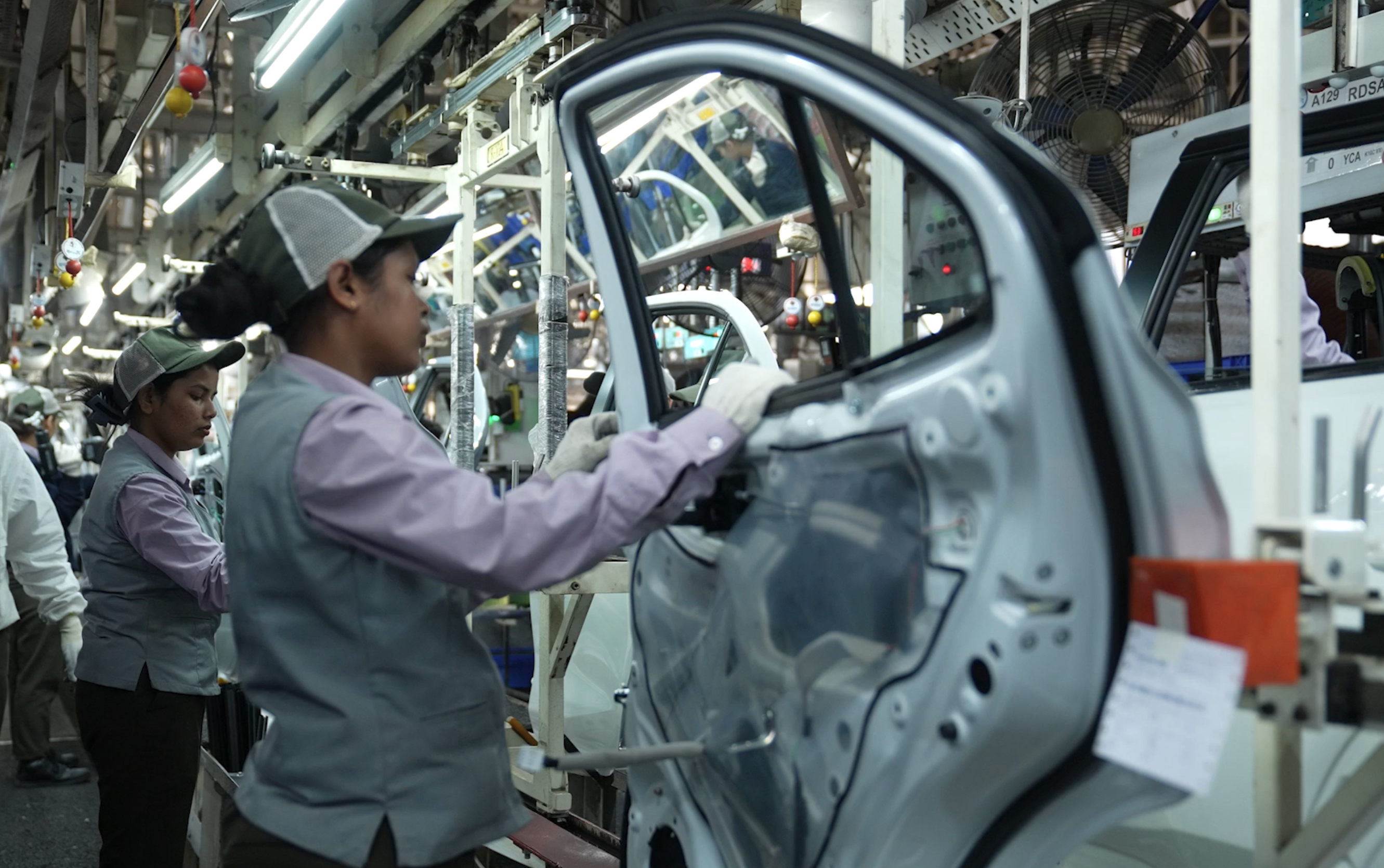
At present, the carmaker has 190 women at the shopfloor, which translates to less than 10 percent of the shopfloor workforce.
“Maruti Suzuki’s goal is not just numbers, but to create an inclusive environment for all,” Rahul Bharti, Senior Executive Officer, Corporate Affairs, Maruti Suzuki, told the media.
According to a report by Deloitte, women comprise only a quarter of the auto manufacturing industry’s workforce, highlighting the grey area which requires not only strict policies but also initiatives by OEMs (original equipment manufactures) to promote gender diversity across their plants.
At its upcoming facility at Khoraj Industrial Estate in Gujarat, for which the company has earmarked ₹10,189 crore, Maruti Suzuki plans to recruit more women through JIM and ITI programmes. The company is targeting a 30 per cent increase in women hiring through JIMs.
For comparison, other OEMs such as Tata Motors and JSW MG Motor India have higher women participation. Tata Motors employs more than 1,700 women, while JSW MG Motor deploys around 80 per cent women workforce in the battery assembly shop at its Halol plant in Gujarat.
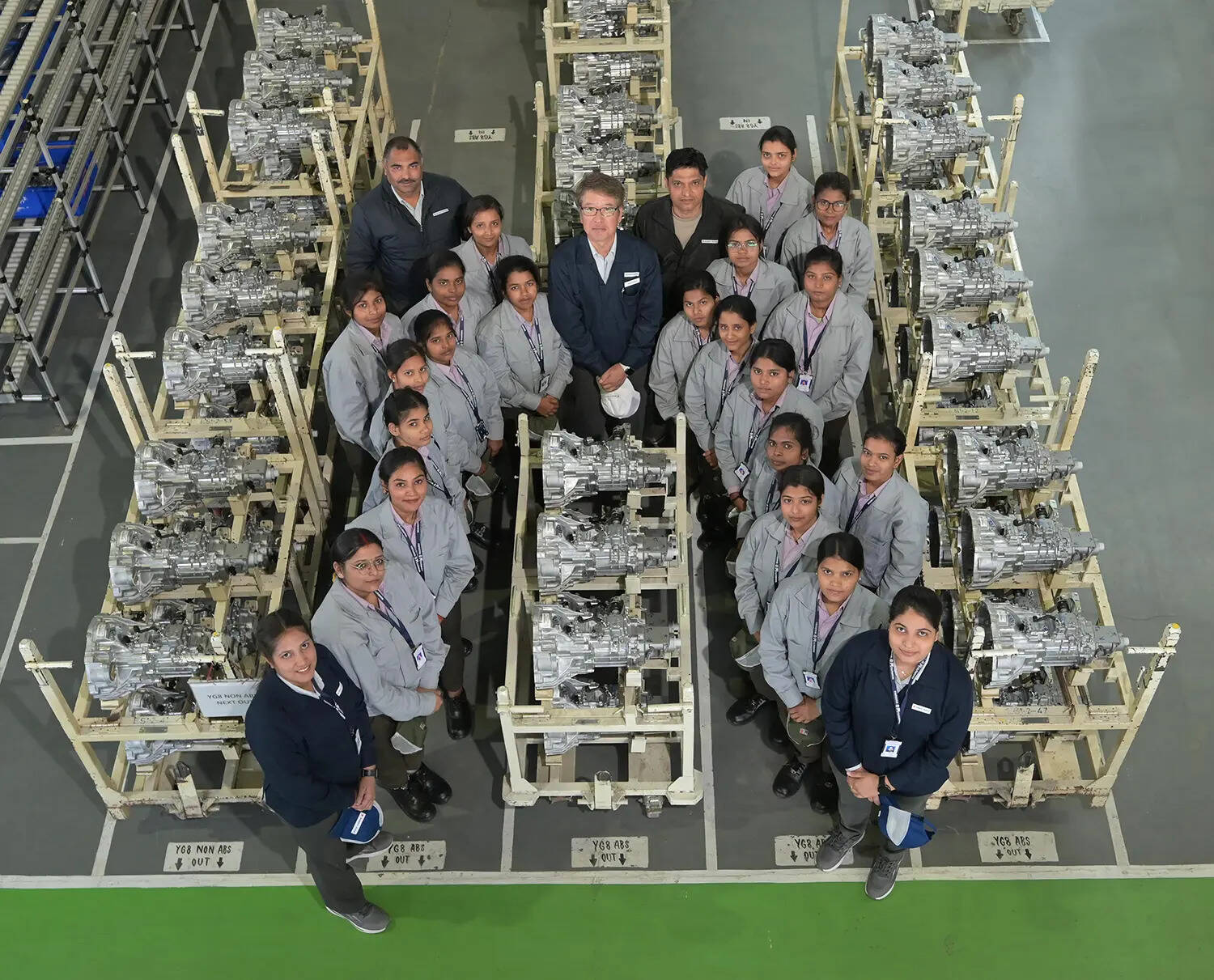 Women group photo with MD & CEO Hisashi Takeuchi
Challenges in hiring women workforce
Despite the best of intent, multiple factors limit the attempt to bring gender parity in the workforce. Maruti said hiring has remained limited due to challenges such as safety concerns, accommodation availability, hygiene infrastructure, and skill readiness in certain locations. However, to change this scenario, Maruti Suzuki has introduced ITI courses in trades such as mechanical and electrical to train women as per shopfloor requirements, although hiring levels remain modest.
The carmaker also conducted a detailed study two years ago to better understand the requirements of women employees. Based on the findings, infrastructure upgrades were introduced.
“Infrastructure changes such as adequate restrooms for women, changing areas, a creche, and safety support in the form of guards on duty and patrolling during evening shifts were introduced,” said Salil Lal, Executive Officer, Human Resources, Maruti Suzuki.
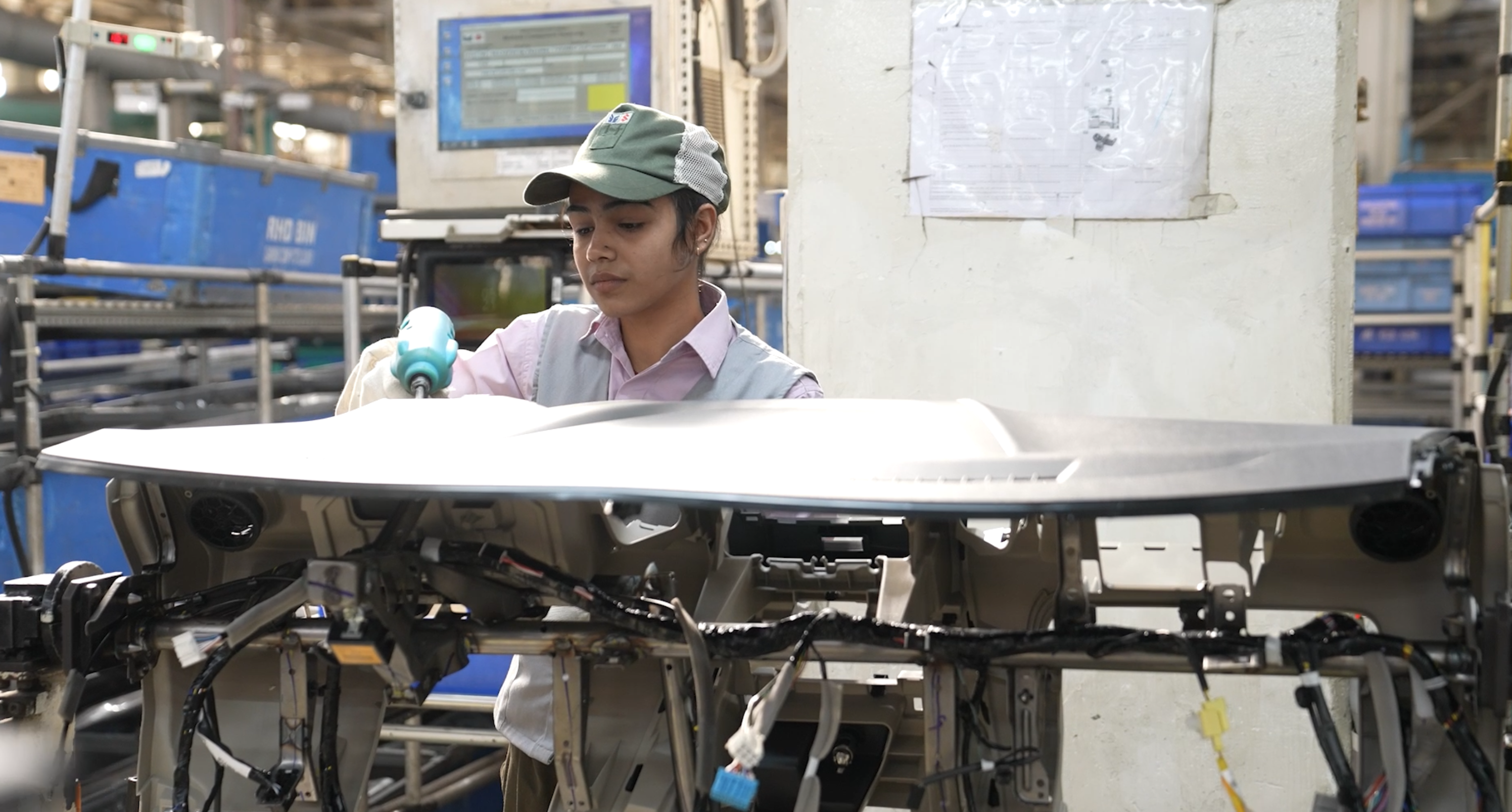
Voices from shopfloor
In Maruti Suzuki plants, women are currently deployed in areas such as production quality control, instrument panel sub-assembly, rear door sub-assembly, transmission assembly, and K and Z series engine assembly.
“This makes me feel confident and independent. Also, other women are inspired,” said 20-year-old Hiran during a visit at the company’s Manesar plant.
Her experience reflects the company’s broader engagement and efforts to make the workplace more women-friendly. Measures like sensitisation training for other team members, mandatory POSH training for 100 per cent of employees, adequate restrooms for women, changing area, and safety support in the form of guards on duty and patrolling during evening shifts give the female employees confidence in the space.
Aanchal, who handles the inspection department, said her journey at the place has been a transformational journey .“Earlier I was hesitant, my family was worried, but now they are proud of me,” she noted.
Another woman worker echoes the same sentiment. “I have been working here for the last 1.5 years and am currently on the inspection line with many other women. Maruti Suzuki gives us opportunities to experiment with other parts of manufacturing too according to our interest area,” said Saloni.
These stories point to the widening participation of women in the space that has traditionally been dominated by men. And Maruti Suzuki plans to build on this momentum.